



The Double-Touching Controversy at the 2026 Winter Olympics: A Curling Crisis or Media Overreach?
An American Curler Speaks Out
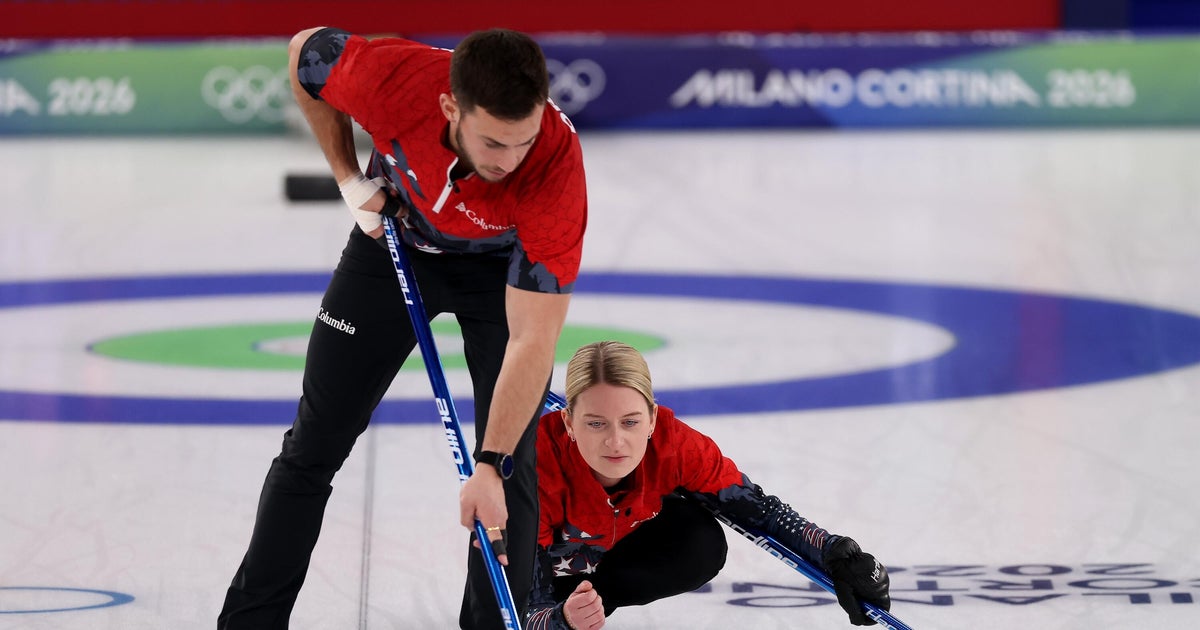
The 2026 Winter Olympics in Cortina d’Ampezzo, Italy, have been overshadowed by an unexpected controversy in one of the Games’ most genteel sports: curling. At the center of the storm is Team USA’s Korey Dropkin, a mixed doubles silver medalist, who has stepped forward to defend his fellow curlers against accusations of cheating. Speaking to CBS News on Tuesday, Dropkin didn’t mince words about what he sees as a manufactured scandal. “It’s bigger than it needs to be,” he said, referring to the so-called “double-touching” controversy that has captivated Olympic audiences and sparked heated debates both on and off the ice. Dropkin, who celebrated his silver medal victory with partner Cory Thiesse just days earlier, expressed frustration that what should have been a celebration of athletic excellence has instead become a media circus focused on a technical infraction that he and many other curlers believe is being blown out of proportion. His candid defense of colleagues caught in the crossfire reveals the human side of Olympic competition—where reputation, respect, and years of dedication can be called into question in an instant.
The Incident That Started It All
The controversy erupted during a fiercely contested matchup between Sweden and Canada on Friday, February 13th. During Canada’s 8-6 victory, Swedish curler Oskar Eriksson accused Canadian veteran Marc Kennedy of “double touching”—making contact with the granite stone again after initially releasing it to slide down the ice. The accusation struck a nerve with Kennedy, one of Canada’s most respected curlers, who responded with an expletive-laden outburst that was captured on camera and quickly spread across social media. Kennedy vehemently denied breaking any rules, and his emotional reaction highlighted just how seriously these athletes take both the rules of their sport and their personal integrity. The confrontation was so intense that Olympic officials felt compelled to intervene, adding arbitrators to monitor subsequent stone releases during matches. However, the sport of curling doesn’t utilize video replay technology to review game decisions, making it impossible to definitively settle the dispute after the fact. World Curling, the sport’s governing body, issued a statement confirming that “decisions made during a game are final,” effectively ending any hope for an official resolution that might have cleared Kennedy’s name or validated Sweden’s complaint.
Understanding the Rule and Its Impact
In the aftermath of the Canada-Sweden incident, World Curling released a clarifying statement about the rules surrounding stone contact. According to official regulations, touching the granite portion of the stones after release is prohibited, and any violation results in the stone being immediately removed from play. This seemingly straightforward rule, however, has proven more complicated in practice than in theory. In the days following the Kennedy incident, other high-profile curlers found themselves penalized for similar infractions, including Canada’s Rachel Homan and Great Britain’s Bobby Lammie, both of whom had stones removed from play during their matches. The sudden enforcement of this rule has raised questions about consistency and whether officials are now hypersensitive to violations that may have previously gone unnoticed or unpunished. Dropkin suggested that the practice of briefly touching the stone has been relatively common among curlers, particularly those who have been competing for years under different interpretations of the rules. “Throughout the last few seasons, truly there’s been a lot of athletes that have done this, and it hasn’t really been brought up,” he explained. “There’s plenty of Olympians that have done the double-touch or flick of the granites.” For Dropkin, the real issue isn’t whether the rule exists, but whether athletes who may have inadvertently developed this habit over years of competition should suddenly be branded as cheaters when the rule is enforced more strictly.
A Question of Intent Versus Infraction
Dropkin’s defense of his fellow curlers centers on a crucial distinction: the difference between intentional cheating and unintentional rule violations. He emphasized that many of the athletes now being scrutinized are veterans who developed their techniques over decades, potentially before this specific rule was strictly enforced or even existed in its current form. “I think it’s been tough for some of the athletes” who have been in the game for years, Dropkin told CBS News, his voice reflecting genuine empathy for colleagues he has long admired. “Honestly, they’re athletes that I look up to, athletes that I’ve watched and admired for years.” His comments reveal the emotional toll that accusations of cheating can take on athletes who have dedicated their lives to their sport and built reputations on fair play and sportsmanship. Regarding Marc Kennedy specifically, Dropkin was unequivocal in his support: “He’s one of the greatest curlers of all time and plays by the rules. He’s been one of the guys that I’ve looked up to my entire life. Seeing him being seen as a cheating individual in the sport of curling, in my opinion, is just not right.” While Dropkin acknowledged that Kennedy’s use of “some foul language” during the confrontation “probably wasn’t necessary,” he clearly viewed this as an understandable human reaction to having one’s integrity questioned on the world’s biggest sporting stage. For many observers, the incident raises broader questions about how sports should balance strict rule enforcement with recognition of human error and the evolution of techniques over time.
Support from the Curling Community
Dropkin isn’t alone in his assessment that the double-touching controversy has been overblown. Several other Olympic curlers have publicly expressed similar views, suggesting that the international curling community largely sees this as a case of media sensationalism rather than a genuine cheating scandal. Swiss curler Alina Paetz offered perhaps the most pragmatic perspective when she spoke to The Associated Press about the incident. While she acknowledged that double-touching “is not allowed” according to the rules, she characterized it as a minor infraction rather than a serious violation. “It’s a bigger thing than it actually is,” Paetz said, echoing Dropkin’s sentiments almost exactly. She also provided important context about the emotional atmosphere of Olympic competition, reminding observers that “it’s the Olympics, there’s emotion in it.” Her final assessment was measured and reassuring: “I don’t think it is actually that big of a deal.” This perspective from multiple curlers across different national teams suggests that the athletes themselves—those who understand the sport most intimately—view the controversy as disproportionate to the actual infractions. Their collective response indicates that within the curling community, there’s a shared understanding that these incidents represent technical violations rather than deliberate attempts to gain unfair advantages, and that the media attention has magnified what should have been relatively minor officiating moments into an international incident.
Perspective and Moving Forward
The double-touching controversy at the 2026 Winter Olympics serves as a fascinating case study in how modern sports navigate the intersection of rules, enforcement, technology, and human judgment. Unlike many Olympic sports that have embraced extensive video replay systems and technological aids to ensure fair play, curling remains decidedly low-tech in its officiating approach. This traditional method has its advantages—it keeps the game flowing and places trust in officials and athletes—but it also means that disputed calls cannot be definitively resolved after the fact, leaving room for lingering controversy and damaged reputations. As the Olympics continue, the curling community seems eager to move past this incident and refocus attention on the athletic excellence that should be the Games’ true highlight. Dropkin’s silver medal performance with Thiesse, along with compelling competitions across all curling events, deserve to be the story rather than technical infractions and heated arguments. The controversy has, however, sparked important conversations about whether curling’s officiating methods need to evolve, whether rules need clearer enforcement guidelines, and how sports can better distinguish between intentional rule-breaking and inadvertent technical violations. For now, the curlers themselves seem united in their desire to be judged on their skill, strategy, and sportsmanship rather than split-second contact with stones that may or may not have provided any actual competitive advantage. As Dropkin and others have made clear, these are athletes who respect both their sport and each other, and they deserve to have their Olympic moments defined by their achievements rather than controversies.