

Iranians Caught Between War and Autocracy: Life Under the Bombs
A Capital City Gripped by Fear and Uncertainty
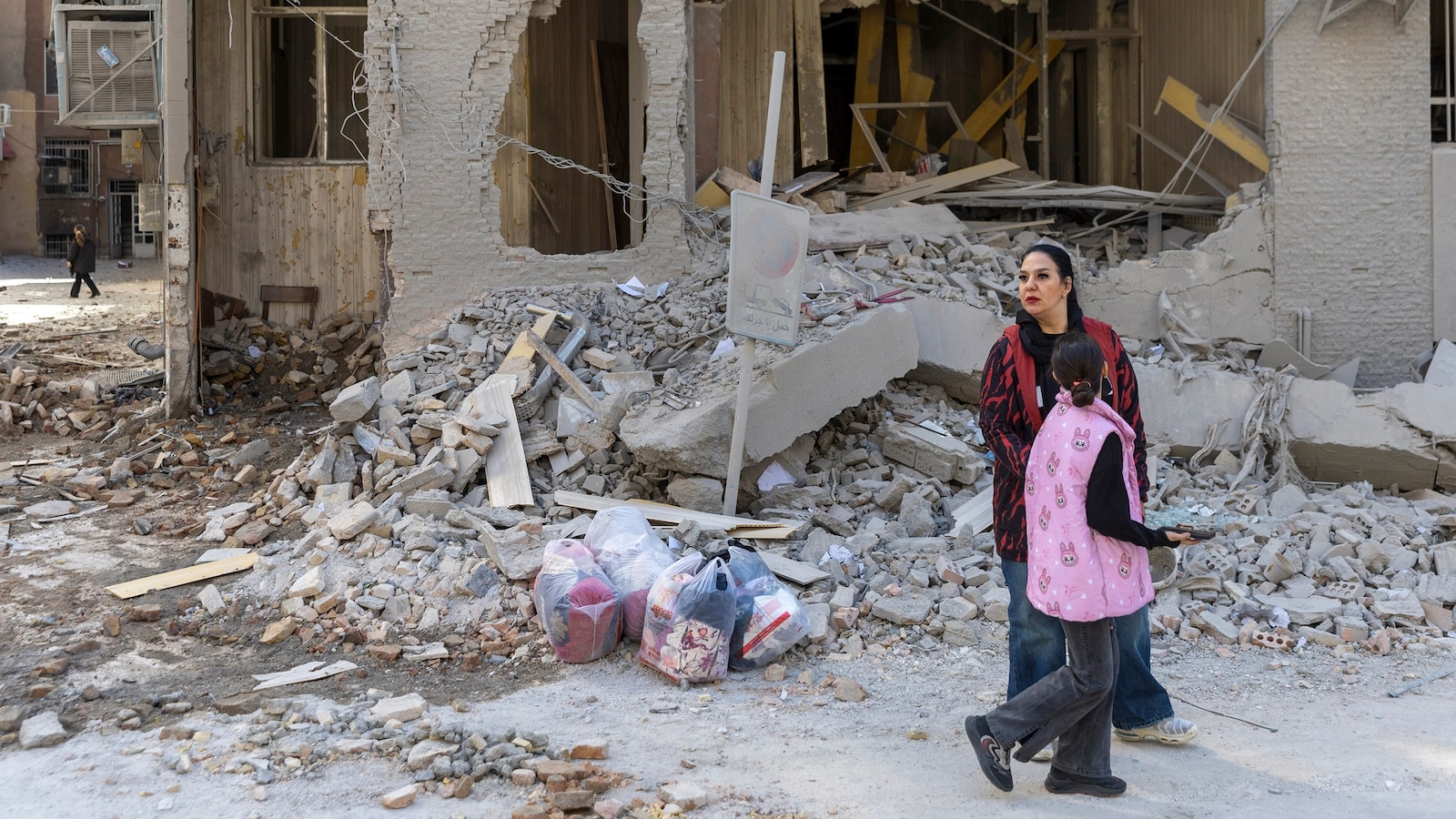
The streets of Tehran tell a story of a city holding its breath. As American and Israeli forces continue their relentless aerial campaign against Iran, the capital has transformed into a ghost town shrouded in toxic smoke and anxiety. The bombardment reached new intensity over the weekend when Israeli strikes targeted oil depots on Sunday, triggering massive fires that blanketed the city in thick, acrid smoke. Residents describe the current situation as the heaviest bombing they’ve experienced since the conflict began. By Monday, those who remained in the city were largely confined to their homes, afraid to venture out as the sound of explosions periodically shattered the tense silence.
The few who do walk the streets navigate through numerous checkpoints manned by government forces maintaining a heavy security presence throughout the capital. Shop owners open their doors each day more out of desperate hope than genuine expectation of customers, as much of the population has either fled or remains locked indoors. “The city is almost emptied out,” explained one resident, whom ABC News is calling Amir to protect his identity from potential government retaliation. “Shops are open hoping against hope for customers. But many have left Tehran. It’s mostly silence unless there’s an attack.” The rain has provided some relief from the suffocating smoke that poured from the burning oil facilities, but a metallic smell of fuel and destruction still permeates the air. Social media posts from inside Iran paint a picture of a city “trapped under a giant glass dome,” where the appearance of calm masks an underlying terror that grips the population.
Life Under Digital Darkness and Physical Destruction
Communication with the outside world has become increasingly difficult as the Iranian regime has imposed a comprehensive internet blackout, attempting to control the narrative and prevent images of destruction from reaching international audiences. Some resourceful Iranians manage to connect for brief periods using Starlink satellite internet and VPNs, creating fleeting windows through which the world can glimpse the reality on the ground. These fragmented connections reveal a population struggling with basic necessities while processing the trauma of living through intensive bombing. Bakeries have become gathering points, packed with people trying to secure bread and other essentials, standing in line while nervously scanning the skies.
The human cost of the American-Israeli campaign has been staggering. Iranian officials report that more than a thousand people have been killed since the bombing began on February 28th. Among the most tragic incidents was a missile strike on a school in the southern city of Minab that claimed the lives of over 160 schoolgirls. Multiple independent media investigations, including those conducted by The New York Times and Reuters, have suggested that the U.S. military was responsible for this devastating attack, though President Donald Trump has attempted to shift blame to Iran itself. The strikes have targeted not only military installations but also key institutions of the Iranian state’s repressive apparatus, including prisons and security service headquarters, in what appears to be a coordinated effort to dismantle the regime’s ability to control and suppress its population.
A Dynastic Succession in Wartime
Amid the chaos of war, Iranians are also grappling with a significant political development: the appointment of Mojtaba Khamenei as the country’s new supreme leader, succeeding his father Ayatollah Ali Khamenei, who was killed on the first day of the American-Israeli strikes. The Council of Experts, a group of senior Iranian officials and clerics, announced that it had voted to select Mojtaba, a move that many observers interpret as a continuation and possibly intensification of the hardline policies that characterized his father’s rule. The succession has been met with mixed reactions across Iranian society, revealing deep divisions about the country’s future direction.
For many educated, middle-class Iranians who have been critical of the government, Mojtaba’s appointment represents a crushing blow to hopes that the crisis might lead to political reform or compromise. These Iranians express feeling trapped between an autocratic regime they oppose and what they view as indiscriminate bombing by foreign powers. “Most of us feel entrapped between an oppressive regime and warmonger nutters in Israel and the U.S. It’s all very tiring for our agency, our lives,” Amir explained, capturing the frustration of those who see themselves as victims of both their own government and foreign military intervention. The appointment of a hardliner during wartime, they fear, makes the regime less likely to seek a negotiated settlement and more prone to violent crackdowns on internal dissent. Meanwhile, the regime has mobilized thousands of its supporters to participate in rallies celebrating the new supreme leader’s appointment across various cities, demonstrating that despite widespread protests in January, the government retains a significant base of conservative, religious supporters who remain loyal to the Islamic Republic’s ideology.
Divided Opinions on Foreign Intervention
Not all Iranians view the American-Israeli bombing campaign with fear or disapproval. Some see the strikes as a potential path to freedom from a government they despise, welcoming the foreign intervention as their best hope for regime change. “Everyone in Iran rejoiced over Khamenei’s death, especially families whose children were killed in protests in the last two months,” one woman using the alias B16 told ABC News. She expressed being “very happy about this war and the attacks by America and Israel,” viewing the military campaign as offering “hope for freedom from the evil of the Islamic Republic.” This sentiment reflects the deep resentment harboring within segments of Iranian society following the brutal crackdown on January protests, which human rights groups report resulted in thousands of deaths at the hands of security forces.
These contrasting perspectives highlight the complex reality of Iranian public opinion, which cannot be reduced to simple support for or opposition to either the regime or foreign intervention. The protests that shook Iran in January demonstrated widespread discontent with the government, particularly among younger and more secular Iranians. The regime’s violent suppression of those demonstrations created grievances that continue to simmer beneath the surface. For some Iranians, particularly those who lost family members to government violence or who have suffered under religious and social restrictions, any force that might topple the Islamic Republic is welcome, regardless of the immediate humanitarian costs. However, this view exists alongside significant skepticism about the motives and methods of the American and Israeli governments, with many Iranians questioning whether foreign bombing campaigns truly serve the interests of ordinary Iranian people or merely replace one form of suffering with another.
Fear of Worst-Case Scenarios
Perhaps the most widespread concern among Iranians, regardless of their political leanings, is the possibility of a catastrophic outcome in which the country’s infrastructure is destroyed but the regime survives, emerging more paranoid and violent than before. “I think mostly people are worried about a failed state situation, that infrastructure is gone and the regime is in place,” explained Mehdi Yahyanejad, an Iranian-American activist who has worked to develop technologies helping Iranians circumvent government censorship. “That would be the worst combination if it happens.” This nightmare scenario would leave ordinary Iranians facing the daily struggles of life in a country with collapsed services and destroyed economic capacity while still subject to the control of an authoritarian government that might blame external enemies for all hardships and intensify its grip on society.
The visible signs of this potential future are already emerging in Tehran and other cities. The military and paramilitary presence has expanded dramatically, with plainclothes agents, Basij forces, and anti-riot units stationed at strategic points throughout the capital. Posters and signs celebrating Mojtaba Khamenei’s appointment have appeared across the city, part of the regime’s effort to project an image of continuity and strength despite the ongoing bombing. The government appears to be preparing for both external war and potential internal unrest, positioning forces to respond quickly to any signs of protest or dissent. For ordinary Iranians trying to navigate daily life, this means living under multiple layers of threat: the danger of airstrikes from above, the economic hardship of a country under siege, the health hazards of smoke and pollution from burning infrastructure, and the ever-present possibility of arrest or violence from security forces watching for any sign of opposition. As the conflict continues with no clear end in sight and American and Israeli officials continue to call on Iranians to overthrow their government, the population remains caught in an impossible situation, hoping for change while fearing the cost it may exact on their lives, their families, and their country.