
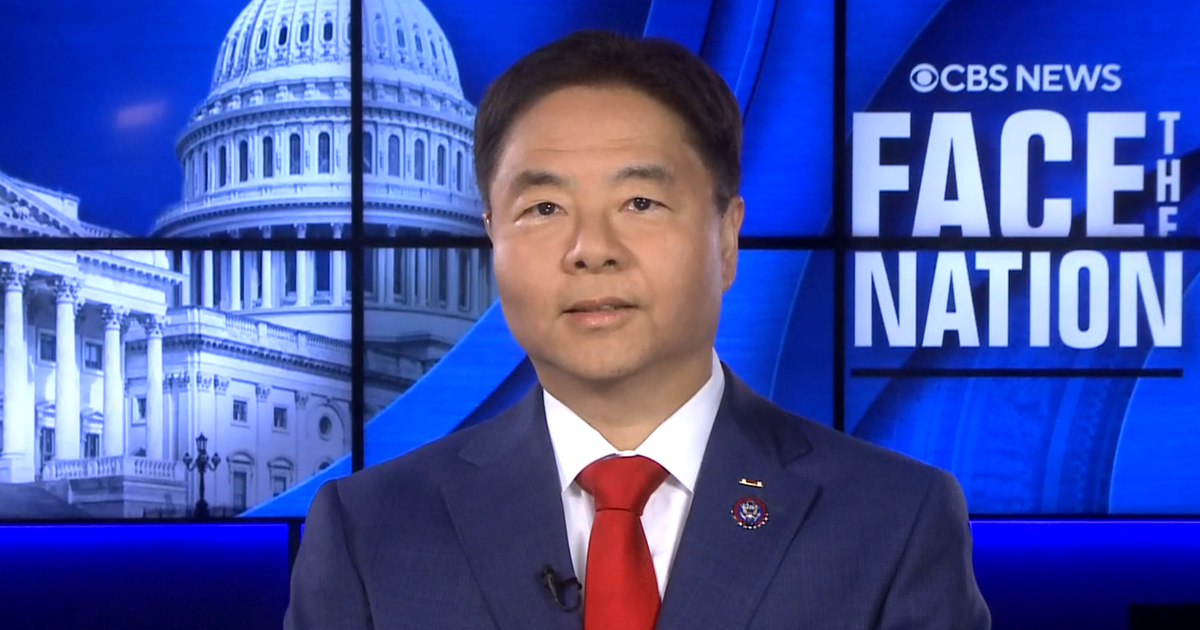

Democratic Congressman Ted Lieu Discusses Midterm Strategy and National Security on Face the Nation
Introduction: Mother’s Day Greetings and Political Optimism
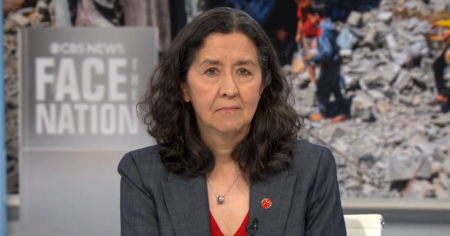
On a Mother’s Day Sunday morning, California Representative Ted Lieu appeared on “Face the Nation” from Los Angeles, bringing a message of determination and optimism for his party’s future. As vice chair of the Democratic Caucus and a member of the House Foreign Affairs Committee, Lieu represents an important voice within Democratic leadership. Before diving into the political challenges facing his party, he took a moment to acknowledge the day, extending warm Mother’s Day wishes to all the mothers across America. This personal touch set the tone for an interview that would cover everything from redistricting battles to international security concerns, all while Lieu maintained his party’s fighting spirit despite recent setbacks. His appearance came at a critical moment as Democrats prepare for upcoming midterm elections, facing both opportunities and obstacles in their quest to regain control of the House of Representatives.
Redistricting Battles and the Path to Victory
When host Margaret Brennan pressed Congressman Lieu about the Republican advantage in redistricting following recent court decisions, particularly in Virginia, the congressman offered a counter-narrative that challenges conventional wisdom. Rather than accepting the reported nine-seat Republican advantage based on previous electoral data, Lieu argued that the political landscape has fundamentally shifted. He pointed to what he described as the complete collapse of the Trump coalition, citing skyrocketing gas prices and surging inflation as key factors eroding Republican support. Drawing on recent polling data and results from special elections held over the past year, Lieu suggested that the actual Republican advantage might be closer to three to five seats rather than nine. This narrower gap, he argued, would not be sufficient to prevent what he confidently predicted would be a “Democratic blue wave” in the November midterms. His message was clear: when faced with setbacks, the proper response is to fight harder rather than accept defeat.
The Virginia redistricting case particularly animated the congressman, who called the state Supreme Court’s decision not only wrong but “disgraceful.” Democrats had invested more than $60 million in Virginia’s redistricting effort, only to see the court invalidate an election after allowing it to proceed. Lieu’s frustration was evident as he explained how the court essentially told Virginia voters that their participation and the taxpayer money spent on the election didn’t matter because the results wouldn’t count. He argued that if the court intended to overturn the process, it should have stopped the election before it happened rather than allowing citizens and the state to invest time, energy, and resources into what became a meaningless exercise. When questioned whether those $60 million could have been better spent on frontline candidates and issue campaigns, Lieu defended the expenditure, noting that most of the money came from so-called 501(c)(4) organizations rather than direct campaign funds needed for midterm races. Despite the setback, Democrats plan to explore all available options to continue fighting, and Lieu expressed confidence that his party would win at least two of the four contested Virginia seats in the upcoming midterms.
Economic Message: Inflation, Healthcare, and Broken Promises
Representative Lieu laid out what he sees as the Democratic Party’s winning message for the midterms, centering on economic pain felt by American families. He argued that voters chose Donald Trump because they wanted lower costs, but instead, the former and current president had “lied to them.” The result, according to Lieu, has been exactly the opposite of what was promised: surging inflation, skyrocketing gas prices, and tariffs that have raised costs across numerous products throughout the country. In his view, ordinary Americans are drowning in debt and bills, creating an opening for Democrats to present themselves as the party that will genuinely address cost-of-living concerns. The Democratic agenda, as Lieu outlined it, focuses on reducing healthcare costs, lowering expenses across the board, and cutting energy costs for struggling families.
However, Brennan challenged this narrative by pointing to recent Democratic failures on healthcare policy. She noted that Democrats had shut down the government to fight over healthcare issues but emerged without any policy concessions, and premiums actually increased during that time. In response to this pointed question about losing that particular fight, Lieu pivoted to legislative accomplishments, highlighting that the House had passed an extension of Affordable Care Act tax credits for three years under Democratic control. He urged the Senate to follow suit and promised that once Democrats regain full control of Congress, they would reverse what he characterized as massive cuts to Medicaid, Medicare, and the ACA that Trump and Republicans implemented. This exchange highlighted the tension between Democratic aspirations and recent political realities, with Lieu trying to shift focus from past setbacks to future promises while maintaining that his party’s economic message would resonate with voters tired of unfulfilled Republican promises about prosperity.
Taiwan, China, and the Complexities of Indo-Pacific Strategy
As a member of the House Foreign Affairs Committee, Congressman Lieu addressed pressing international security concerns, particularly regarding Taiwan and the upcoming summit between President Trump and Chinese leader Xi Jinping. Secretary of State Marco Rubio had indicated that Taiwan would likely be discussed during Trump’s visit to China, making the meeting highly consequential for regional stability. Taiwan’s Parliament had just approved $25 billion to purchase American weapons, prompting questions about Democratic support for the Trump administration’s approach to strengthening Taiwan’s defenses. Lieu’s response emphasized continuity in American policy across both Democratic and Republican administrations, noting that the longstanding strategy has been to preserve the current status quo and prevent China from taking any reckless actions in the Indo-Pacific region, particularly military conflict.
However, Lieu quickly pivoted to what he sees as a more fundamental problem with American defense strategy, using recent experience in what he referred to as the “Iran war” to illustrate his concerns. According to the congressman, this conflict revealed that the United States would run out of defensive munitions in any prolonged conflict with major powers like China or Russia. Even more troubling, he noted, America began depleting its defensive munitions stockpiles in a war that lasted less than 60 days against what he characterized as a “second-rate military” like Iran. Iranian forces managed to strike multiple U.S. bases during this conflict, leading Lieu to conclude that in any overseas conflict with Russia or China, American overseas bases would be “obliterated.” When Brennan pressed him on whether this meant America couldn’t actually deliver on President Trump’s record-large promises of arms sales to Taiwan due to depleted stockpiles and insufficient industrial capacity, Lieu confirmed exactly that. He explained that the United States simply doesn’t have enough defensive munitions to sustain a prolonged conflict with Russia or China, pointing out that production of certain critical missiles is limited to just 96 units per year—nowhere near sufficient for extended combat operations. His call for the Pentagon to deliver a completely new defense strategy to Congress underscored the seriousness of these concerns.
Technology, AI Regulation, and Government Oversight
The interview briefly touched on artificial intelligence regulation before technical difficulties interrupted the discussion. Brennan mentioned a New York Times report indicating that President Trump was considering an executive order implementing government oversight over new AI models, noting that Congressman Lieu had legislation on the subject. Identifying himself as a “recovering computer science major,” Lieu expressed strong views about the need for reasonable guardrails on the AI industry. He stated emphatically that allowing the AI industry to “run wild” would be horrible, making clear his belief that some form of government regulation is necessary to ensure these powerful technologies develop responsibly. This position places him in agreement with the Trump administration on at least this particular issue, suggesting that AI regulation might be one area where bipartisan cooperation could emerge. Unfortunately, audio issues prevented a fuller exploration of Lieu’s specific legislative proposals or how he envisions balancing innovation with safety concerns in the rapidly evolving field of artificial intelligence.
Conclusion: A Fighter’s Mentality Facing Uncertain Times
Throughout the interview, Representative Ted Lieu projected an image of determined resilience in the face of setbacks. Whether discussing disappointing court decisions on redistricting, defending past strategic choices, or outlining his party’s path forward, his consistent message was one of getting back up and fighting after being knocked down. His confidence about Democratic prospects in the midterms stands in contrast to the obstacles his party faces, including redistricting disadvantages and questions about the effectiveness of their recent policy fights. On economic issues, he attempts to turn Republican vulnerabilities on inflation and costs into Democratic opportunities, though he must navigate his own party’s recent failures to deliver concrete policy wins on healthcare. His foreign policy commentary revealed serious concerns about American military preparedness that transcend partisan divisions, suggesting that whoever controls Congress after the midterms will need to address fundamental questions about defense strategy and industrial capacity. As Democrats prepare for crucial midterm elections, Lieu represents a leadership determined to remain optimistic and aggressive, refusing to accept defeat while acknowledging the real challenges ahead in both domestic politics and international security.