
Supreme Court Voting Rights Decision Sparks Heated Democracy Debate
A Landmark Ruling That Reshapes Voting Rights Protections
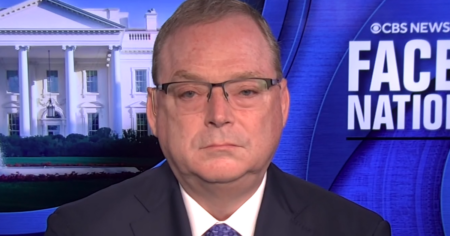
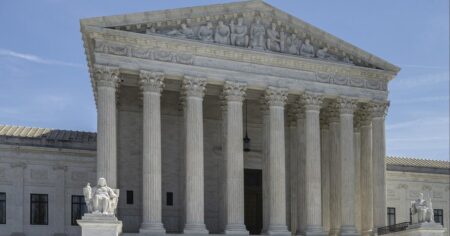
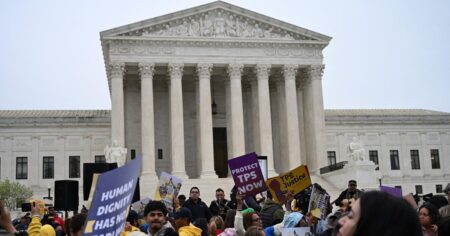
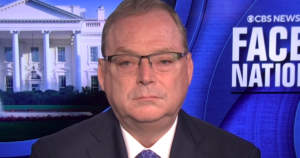
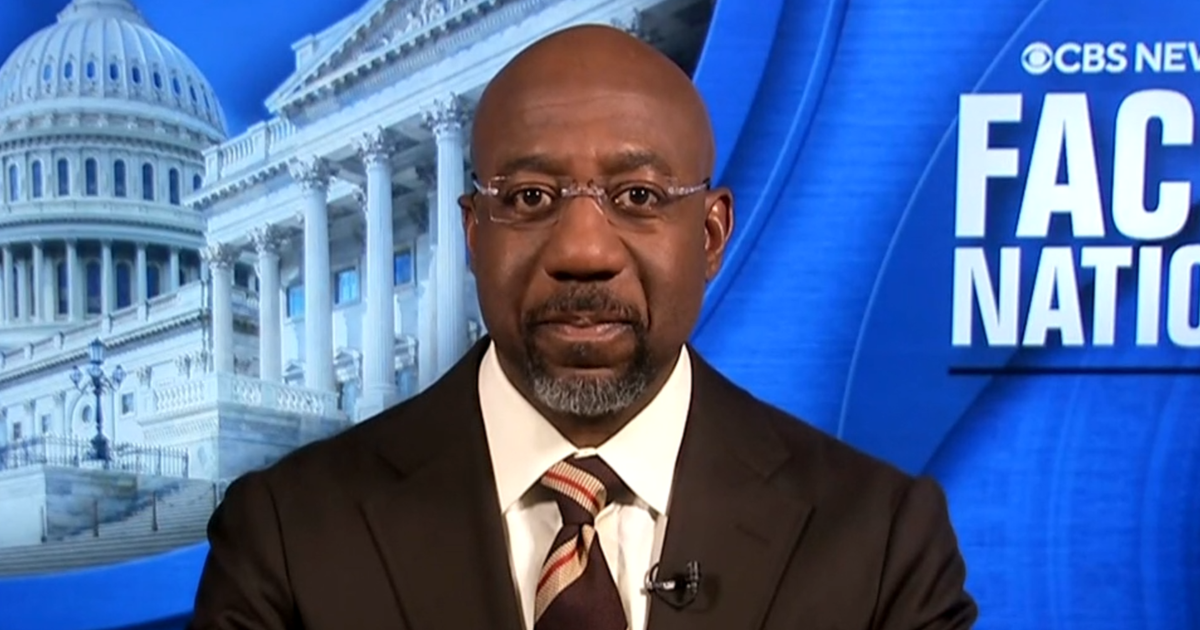
In a consequential 6-3 decision last week, the Supreme Court struck down a Louisiana congressional map that had been specifically drawn to create a second majority-Black district, sending shockwaves through civil rights communities across the nation. The conservative majority framed their ruling as an “update” to the legal framework surrounding voting rights, but the three liberal justices who dissented painted a far more alarming picture, warning that the decision would effectively “eviscerate” a critical section of the historic 1965 Voting Rights Act. Senator Raphael Warnock of Georgia, appearing on “Face the Nation,” didn’t mince words about what this means for American democracy, calling it “nothing less than a massive and devastating blow, not only to our democracy, but particularly to people of color in the South.” The decision fundamentally changes how discrimination cases can be brought forward, requiring proof of intentional racial discrimination in gerrymandering rather than simply demonstrating discriminatory effects. This higher bar for legal challenges has civil rights advocates deeply concerned about the future of fair representation, while conservative legal scholars argue it properly interprets the law’s original intent.
The Historical Context and Ongoing Struggle for Voting Rights
Senator Warnock didn’t hesitate to place this decision within America’s troubled history of voting rights, reminding viewers that even after the 15th Amendment theoretically gave Black Americans the right to vote, a full century passed before that right could be meaningfully exercised. His passionate response highlighted how supposedly “race-neutral” methods were systematically used to deny voting rights for generations. The senator pointed to the Supreme Court’s 2013 Shelby v. Holder decision, which weakened Section 5 of the Voting Rights Act, as a turning point that began dismantling crucial protections. Since that ruling, Warnock explained, the racial turnout gap has actually widened rather than narrowed, growing twice as fast in states that were previously required to get federal approval before changing voting rules. He rejected what he called the misleading framing around “intent,” arguing that focusing on proving intentional discrimination ignores the lived reality of how voting barriers actually function in practice. “I know that there are those who are tired of the remedy. I’m tired of racism,” Warnock declared, adding that “I think it’s a strange position to be more concerned about the medicine than you are about the malady.”
Modern Voter Suppression Tactics in a New Era
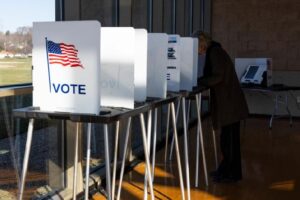
The senator painted a vivid picture of what he termed “21st Century Jim Crow tactics in new clothes,” describing concrete ways that voting has become more difficult for Black and Brown communities since the 2013 weakening of voting protections. According to Warnock, states that previously faced federal oversight have implemented various obstacles including moving polling locations, closing voting sites in predominantly minority communities, and purging voter rolls without adequate notice to affected citizens. He cited data showing that Black and Brown voters spend significantly longer waiting in lines to vote compared to white voters, and that voter roll purges disproportionately impact communities of color, with people literally showing up to vote only to discover their names have been removed from registration lists. The latest Supreme Court decision, in Warnock’s view, adds yet another barrier by essentially giving politicians a “green light” to manipulate district boundaries, meaning that even when voters overcome all the other obstacles to cast their ballots, their voices can still be “muted” through gerrymandering. The cumulative effect of these various tactics, he argues, creates a systematic weakening of minority voting power that doesn’t require explicitly racist language or openly discriminatory intent to be devastatingly effective.
The Gerrymandering Arms Race and Congressional Solutions
When pressed about the current partisan redistricting battle, Senator Warnock found himself defending a practice he openly admits to hating: partisan gerrymandering carried out by his own Democratic Party. His defense rested on the argument that Democrats “could not unilaterally disarm” in the face of aggressive Republican redistricting efforts, which he traced back to former President Donald Trump, who he claimed literally called Texas and demanded “give me six more seats.” This forced Democratic-controlled states like California and Virginia to respond in kind, creating what Warnock characterized as an unfortunate but necessary strategic response. However, the senator was quick to pivot to his proposed solution: a bill that would ban partisan gerrymandering entirely, turning the system on its head so that “rather than the people picking their politicians, the politicians are picking their voters.” So far, Warnock noted, he has had “no Republican takers” for this legislation. The exchange highlighted one of the most difficult aspects of the current redistricting debate—both parties engage in gerrymandering when they have the opportunity, yet both claim to oppose it in principle, creating a prisoner’s dilemma where neither side wants to give up the practice unless assured the other side will as well.
Black Representation and the Merit Debate
The interview took a fascinating turn when addressing competing visions of Black representation in Congress, particularly through the lens of comments from Black Republican congressmen. Congressman Wesley Hunt of Texas argued that he represents a white-majority district and won by a significant margin, declaring “I’m being judged not by the color of my skin, but by the content of my character. I don’t care how many Black people are here. I want the most qualified people that are here.” Congressman Byron Donalds of Florida went further, claiming that “Democrats do not care about Black representation. They only care about Democrat representation.” Senator Warnock pushed back forcefully against these arguments, saying Hunt “doesn’t understand American history” and that invoking Dr. Martin Luther King’s words while dismissing the importance of representation fundamentally misunderstands King’s legacy. Warnock emphasized that King was the “moral power behind the Voting Rights Act of 1965” precisely because he understood that representation matters deeply in a democracy. Using his own experience as an example, Warnock explained that when he goes to the Senate each week, he brings “my story and my experience as a Black kid who grew up in public housing in Savannah,” just as his colleagues bring their own experiences, and that this diversity of perspective is essential to crafting policies that “embrace all of our children and give every child a chance.”
Looking Ahead: Immediate Consequences and Political Responses
The immediate aftermath of the Supreme Court’s decision is already unfolding across the South, with governors in Louisiana, Alabama, South Carolina, and Tennessee all indicating interest in redrawing their congressional maps in light of the new legal framework. This rapid response suggests that the decision’s impact will be felt quickly and broadly, potentially reshaping congressional representation across multiple states before the next election cycle. Senator Warnock sees this as the predictable consequence of the Court essentially pouring “fuel on this redistricting arms race,” and he continues to push his legislation as the solution that could “end this right now.” The debate encapsulates the fundamental tension in American democracy between colorblind ideals and the practical realities of persistent racial disparities in political power and representation. While some argue that focusing on race in drawing districts perpetuates division and that merit alone should determine representation, others contend that without intentional protections, minority voices will continue to be systematically diluted through various legal and procedural mechanisms. As states begin the process of redrawing congressional boundaries, this Supreme Court decision will likely shape American politics for years to come, determining not just which party controls Congress but also whose voices and experiences are represented in the halls of power.