

Voices from Inside Iran’s Evin Prison: A Call to Remember America’s Detained Citizens
The Ongoing Crisis of American Detainees
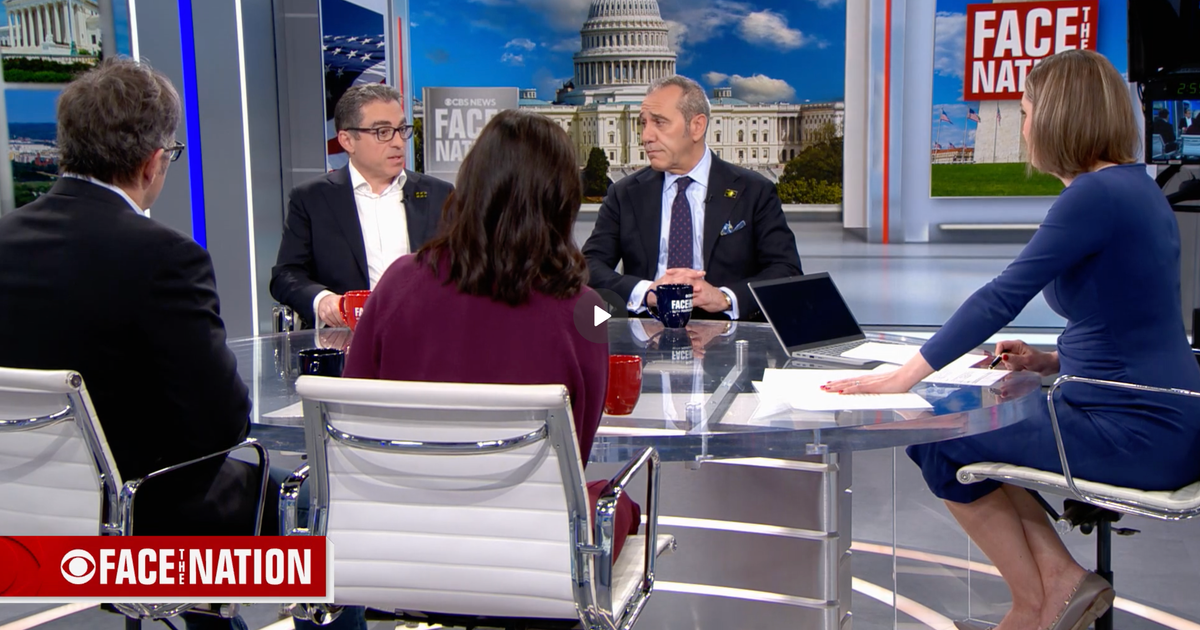
At least four Americans remain wrongfully detained in Iran’s notorious Evin Prison, caught between an increasingly volatile regional conflict and a regime that has long used foreign nationals as bargaining chips. Reza Valizadeh, a journalist accused of collaborating with a “hostile government,” and Kamran Hekmati, a 61-year-old American sentenced on charges including visiting Israel, are among those whose names have been made public. However, former detainees and advocates believe the actual number may be closer to six or more, with some families choosing to keep their cases private out of fear or strategic considerations. This panel discussion on “Face the Nation” brought together two men who survived years inside Evin Prison—Siamak Namazi and Emad Shargi—along with Neda Sharghi, Emad’s sister and tireless advocate, and Roger Carstens, former U.S. Special Envoy for Hostage Affairs. Together, they painted a sobering picture of what these Americans face and why their plight demands immediate attention despite the competing crises dominating headlines.
Life Inside Evin Prison During Wartime
Both Namazi and Shargi described Evin Prison as an amplifier for external tensions, where even small disturbances in Iranian society create massive waves of instability behind bars. Shargi recalled being imprisoned during the 2022 Mahsa Amini protests, when conditions deteriorated rapidly from bad to worse. The threat comes from multiple directions—not just from the regime captors, but potentially from other inmates who might target Americans in retaliation for military strikes against Iran. Namazi, who holds the unfortunate distinction of being the longest-held American prisoner released from Iran after eight years of detention, emphasized that this represents perhaps the most dangerous period imaginable for foreign detainees. They’re caught between a cruel regime using them as pawns in hostage diplomacy and a military conflict they cannot control or escape. When Israel bombed Evin Prison during a previous 12-day conflict, dropping approximately seven bombs around noon, it became painfully clear that explosives don’t distinguish between inmates and guards. The current war raises similar fears, with Iran’s foreign minister offering only the conditional assurance that American prisoners remain safe “as long as the U.S. and Israel do not attack their prisons”—hardly a comforting guarantee for those trapped inside.
The Power of Public Attention
Perhaps the most poignant theme throughout the discussion was the psychological importance of public awareness for those imprisoned. Shargi spoke movingly about what it means to detainees when people back home—whether at the State Department or in the media—talk about their cases. Knowing that your situation matters to people in your own country provides hope, makes it easier to go to sleep at night, and helps you wake up a little lighter, believing there’s a light at the end of the tunnel. The alternative—being forgotten—represents a horrible feeling of being lost in the universe. Namazi echoed this sentiment with particular force, noting that for any hostage or wrongfully detained citizen abroad, the biggest fear is being forgotten. In a surreal moment, he recalled that about three years earlier, someone had smuggled a cell phone into the prison, allowing him to watch this very program featuring Emad’s wife and daughters advocating for his release. He remembered telling Emad how proud he was of his girls for becoming so effective at advocacy, even while being sorry that such circumstances forced them to develop these skills. Beyond providing hope to those imprisoned, public attention serves a crucial function for policymakers who face countless competing priorities. With so much happening in Iran and the broader region, even presidents who genuinely want to bring Americans home may simply be unaware of specific cases or the urgency of the situation.
The Designation Process and Why Names Matter
Neda Sharghi explained the critical importance of formal designation by the U.S. government, which publicly recognizes individuals as being detained solely for holding an American passport. This designation provides carte blanche for the government to use all available resources to secure their release. However, she noted with concern that journalist Reza Valizadeh hasn’t received the same level of public attention as other detained journalists like Evan Gershkovich. Similarly, she emphasized that Kamran Hekmati, an American Jew, deserves the same attention given to hostages held in Gaza during that crisis. Her advocacy philosophy centers on a simple principle: “Freedom starts with a name.” Until senior officials—particularly the President—actually speak the names of detained Americans, those individuals remain abstract concepts rather than real people requiring immediate action. She urged families not to be afraid of going public, despite diplomatic concerns that publicity might increase the “price” on an American’s head. Instead, she encouraged them to engage with media, hold senior leaders accountable, and ensure the American public knows their stories and names. Officials have thick skin, she noted, and if their own family members were detained in Iran, they would do exactly the same thing.
Diplomatic Complexity and Historical Context
Roger Carstens provided insider perspective on the intricate diplomatic calculations involved in hostage negotiations. He pointed out that the controversial prisoner exchange during the Biden administration—which involved releasing Iranians who had gone through the U.S. court system and unfreezing about $6 billion in Iranian funds—was actually more nuanced than public criticism suggested. The money was transferred from South Korea to Qatar for humanitarian purposes, and Iran never touched a single dollar of it. The challenge now is that available options have shifted. Iran faces unprecedented military, political, and economic pressure, with military objectives naturally taking center stage. Carstens expressed hope that if President Trump lists four war objectives, a fifth might be getting Americans out and possibly freeing other foreign nationals held in Evin Prison—a group he estimated at just under twenty people from various countries. Significantly, Secretary of State Rubio designated Iran as a state sponsor of hostage diplomacy just days before the current conflict began—the first time such a designation had been used. This timing suggested the administration wanted to signal that this issue remains important even while pursuing military objectives. The delicate balance involves maintaining some connection between nuclear talks and prisoner negotiations while not linking them so tightly that failure in one area automatically dooms the other. In the Iranian regime’s view, these issues are more closely connected than American negotiators prefer, creating constant tension in diplomatic strategy.
A Prison Full of Iran’s Bravest Voices
When asked about who else occupies Evin Prison, both Namazi and Shargi painted a picture of an institution that serves as much more than a simple criminal detention facility. It functions as a dumping ground for anyone the regime wants out of the way, creating an unlikely community that spans the entire spectrum of Iranian society. Because Iran operates as a highly corrupt, mafia-like system, the prison houses everyone from very senior government officials who lost internal power struggles to members of ISIS, with everything in between. Namazi described meeting prominent opposition figures, former reformists turned “transitionalists,” human rights lawyers, and activists from labor unions and teachers’ movements—people whose courage left him in awe of what true bravery means. Shargi spent time with young people who had taken to the streets during the Mahsa Amini protests and earlier fuel price uprisings. Remarkably, Namazi noted that inside the prison, people from dramatically different political perspectives—monarchists, members of the MEK opposition group, reformists—spoke respectfully to each other, unlike the fractious Iranian diaspora opposition. He particularly emphasized the courage of women prisoners, held in a separate ward but clearly visible in their resistance. The women, facing even more restrictions than male prisoners, demonstrated such extraordinary bravery that they “shamed all the men,” in Namazi’s words. These prisoners continue speaking out even within their confinement, issuing statements and getting published in newspapers, showing how the regime fails to crush dissent even within its most controlled spaces. This reality makes Evin Prison not just a place of suffering but a powerful symbol of both the regime’s repressive control and its ultimate inability to silence those who stand for freedom and justice.