


U.S. Ambassador Mike Waltz Discusses Escalating Iran Crisis on Face the Nation
The Strait of Hormuz Standoff and International Response
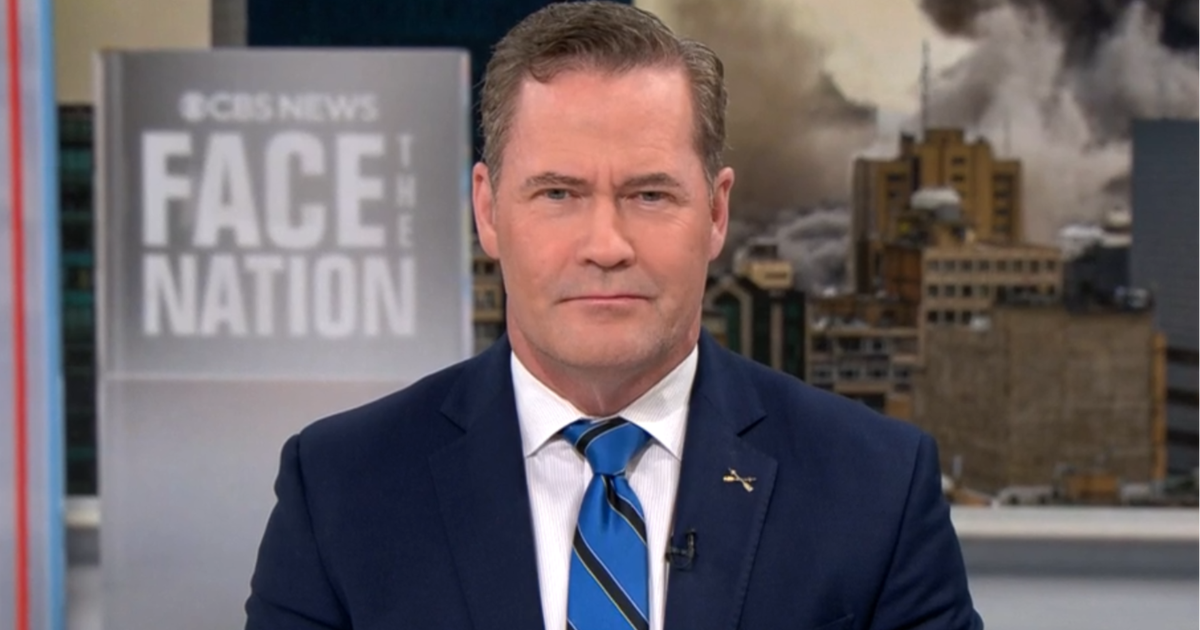
In a tense interview that aired on Face the Nation, U.S. Ambassador to the United Nations Mike Waltz addressed the rapidly escalating situation with Iran, attempting to clarify what many see as contradictory messaging from the White House. The crisis centers on Iran’s actions in the Strait of Hormuz, a critical maritime chokepoint through which much of the world’s energy supplies flow. President Trump has issued conflicting statements—first declaring that other nations should police the strait because “The United States does not,” then issuing a 48-hour ultimatum threatening to “hit and obliterate” Iranian power plants if the waterway isn’t reopened. When pressed by host Margaret Brennan on which approach the administration would actually take, Ambassador Waltz insisted both strategies could work together, noting that allies including Italy, Germany, France, and Japan have committed to helping with the effort, though most have specified their support would come only after active combat operations end. Waltz emphasized that 80% of the Gulf’s energy exports go to Asia, while much of the remainder flows to Europe, making this an international crisis that should involve burden-sharing among allies. He defended the president’s aggressive stance by pointing to five decades of Iranian threats to hold global energy supplies hostage, arguing that the United States cannot allow this regime to continue such behavior.
The Threat of Nuclear Proliferation and Targeting Civilian Infrastructure
Ambassador Waltz painted a dire picture of potential nuclear proliferation in the Middle East if Iran isn’t stopped now. He argued that if Iran developed nuclear weapons, it would trigger a domino effect with Saudi Arabia, the UAE, Turkey, and other regional powers pursuing their own nuclear programs—a scenario he described as something that “should petrify every American.” This justification for military action became more complicated when the conversation turned to specific targets. When Brennan asked whether the president would bomb Iran’s Bushehr nuclear power plant—a civilian facility—Waltz wouldn’t rule anything out, though he clarified that larger gas-fired thermal plants near Tehran and other cities would likely be prioritized. The ambassador’s refusal to take any option “off the table” raised immediate concerns about potential war crimes, especially since the UN Secretary General had warned that attacks on energy infrastructure could constitute such violations. Waltz defended the targeting strategy by pointing to Iran’s Islamic Revolutionary Guard Corps (IRGC), designated as a terrorist organization by the United States and several European countries, which he said controls vast portions of Iran’s critical infrastructure, economy, and governing institutions. He argued that when a regime embeds military capabilities within civilian infrastructure—hiding weapons under schools and hospitals, using power plants for both military and civilian purposes—those sites become legitimate military targets under international law.
Concerns About Civilian Casualties and War Crime Accusations
The exchange grew more heated when Brennan pressed the ambassador on how the United States would ensure its actions don’t constitute mass punishment of innocent Iranian civilians. She specifically raised concerns about water desalination plants being connected to the energy infrastructure that might be targeted, potentially leaving millions without access to clean water. Waltz attempted to deflect by pointing to the Iranian regime’s own human rights abuses, noting that it has massacred between 20,000 and 30,000 of its own citizens and attacked civilian infrastructure in neighboring countries. However, Brennan pushed back that while no one endorses the regime’s behavior, that doesn’t answer how American strikes would avoid harming ordinary Iranians. The ambassador insisted that the president, the Pentagon, and their teams would ensure targeting focuses on military infrastructure, but acknowledged the challenge presented by Iran’s deliberate strategy of blending military and civilian facilities. He argued this blending itself violates international law, essentially claiming that Iran’s tactics make it impossible to strike military targets without some civilian impact. This circular reasoning—that because Iran allegedly violates international law by mixing civilian and military infrastructure, the U.S. is justified in striking sites that may harm civilians—did little to address the fundamental ethical and legal questions about the proposed military action and its potential consequences for innocent people caught in the crossfire.
Conflicting Intelligence Assessments on Iran’s Missile Capabilities
A significant portion of the interview focused on recent missile attacks and disputed intelligence assessments about Iran’s ballistic missile capabilities. Just last week, the U.S. Director of National Intelligence had testified to Congress that Iran could not develop a militarily viable intercontinental ballistic missile (ICBM) before 2035. However, overnight attacks changed the conversation dramatically when Israel’s defense forces claimed that Iran had fired an ICBM at both Israeli territory and the U.S. military installation at Diego Garcia in the Indian Ocean. Ambassador Waltz said he wasn’t familiar with the Israeli assessment but confirmed that the United Kingdom had condemned Iran for firing an intermediate-range ballistic missile at Diego Garcia—a weapon that Iran had previously denied developing. He emphasized that this type of missile could reach not just Diego Garcia but also European capitals, significantly expanding the threat Iran poses beyond its immediate region. Waltz went further, suggesting that Iran’s space program has been a cover for developing the booster technology necessary for ICBMs, and that marrying this technology with re-entry vehicle capabilities wouldn’t require much additional development. His comments suggested that U.S. intelligence may have underestimated how quickly Iran could develop long-range strike capabilities, or that recent events have forced a reassessment of the timeline. This discrepancy between last week’s congressional testimony and current events highlighted the fog of war and the challenges of making policy based on intelligence that may be incomplete or rapidly changing.
Domestic Political Support and Public Opinion Challenges
Perhaps the most uncomfortable moment for Ambassador Waltz came when Brennan confronted him with polling data showing that the American public remains unconvinced about the necessity of military action against Iran. The numbers painted a troubling picture for the administration: 66% of Americans believe the conflict is a war of choice rather than necessity, 60% disapprove of U.S. military action against Iran, and 57% think the conflict is going badly. When asked how he would tell the American people they’re wrong, Waltz pivoted to more favorable polling among the president’s base, citing 100% approval from self-described MAGA Republicans and 90% support among Republicans broadly for destroying Iran’s nuclear capabilities. He reminded viewers that President Trump has consistently said since his 2016 campaign that Iran cannot have nuclear weapons, mentioning it 74 times publicly since 2024 alone, so no one should be surprised by his actions. However, Brennan pressed the crucial question: if the president is considering committing ground troops, doesn’t he need to persuade a majority of all Americans, not just his political base? Waltz responded that the president would keep all options on the table and, as both a veteran and a parent, was grateful that this administration wasn’t “kicking the can” down the road as previous administrations had done for fifty years. He framed the current action as preventing a catastrophic problem that would leave future leaders with very limited options to address an Iranian nuclear capability or a Middle East awash in nuclear weapons.
The Broader Strategic Implications and Historical Context
Throughout the interview, Ambassador Waltz attempted to place the current crisis within a broader historical and strategic context that would justify the administration’s aggressive approach. He repeatedly referenced Iran’s decades-long pattern of threatening regional stability, attacking civilian infrastructure in neighboring countries, repressing its own population, and pursuing nuclear capabilities in violation of UN sanctions. His argument essentially boiled down to the idea that every previous administration had postponed dealing with Iran’s nuclear ambitions, allowing the problem to grow more dangerous and the available solutions to become more limited and costly. He specifically invoked the example of North Korea under the Clinton administration, which ultimately surprised the world by developing a full nuclear program while diplomatic efforts were ongoing. The implicit message was that decisive military action now, however unpopular or risky, was preferable to facing a nuclear-armed Iran in the future with even fewer options. However, this framing glossed over several important details, including the fact that U.S. officials had testified that Iran wasn’t actively enriching uranium before the current crisis began—a situation Waltz attributed to a previous operation called “Midnight Hammer” that had destroyed their enrichment capability. The ambassador’s refusal to take any military option off the table, combined with the 48-hour ultimatum and threats to strike civilian energy infrastructure, suggested an administration committed to military confrontation regardless of diplomatic alternatives, alliance concerns, international law questions, or domestic public opinion. As the interview concluded, the situation remained precarious, with the clock ticking on the president’s ultimatum and fundamental questions about the wisdom, legality, and strategic consequences of the threatened military action still unresolved.