


Syrian Man Denies Torture Charges in Dutch War Crimes Trial
A High-Stakes Trial Based on Universal Jurisdiction
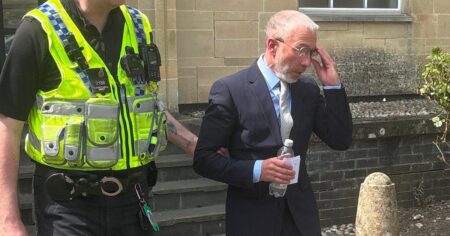
In a courtroom at The Hague’s District Court this Wednesday, a 58-year-old Syrian man stood accused of some of the gravest crimes known to international law: crimes against humanity, including dozens of charges related to torture and sexual violence. The defendant, identified only as Rafiq al Q. due to Dutch privacy laws, vehemently denied all accusations against him in what marks another significant case in the Netherlands’ ongoing efforts to hold Syrian war criminals accountable. His trial represents the continued international commitment to pursuing justice for victims of Syria’s devastating civil war, even as the conflict’s political landscape has dramatically shifted following the recent fall of Bashar Assad’s government.
The case against Rafiq al Q. rests on the legal principle of universal jurisdiction, a powerful tool in international law that allows countries to prosecute individuals for the most serious international crimes—such as war crimes, crimes against humanity, and genocide—regardless of where those crimes were committed or the nationality of the perpetrators or victims. This principle recognizes that certain acts are so heinous that they offend the conscience of humanity as a whole, and therefore any nation has the authority and responsibility to bring perpetrators to justice. The defendant arrived in the Netherlands in 2021, seeking asylum like thousands of other Syrians fleeing the conflict. He had been living quietly in Druten, a small town in the eastern part of the country, when authorities arrested him in 2023, presumably after receiving intelligence or witness testimony linking him to alleged war crimes committed during Syria’s civil war.
The Accusations and the Defendant’s Response
Prosecutors presented a damning case against Rafiq al Q., alleging that he served as a member of the National Defence Force, a pro-Assad paramilitary organization that played a significant role in the Syrian government’s brutal suppression of opposition forces during the civil war. More specifically, authorities claim he functioned as the lead interrogator for this group—a position that would have given him direct involvement in the detention, questioning, and treatment of prisoners during some of the conflict’s darkest periods. The charges against him include numerous counts of torture and sexual violence, crimes that have been extensively documented throughout Syria’s nearly 14-year conflict as systematic tools of oppression used against those suspected of opposing the Assad regime.
The defendant’s response to these serious accusations was one of absolute denial and counteraccusation. Speaking through an interpreter, Rafiq al Q. told the court that he was the victim of a widespread conspiracy. He specifically accused the nine victims whose testimonies form part of the prosecution’s case, along with witnesses and even Dutch police investigators, of fabricating evidence and lying about his alleged crimes. “All of them are conspiring against me,” he declared to the court. He maintained that his actual role in Syria was far more mundane than prosecutors suggest, claiming he worked as a civil servant in Salamiyah, a city in central Syria, and categorically denied any involvement in torture or other abuses. In one particularly unusual moment during the proceedings, the defendant attempted to present evidence to the presiding judge by waving a piece of paper, though even his own lawyer, André Seebregts, admitted he wasn’t clear about what this evidence supposedly contained. When questioned about this, the defendant cryptically responded, “I don’t tell my lawyer everything”—a statement that raised eyebrows in the courtroom and suggested a difficult relationship between the accused and his legal counsel.
The Netherlands’ Commitment to Syrian War Crimes Prosecutions
The trial of Rafiq al Q. is far from an isolated case. The Netherlands has established itself as one of the leading nations in Europe when it comes to prosecuting individuals accused of war crimes and crimes against humanity committed during the Syrian conflict. This commitment reflects both the country’s strong tradition of supporting international justice—The Hague is home to several international courts and tribunals—and the practical reality that many Syrian refugees, including some who may have perpetrated crimes, have sought asylum in European countries. In 2024 alone, a Dutch court successfully convicted a former high-ranking member of a pro-Syrian government militia of illegal detention and complicity in torture, demonstrating that even those in positions of authority cannot escape accountability for their actions. Earlier, in 2021, another Syrian man faced justice in a Dutch courtroom when he was convicted of war crimes for his participation in the summary execution of a prisoner—a conviction that sent a clear message that the Netherlands would pursue justice for Syrian war crimes victims regardless of how much time had passed.
These prosecutions serve multiple important purposes. First and foremost, they provide a measure of justice and acknowledgment for victims who have suffered unimaginable trauma during Syria’s conflict. For many survivors of torture, sexual violence, and other abuses, seeing their perpetrators held accountable in a court of law can be an important step in their healing process, even if it cannot undo the harm they’ve experienced. Second, these trials help establish a historical record of what occurred during the Syrian civil war, preserving evidence and testimony that might otherwise be lost. Third, they serve a deterrent function, sending a message to current and future would-be war criminals that the international community has the will and the means to pursue them, even across borders and years after their alleged crimes. Finally, in the absence of meaningful accountability mechanisms within Syria itself, these international prosecutions represent one of the few avenues available for justice.
Syria’s Conflict: From Peaceful Protests to Civil War and Beyond
To understand the context of the charges against Rafiq al Q., it’s essential to look back at how Syria’s conflict began and evolved. In March 2011, inspired by the Arab Spring movements that had toppled authoritarian governments in Tunisia and Egypt, Syrians took to the streets in peaceful protests demanding democratic reforms and an end to the Assad family’s decades-long authoritarian rule. What started as a hopeful movement for change quickly descended into nightmare as the Assad government responded with brutal force. Security forces fired on peaceful demonstrators, arrested and tortured activists, and employed increasingly violent tactics to suppress dissent. This heavy-handed crackdown radicalized the opposition, and what had begun as peaceful protests morphed into an armed rebellion, then a full-scale civil war that would last nearly 14 years and draw in regional and international powers, creating one of the worst humanitarian catastrophes of the 21st century.
The conflict devastated Syria, killing hundreds of thousands of people, displacing millions both internally and as refugees to neighboring countries and Europe, and leaving the country’s infrastructure and economy in ruins. Throughout the war, all sides committed serious violations of international humanitarian law, though the Assad government and its allies were responsible for the vast majority of civilian casualties and atrocities. Torture, enforced disappearances, chemical weapons attacks, and systematic sexual violence became hallmarks of the government’s approach to crushing opposition. The National Defence Force, the paramilitary organization prosecutors claim Rafiq al Q. worked for, was established in 2012 as a pro-government militia meant to supplement Syria’s regular military forces. These groups operated with considerable impunity and were frequently implicated in serious human rights abuses against civilians in areas they controlled or reconquered from opposition forces.
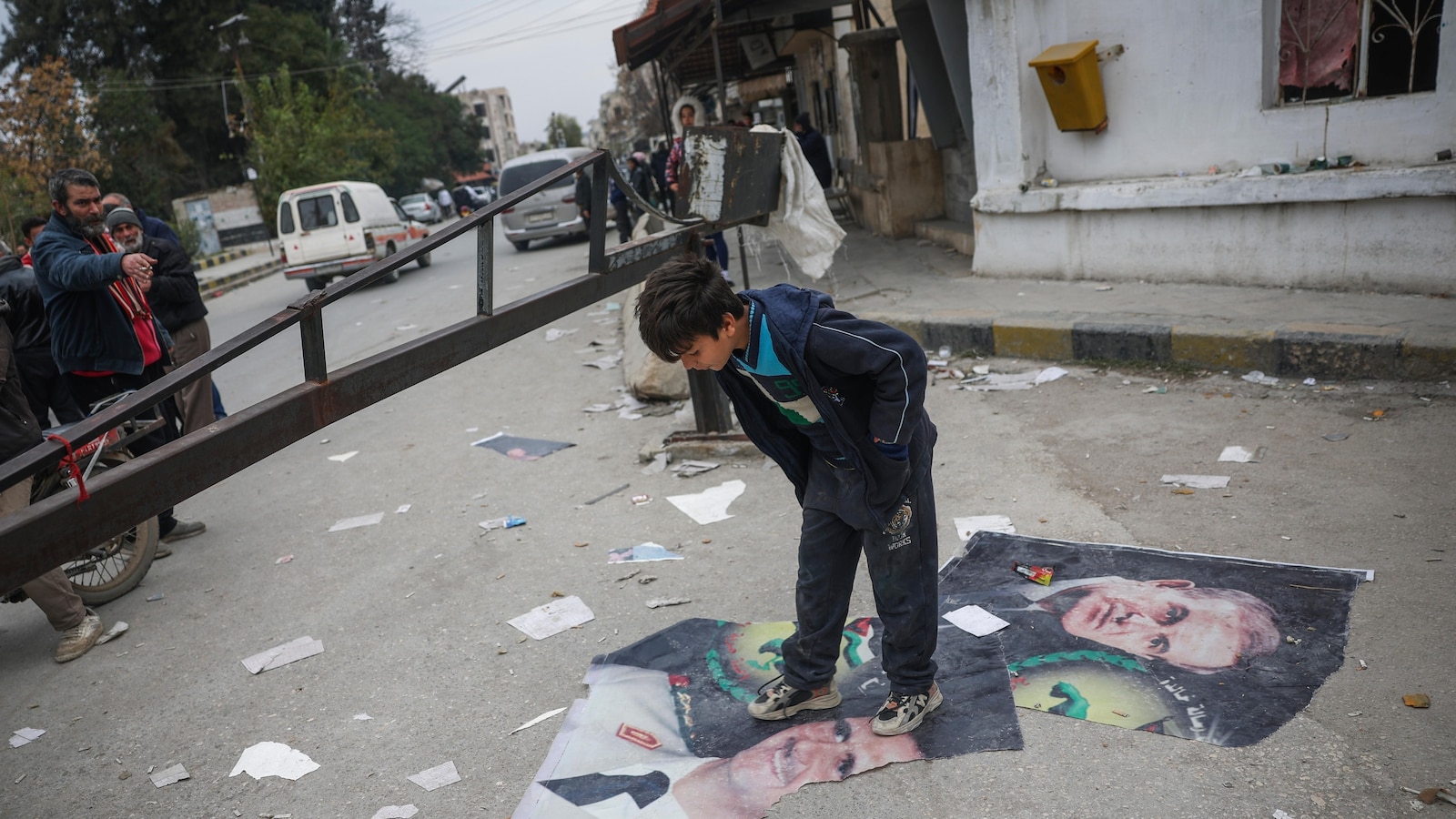
The Syrian political landscape changed dramatically in 2024 when insurgent forces led by Ahmad al-Sharaa’s Hayat Tahrir al-Sham—an Islamist group with roots in al-Qaida’s Syrian branch—launched a surprise offensive that culminated in a march on Damascus and the removal of Bashar Assad from power after more than two decades of rule. In a remarkable political transformation, al-Sharaa, now Syria’s interim president, has worked to improve relations with Western countries and even became the first Syrian head of state to visit Washington since Syria gained independence in 1946. This dramatic political shift has complicated the landscape for war crimes prosecutions, as the new Syrian government grapples with questions of justice, reconciliation, and how to deal with the legacy of decades of authoritarian rule and years of brutal conflict.
Broader International Efforts to Address Syrian War Crimes
The trial of Rafiq al Q. is taking place against the backdrop of broader international efforts to address the systematic torture and other crimes committed during Syria’s conflict. The Netherlands and Canada have jointly brought a case against Syria at the International Court of Justice, the United Nations’ highest judicial body, accusing the Damascus government of conducting a yearslong campaign of systematically torturing its own citizens. This case represents an innovative use of international law, as it seeks to hold a state accountable for violations of the Convention Against Torture. In 2023, the International Court of Justice issued a preliminary ruling ordering the Syrian government to “take all measures within its powers” to prevent torture—a legally significant decision even as the practical enforcement of such an order remained challenging given the ongoing conflict and the Assad government’s isolation from much of the international community. With the recent change in government, the status and implications of this case have become even more complex, as the new Syrian authorities grapple with the legacy of the previous regime’s actions.
These international legal efforts represent important steps toward accountability, but they also highlight the limitations and challenges of pursuing justice for mass atrocities. Syria is not a party to the International Criminal Court, which means that court cannot automatically exercise jurisdiction over crimes committed on Syrian territory. This is why universal jurisdiction, as exercised by countries like the Netherlands, Germany, and France, has become so important—it allows for prosecutions to move forward even without a referral from the UN Security Council (which Russia and China, as Syrian government allies, would likely veto) or Syrian cooperation. However, these cases are resource-intensive, often relying on witness testimony from traumatized individuals, and can only address a tiny fraction of the tens of thousands of alleged perpetrators involved in Syria’s conflict. Nevertheless, each successful prosecution chips away at the impunity that has allowed such crimes to continue and reinforces the principle that those who commit crimes against humanity will eventually be held accountable.
The Path Forward: Awaiting Justice
As the trial of Rafiq al Q. continues in The Hague, the proceedings are expected to last another two weeks, with the court scheduled to issue its verdict on June 9th. During this time, prosecutors will present evidence, witnesses will testify about what they experienced or observed, and the defense will have the opportunity to challenge the prosecution’s case and present alternative explanations for the evidence. For the nine victims whose experiences form the basis of the charges against the defendant, these proceedings represent an opportunity to be heard, to have their suffering acknowledged by an official legal process, and potentially to see someone they believe is responsible for their trauma held accountable. For the defendant, the trial represents a fight for his freedom and reputation, as he maintains his innocence and claims to be the victim of a conspiracy.
The outcome of this trial will have implications beyond the specific case of Rafiq al Q. A conviction would add to the growing body of precedent establishing that perpetrators of Syrian war crimes can be successfully prosecuted under universal jurisdiction, potentially encouraging other countries to pursue similar cases and deterring future atrocities. It would also provide some measure of justice and closure for victims and their families. An acquittal, on the other hand, would raise questions about the sufficiency of evidence and the challenges of prosecuting war crimes years after they were allegedly committed, in a different country, with witnesses who may have been traumatized and whose memories may have faded or been influenced by time and circumstance. Regardless of the outcome, the trial itself represents an important statement that the international community has not forgotten Syria’s victims and remains committed to pursuing justice, even as attention has shifted to other global crises. As the world watches these proceedings in The Hague, they serve as a reminder that justice, though often delayed, need not be denied, and that those who commit the worst crimes against humanity may find themselves held to account, no matter how far they flee or how much time passes.