


President Trump Honors Civil Rights Leader Jesse Jackson After His Death at 84
A Legacy Remembered
The nation mourned this week as Reverend Jesse Jackson, one of America’s most influential civil rights leaders, passed away peacefully at the age of 84. President Trump took to Truth Social on Tuesday to share his condolences and reflect on his decades-long relationship with the renowned activist. In his statement, the president described Jackson as “a force of nature like few others before him,” emphasizing the profound impact the reverend had on American society and those who knew him personally. Jackson’s family confirmed that he died peacefully Tuesday morning after being hospitalized in November for observation related to a neurodegenerative condition diagnosed last year. The loss of this towering figure in civil rights history prompted reflection not only on his monumental achievements but also on the unexpected relationships he built across political divides throughout his remarkable life.
A Personal Connection Spanning Decades
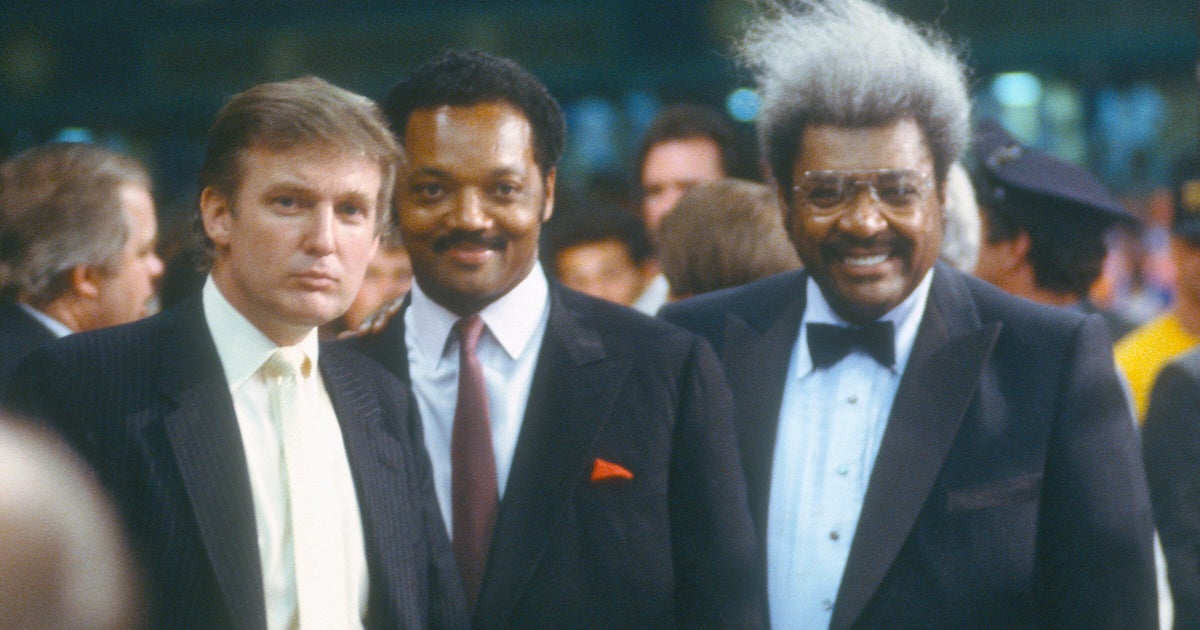
President Trump’s tribute revealed a personal relationship with Jackson that extended far beyond political calculations, reaching back years before Trump entered the political arena. The president reminisced about knowing Jackson long before his presidency began, describing him as “a good man, with lots of personality, grit, and ‘street smarts.'” Trump painted a picture of Jackson as genuinely warm and personable, someone who “was very gregarious – Someone who truly loved people!” This characterization highlighted Jackson’s ability to connect with individuals from all walks of life, regardless of their political affiliations or social standings. Their relationship, documented through photographs dating back to 1988 showing the two men together at a boxing match in Atlantic City and at campaign events in New York, demonstrated a bond that transcended the partisan divisions that would later define American politics. Trump’s willingness to provide concrete support to Jackson’s Rainbow PUSH Coalition, the civil rights organization Jackson founded, showed that their connection involved more than just photo opportunities and pleasantries.
Support for the Rainbow PUSH Coalition
One of the most tangible expressions of Trump’s relationship with Jackson came in 1997 when Trump announced he would donate office space to the Rainbow PUSH Coalition’s Wall Street Project. This wasn’t just any office space—it was located in The Trump Building at 40 Wall Street, a prestigious Manhattan address that Trump was renovating at the time. The New York Times reported on this arrangement, which Jackson himself acknowledged as significant, stating it was “to make a statement about our having a presence there.” For Jackson, having the Rainbow PUSH Coalition’s Wall Street Project in such a prominent financial district location represented more than just free rent; it symbolized legitimacy and access to the corridors of economic power that had historically excluded African Americans. This gesture occurred during a time when Trump was primarily known as a real estate developer and businessman rather than a political figure, suggesting that his support for Jackson’s work came from a place of genuine respect rather than political calculation. The arrangement gave Jackson’s organization a physical foothold in America’s financial capital, helping advance his mission of economic empowerment for minority communities.
Mutual Respect and Public Endorsements
The warmth between Trump and Jackson was publicly displayed on multiple occasions, perhaps most memorably during events hosted by Jackson’s Wall Street Project. In January 1998, Jackson introduced Trump at a conference, using humor to praise the real estate mogul in a way that showed their comfortable rapport. Jackson jokingly described Trump as “the most bashful and the most retreating and the most self-effacing” as Trump looked on—a description that anyone familiar with Trump’s larger-than-life personality would recognize as playfully ironic. One year later, in 1999, Jackson again introduced Trump and offered sincere praise for his support of the Wall Street Project, telling attendees, “One can miss his seriousness and his commitment, for his success is beyond argument.” Jackson, who had run for president as a Democrat in both 1984 and 1988, spoke of Trump with genuine admiration, noting that Trump attended a business meeting hosted by his presidential campaign in New York. Jackson explained that Trump “has this sense of the curious and the will … to make things better. Aside from all of his style and his pizzazz, he’s a serious person.” These public endorsements from a prominent Democrat and civil rights leader stand in stark contrast to later political narratives, offering a window into a time when relationships across political lines seemed more possible and perhaps more common.
Defending Against Modern Criticism
In his tribute, President Trump directly addressed what he called false characterizations of his views on race, stating, “Despite the fact that I am falsely and consistently called a Racist by the Scoundrels and Lunatics on the Radical Left, Democrats ALL, it was always my pleasure to help Jesse along the way.” This defense, woven into a statement mourning Jackson’s death, reflects the complex political landscape in which Trump operates and the controversial nature of his relationship with communities of color. To support his point, Trump listed several policies enacted during his administrations that he claimed Jackson supported, including criminal justice reform—likely referring to the First Step Act, which addressed sentencing disparities and prison reform. He also mentioned increased funding for historically Black colleges and universities, a policy initiative Trump frequently highlighted during his time in office. Additionally, he referenced “Opportunity Zones,” tax incentives created through the 2017 tax reform legislation designed to encourage investment in economically disadvantaged areas. While the statement was self-serving in some respects, it also pointed to genuine policy initiatives that had bipartisan support and were aimed at addressing issues Jackson spent his life fighting for, including economic justice and criminal justice reform.
A Complex Legacy of Relationships Across Divides
The death of Jesse Jackson and President Trump’s response to it highlight something increasingly rare in American public life: meaningful relationships that transcend political and ideological boundaries. Jackson’s career was dedicated to fighting racial injustice, economic inequality, and discrimination in all its forms. He marched alongside Dr. Martin Luther King Jr., ran groundbreaking presidential campaigns that expanded political participation among African Americans, and founded organizations that continue working toward equality and justice. That such a figure maintained a decades-long relationship with Donald Trump—a president whose policies and rhetoric have been deeply divisive along racial lines—speaks to Jackson’s complexity as a person and to a time when American politics allowed for more nuanced human connections. Trump’s tribute, ending with the words “Jesse was a force of nature like few others before him” and offering condolences to Jackson’s family, represents at minimum a recognition of Jackson’s importance and at maximum a genuine expression of loss for someone he considered a friend. As America continues to grapple with divisions along racial, political, and economic lines, the relationship between these two men—whatever its limitations and contradictions—offers a reminder that people are often more complex than our political narratives allow them to be. Jackson’s family, receiving condolences from across the political spectrum, can take comfort in knowing that their loved one’s impact reached into unexpected corners of American life, touching people in ways that defied simple categorization. His legacy will undoubtedly be debated and analyzed for generations, but the breadth of those mourning his loss testifies to a life lived with purpose and impact.