


Trump’s NATO Withdrawal Threat: What It Means for America and the World
Understanding NATO and Its Historical Significance
The North Atlantic Treaty Organization, commonly known as NATO, represents one of the most enduring military alliances in modern history. Established in 1949 in the aftermath of World War II’s devastation, NATO was created as a defensive shield to protect the United States, Canada, and European nations from potential aggression during the early Cold War era. What began as a coalition of 12 founding nations has grown substantially over the decades, now encompassing 32 member countries, with Finland joining in 2023 and Sweden in 2024 being the most recent additions. The alliance’s fundamental purpose is straightforward yet profound: to guarantee the freedom and security of all member nations through both political dialogue and military cooperation. At the heart of this commitment lies Article 5, the alliance’s most sacred principle, which declares that an armed attack against one member shall be considered an attack against all members. This collective defense clause has only been invoked once in NATO’s history—following the September 11, 2001, terrorist attacks on the United States. For more than seven decades, NATO has served as a cornerstone of Western security architecture, deterring potential adversaries and fostering stability across the Atlantic region. The alliance has evolved beyond its original Cold War mission, adapting to address modern security challenges including terrorism, cyber warfare, and regional instability.
Trump’s Long-Standing Grievances with NATO
President Trump’s contentious relationship with NATO predates his current term and has been a consistent theme throughout his political career. His primary complaint centers on what he perceives as unfair burden-sharing within the alliance, with the United States shouldering a disproportionate share of defense costs while other member nations fail to meet their financial commitments. During his 2024 campaign for a second term, Trump intensified pressure on NATO allies to substantially increase their defense spending, arguing that the alliance had become a “one-way street” where America provides security guarantees without receiving adequate support in return. He has repeatedly characterized NATO partners as unreliable and has questioned whether the United States receives sufficient value from its membership. This pressure campaign did produce results, with member countries ultimately agreeing to dramatic increases in their defense budgets. However, Trump’s satisfaction with these commitments proved short-lived. The outbreak of conflict with Iran has reignited and intensified his frustrations with the alliance to unprecedented levels. NATO allies have shown considerable reluctance to support American military operations in this conflict, with many member nations denying the United States permission to use their airspace or military airfields. Furthermore, European partners have resisted Trump’s calls to deploy naval vessels to help reopen the strategically vital Strait of Hormuz, a critical waterway for global oil shipments that Iran has threatened to close.
The President’s Escalating Rhetoric and Withdrawal Threats
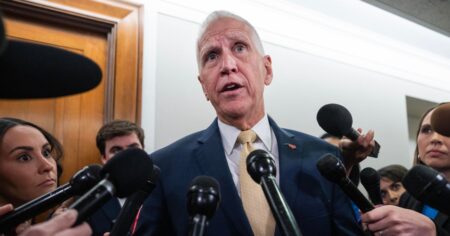
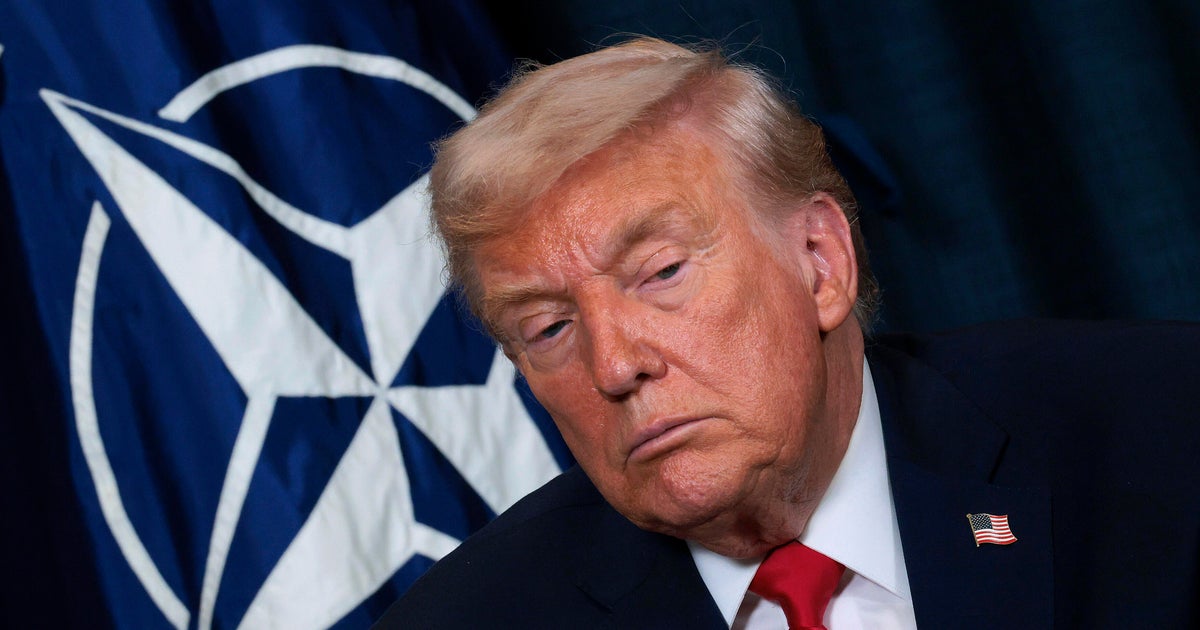
In recent interviews, President Trump has dramatically escalated his rhetoric against NATO, signaling a potential rupture in the transatlantic alliance. Speaking with Britain’s Telegraph newspaper, Trump described the possibility of reconsidering U.S. membership in NATO as going “beyond reconsideration,” and he dismissed the defense alliance that America helped establish as a “paper tiger”—a term suggesting an organization that appears powerful but lacks real strength or effectiveness. In a separate interview with Reuters, the president stated he is “absolutely” considering withdrawing the United States from the alliance. These statements represent the most explicit threat to NATO’s existence since the alliance’s formation. Secretary of State Marco Rubio has echoed the president’s sentiments, telling Fox News that the administration will need to “reexamine whether or not this alliance, that has served this country well for a while, is still serving that purpose, or is it now become a one-way street.” Rubio’s position is particularly noteworthy given his previous strong support for NATO during his time as a senator. He argued that if the United States cannot utilize military bases in Europe during conflicts like the current war with Iran, then the fundamental value proposition of NATO membership requires serious reconsideration. Trump has also indicated his belief that he possesses the authority to withdraw from NATO unilaterally, telling reporters that “I don’t need Congress for that decision” and “I can make that decision myself.” Whether these statements represent genuine intent or tactical pressure designed to extract concessions from reluctant allies remains unclear, but the threat itself has sent shockwaves through diplomatic circles on both sides of the Atlantic.
Legal Barriers to Withdrawal and Congressional Opposition
The question of whether President Trump can actually pull the United States out of NATO without congressional approval is both legally complex and politically contentious. NATO’s founding treaty includes Article 13, which permits any member nation to withdraw from the alliance one year after providing formal notice of its intention to do so. However, Congress anticipated the possibility of a Trump withdrawal attempt and took preventive action in 2023 by passing legislation specifically designed to prevent any president from unilaterally exiting NATO. This provision was included in the National Defense Authorization Act for fiscal year 2024 and was signed into law by then-President Joe Biden. Notably, the legislation was co-sponsored by Democratic Senator Tim Kaine of Virginia and Marco Rubio himself—the same Marco Rubio who now serves as Trump’s Secretary of State and supports reconsidering NATO membership. The law explicitly states that the president cannot “suspend, terminate, denounce, or withdraw the United States from the North Atlantic Treaty” except with the advice and consent of the Senate, requiring a two-thirds majority of senators present, or through an act of Congress. Senate Minority Leader Chuck Schumer has made clear that the Senate “will not vote to leave NATO and abandon our allies just because Trump is upset they wouldn’t go along with his reckless war of choice.” With the Senate Democratic caucus comprising 47 members who would almost certainly oppose withdrawal, along with expected opposition from many Republicans, achieving the necessary two-thirds majority appears virtually impossible. This substantial legal and political barrier represents a significant obstacle to any withdrawal attempt.
Constitutional Ambiguities and Executive Power Claims
Despite the apparent clarity of the 2023 legislation, some legal experts suggest the issue may not be entirely settled. President Trump and his advisors could potentially argue that the law unconstitutionally infringes upon executive authority over foreign policy, citing the president’s constitutional role as commander-in-chief and chief diplomat. Such an approach would assert that Congress exceeded its authority by attempting to restrict the president’s power to make decisions regarding international treaties and alliances. Any attempt by Trump to bypass the congressional prohibition would almost certainly trigger immediate legal challenges, potentially resulting in a protracted court battle that could ultimately reach the Supreme Court. The constitutional questions at stake would involve fundamental issues about the separation of powers and the respective roles of the executive and legislative branches in conducting foreign affairs. Even without a formal withdrawal, Trump’s increasingly hostile stance toward NATO has already begun to weaken the alliance in practical terms. The United States has reduced its participation in joint military exercises, and the administration continues pressuring European nations to assume greater responsibility for their own defense. Perhaps more damaging than any procedural questions are growing concerns among allies about whether the United States would actually honor its Article 5 commitments to collective defense. If member nations cannot trust that America will come to their aid when attacked, the fundamental promise that binds NATO together becomes hollow. Ian Bremmer, president and founder of the Eurasia Group, a political risk consultancy, captured this sentiment by noting that while Trump may not be able to legally withdraw from NATO without Senate consent, if allies “can’t trust” that the United States will honor Article 5, “the alliance is already broken in the way that matters most.”
Implications for Global Security and the Future of Western Alliance
The potential unraveling of NATO carries profound implications that extend far beyond the immediate diplomatic tensions between Washington and European capitals. For more than seven decades, NATO has served as the foundation of Western security, deterring aggression from adversaries and providing a framework for collective defense that has prevented major wars in Europe. A U.S. withdrawal or even a significant weakening of American commitment would create a security vacuum that could embolden adversaries such as Russia and China, potentially destabilizing regions that have enjoyed relative peace under NATO’s protective umbrella. European nations, many of which have allowed their military capabilities to atrophy under the assumption of American protection, would face difficult choices about rapidly increasing defense spending and developing independent military capabilities. The crisis also highlights deeper questions about the future of the post-World War II international order that America helped create and has sustained for generations. If the United States abandons or significantly scales back its role in NATO, it would represent a historic retreat from global leadership and signal a fundamental reorientation of American foreign policy toward isolationism. Allies around the world would be forced to question the reliability of U.S. security guarantees, potentially leading to a cascade of geopolitical realignments. Some nations might seek to develop their own nuclear weapons capabilities rather than relying on the American nuclear umbrella. Others might accommodate themselves to regional powers they previously resisted with American backing. The ultimate resolution of this crisis remains uncertain, but its trajectory will profoundly shape international relations and global security architecture for decades to come, determining whether the Western alliance can adapt and survive or whether Trump’s presidency marks the beginning of its dissolution.