


Trump’s Mixed Messages on the Strait of Hormuz Crisis
A Critical Waterway Under Threat
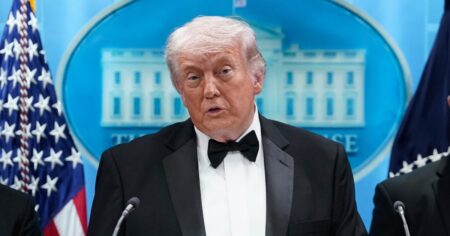
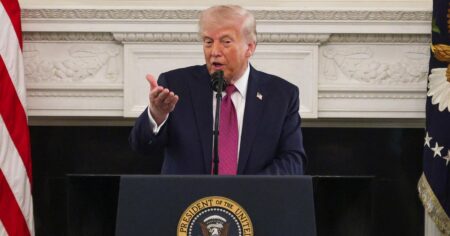
The Strait of Hormuz, a narrow passage of water between Iran and the Arabian Peninsula, has become the center of global attention as tensions with Iran have escalated into conflict. This isn’t just any waterway – roughly one-fifth of the world’s oil supply flows through this critical chokepoint, making it vital to the global economy. When President Trump addressed the nation in a prime-time speech recently, he painted an optimistic picture, declaring that Iran “has been essentially decimated” and suggesting that once the conflict ends, normal shipping operations would naturally resume. “The hard part is done,” he assured Americans. However, the reality on the ground tells a more complicated story, and even the president’s own statements have been far from consistent about how the United States plans to handle this crisis and ensure the safe passage of commercial vessels through these troubled waters.
Contradictory Statements and Shifting Strategies
Over the past several weeks, President Trump has sent Americans and international partners on something of a roller coaster ride with his constantly changing rhetoric about the Strait of Hormuz situation. In one breath, he’s telling the nation that everything is under control and the situation will resolve itself naturally. In the next, he’s calling on other countries to “step up” and take responsibility for protecting the strait, using colorful language like urging them to “cherish it” and “grab it.” During a March interview with CBS News, Trump claimed he was even “thinking about taking it over,” suggesting a more aggressive U.S. posture. Yet on the same day, he told reporters the Navy would escort tankers “if needed” and offered to provide political risk insurance for vessels brave enough to transit the dangerous waters. The mixed messages have left allies, adversaries, and market watchers struggling to understand what America’s actual strategy is – or if there even is a coherent one.
The Reality Versus the Rhetoric
While President Trump has repeatedly suggested that securing the strait would be straightforward or that it’s already been accomplished, the facts paint a different picture. Data reveals that most of the ships that have actually managed to pass through the strait in recent weeks are Iranian vessels, indicating that conditions remain extremely dangerous for international commercial traffic. The president has claimed at various points that American forces destroyed “all” of Iran’s mine-laying ships and “blew up every one” of their mine droppers, even joking that Iran would have to resort to using “a rowboat or something” to deploy additional mines. However, Trump himself has acknowledged the persistent threats facing ships, noting that “a guy can take a mine, drop it in the water” or someone could “take a machine gun from the shore and shoot a few bullets at a ship.” These admissions reveal the complexity of the challenge – it’s not about defeating a conventional army but rather countering asymmetric threats that are difficult to prevent completely. The international oil markets certainly aren’t convinced the crisis is over, with Brent Crude prices jumping more than 7% following Trump’s address.
Passing the Buck to International Partners
A consistent theme throughout President Trump’s statements has been his insistence that other countries should take primary responsibility for securing the Strait of Hormuz. He’s repeatedly called out nations like China, South Korea, Japan, France, and other European countries, arguing that since they depend heavily on oil flowing through the strait, they should be the ones protecting it. “Let them all do it,” Trump said bluntly. “What the hell are we doing it for?” This approach aligns with his broader “America First” foreign policy philosophy, which emphasizes that the United States shouldn’t bear the burden of being the world’s policeman, especially when other nations stand to benefit more directly. In his prime-time address, Trump reiterated this position, saying “We will be helpful, but they should take the lead in protecting the oil that they so desperately depend on.” However, the president hasn’t identified which countries, if any, have actually agreed to participate in protecting commercial shipping, leaving questions about whether this international coalition exists beyond Trump’s wishes and whether America’s allies are willing or able to take on this responsibility without substantial U.S. military support.
Expert Analysis and Military Realities
National security analysts are viewing the situation with considerably more caution than the president’s optimistic public statements might suggest. Aaron MacLean, a CBS News national security analyst, observed that Iran has “played the major card that was available to them” by closing the Strait of Hormuz, creating a problem that “at some point is going to have to be dealt with.” MacLean believes that Trump’s comments reveal his “principle objective remains a deal” with Iran that would result in reopening the strait, or alternatively, some form of regime change that would eliminate the threat altogether. Importantly, MacLean noted that Trump appears to understand “the difficulty of a military campaign to open the strait,” which could significantly prolong a conflict that the president has promised would be brief. This gets to the heart of the challenge: clearing mines, protecting hundreds of miles of vulnerable shipping lanes, and defending against attacks from shore-based weapons isn’t a simple military operation that can be accomplished quickly. It would require sustained commitment of significant naval resources and would carry the risk of escalation – precisely the kind of extended military engagement that Trump has consistently sought to avoid throughout his political career.
The Clock is Ticking on Trump’s Timeline
Perhaps most telling is the disconnect between President Trump’s promised timeline for the conflict and the reality on the ground. Initially, the president said military operations would take four to five weeks. During his recent prime-time address, he revised that estimate downward to two or three weeks. Yet the offensive is now in its fifth week with the strait still closed and no clear resolution in sight. This gap between promise and performance is significant because it affects everything from public support for the military action to economic planning around oil supplies and prices. The uncertainty is already rippling through global markets, and the longer the situation remains unresolved, the greater the economic impact will be. Trump’s suggestion that things will work themselves out “naturally” or that Iran might be “begging to make a deal” seems increasingly optimistic given Iran’s apparent willingness to absorb punishment while maintaining its blockade of this critical waterway. The coming weeks will reveal whether Trump’s confidence is justified or whether the United States and its partners will need to make difficult decisions about how much they’re willing to invest – in terms of military resources, diplomatic capital, and economic cost – to reopen one of the world’s most important oil transit routes. For now, the world watches and waits while ships sit idle and oil prices remain elevated, hoping for clarity and consistency from American leadership on this critical issue.