

The Human Cost of Immigration Enforcement: How Operation Metro Surge Disrupted Life in the Twin Cities
When Federal Agents Came to Town
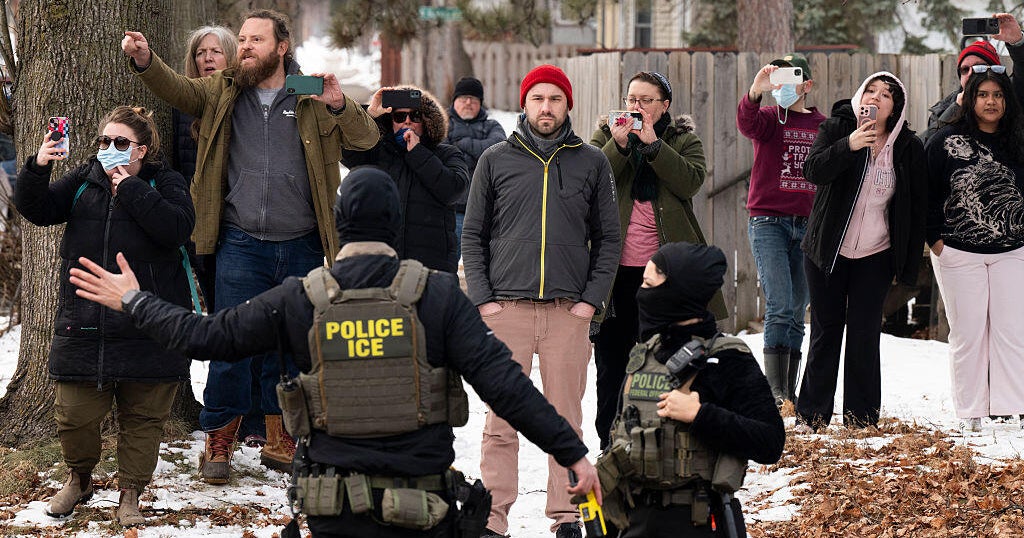
Between December and mid-February, the Twin Cities of Minneapolis and St. Paul experienced something unprecedented: more than 4,000 federal immigration agents descended on their communities as part of what the White House called “Operation Metro Surge.” What followed wasn’t just a law enforcement operation—it was a seismic disruption to everyday life that rippled through entire neighborhoods, affecting citizens and immigrants alike. A comprehensive survey conducted by the University of San Diego has now revealed the true human toll of this massive crackdown, painting a picture of communities where fear replaced routine, where trust eroded, and where the simple act of going to work, school, or the doctor became fraught with anxiety. The findings, based on responses from 728 Minneapolis residents and 662 St. Paul residents surveyed between mid-February and early March, document how large-scale immigration enforcement operations impact not just their intended targets, but entire communities, fundamentally altering how people interact with their neighborhoods and institutions.
The Economic Fallout: Missing Work and Lost Wages
The economic impact of Operation Metro Surge was staggering and immediate. More than 35% of Minneapolis survey respondents reported missing work during the operation, with about 20% of St. Paul residents reporting the same. These weren’t just occasional absences—people stayed home because their workplaces closed their doors out of concern, or because they themselves feared for their safety if they ventured out. The workers affected weren’t limited to any single industry or economic class; the survey documented missed workdays among service workers, physicians, nurses, and professionals across various sectors. When researchers calculated the financial toll, they arrived at a stunning figure: an estimated $243.8 million in combined lost wages across the two cities during the operation period. This number represents more than just statistics—it represents families unable to pay rent, grocery bills left unpaid, and households plunged into financial instability. The ripple effects of this economic disruption extend far beyond individual families, affecting local businesses that lost customers, tax revenues that fund city services, and the overall economic vitality of communities that were already working to build prosperity for all residents.
Children Left Home: Education Interrupted
Perhaps no finding was more troubling than the impact on children’s education. In Minneapolis, more than 53% of parents with school-age children kept them home from school at some point during the operation. In St. Paul, that figure was approximately 45%. These statistics represent thousands of children missing days of instruction, falling behind in their coursework, and experiencing disruption to the stable routines that educators know are essential for learning and development. For many families, the decision to keep children home wasn’t made lightly—it reflected genuine fear about what might happen if their children were en route to school or in the surrounding neighborhood during federal enforcement actions. The educational disruption also speaks to a broader breakdown in the sense of safety that communities need to function. Schools are supposed to be sanctuaries where children can focus on learning, growth, and social development. When parents feel they cannot safely send their children to these institutions, it signals a profound rupture in the social fabric. The long-term consequences of this educational disruption remain to be seen, but educators know that even brief interruptions in schooling can have lasting effects on student achievement, particularly for children already facing challenges.
Health Care Delayed: Medical Appointments Missed
The operation also had serious public health implications. Among survey respondents who had scheduled medical appointments during the crackdown, 29% of Minneapolis residents said they missed at least one appointment, compared to 20% of St. Paul residents. Even more concerning, some people who experienced unexpected medical conditions requiring urgent care or emergency room visits chose to stay home rather than risk venturing out. This behavior represents a dangerous calculation that people felt forced to make: weighing their immediate health needs against their fear of encountering federal agents. The consequences of delayed medical care can be severe—chronic conditions worsen without proper management, acute illnesses that could have been easily treated become serious, and preventable health crises develop into emergencies. From a public health perspective, this presents challenges that extend beyond individual patients. When people avoid medical care, infectious diseases can spread unchecked, chronic disease management falls apart, and the overall health of the community deteriorates. Health care facilities that serve these communities also suffered, with empty appointment slots representing both lost revenue and missed opportunities to provide care.
Broken Trust: How Communities View Law Enforcement Now
Perhaps the most profound and lasting impact of Operation Metro Surge was its effect on community trust in law enforcement. The survey revealed that nearly half of respondents in both cities said they were now less likely to seek help from law enforcement in the future as a direct result of the operation. Think about what this means in practical terms: people who witness crimes won’t report them, victims of domestic violence won’t call for help, and communities become less safe for everyone. Even more troubling, nearly a third of Minneapolis respondents and more than a quarter in St. Paul said they were now less likely to obey commands from law enforcement. About 28% of Minneapolis residents and 19% of St. Paul residents reported direct interactions with ICE or Border Patrol agents during the operation. These encounters were often deeply problematic—many individuals reported being questioned about their race, ethnicity, national origin, or whether they spoke English. In Minneapolis, about 46% of those who interacted with federal agents said those agents didn’t believe they were lawful residents even after showing identification. More than half of those who had encounters with ICE agents in both cities reported that these interactions happened at or near schools, health care facilities, child care centers, courthouses, or places of worship—locations that previous administrations had designated as protected spaces where immigration enforcement should not occur.
Violence and Looking Forward: What This Means for America
The survey also documented disturbing reports of violence. In Minneapolis, approximately 23% of respondents who interacted with ICE reported being physically assaulted, while about 25% said agents used pepper spray, tear gas, or other chemical agents against them. In St. Paul, roughly 14% reported physical assault and 17% said chemical agents were used. These incidents occurred against the backdrop of widespread protests sparked by Operation Metro Surge and the tragic January shooting deaths of two residents, Renee Good and Alex Pretti, by federal agents in south Minneapolis. Federal agents frequently used chemical agents to disperse these protests, adding to the community trauma. Tom Wong, the study’s author and director of the University of San Diego’s U.S. Immigration Policy Center, noted that people of color were roughly twice as likely to be questioned or assaulted by ICE agents. “We are beginning to learn more about how Trump-style, large-scale immigration enforcement is impacting communities,” Wong observed. He also noted that other cities and states are watching nervously, wondering if they might be next. “A lot of other states and cities are kind of just waiting to see if they’re going to be the next target,” he said. “I think that if this happens again in the way that it happened in Minnesota, a lot of communities are going to have to brace for a lot of change.” The Twin Cities experience offers a sobering preview of what large-scale immigration enforcement means for American communities—not just immigration policy debates, but real disruption to education, health care, economic stability, and the basic trust between communities and the institutions meant to serve them.