

British Court Strikes Down Palestine Action Terror Ban: A Battle Over Free Speech and Protest Rights
A Landmark Ruling with Immediate Consequences
In a decision that has sent shockwaves through Britain’s political and activist communities, the High Court in London delivered a significant blow to the government’s hardline approach to pro-Palestinian activism. Three senior judges—Victoria Sharp, Jonathan Swift, and Karen Steyn—ruled that last year’s decision to classify Palestine Action as a terrorist organization was unlawful and disproportionate. The judges determined that while the group’s activities were certainly disruptive, they simply didn’t reach the “level, scale and persistence” that would justify placing them on the same list as genuinely dangerous terrorist organizations like al-Qaeda and Hamas. However, in a twist that has left many scratching their heads, the ban remains in effect while the government prepares its appeal, leaving thousands of supporters in legal limbo. Since the original ban was imposed, more than 2,000 people have been arrested simply for holding signs expressing support for Palestine Action—a staggering number that highlights just how aggressively authorities have been enforcing the proscription. The contrast between the court’s assessment and the government’s continued insistence on the ban illustrates a fundamental disagreement about where the line should be drawn between legitimate protest and activities that threaten national security.
Two Sides Respond: Victory and Defiance
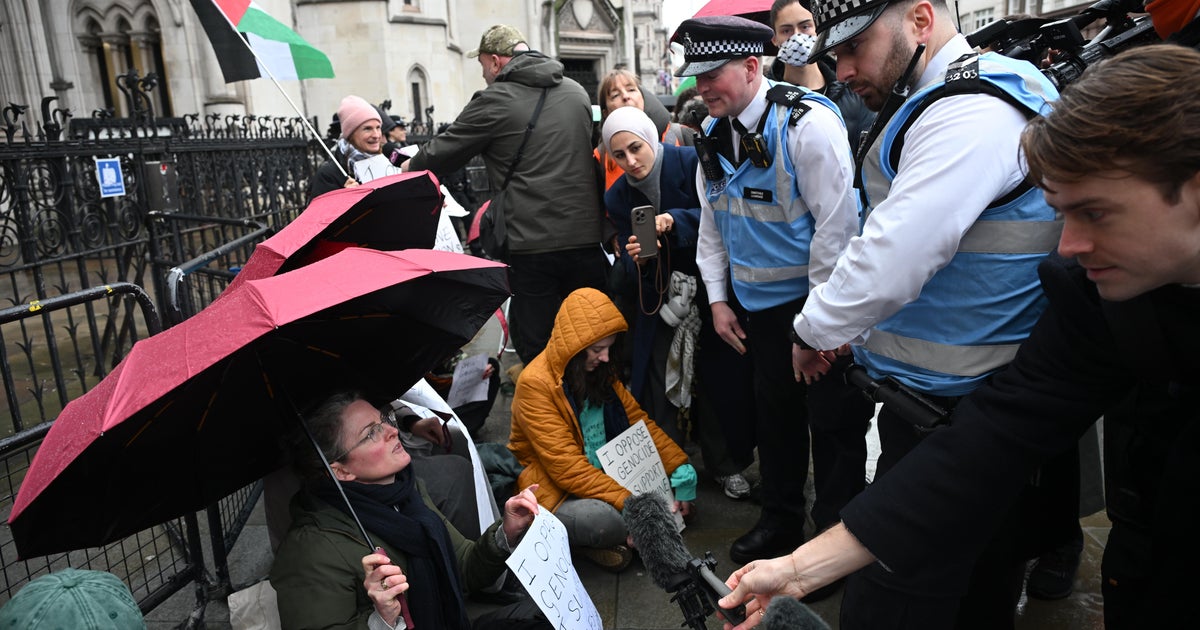
The reaction to the court’s decision couldn’t have been more polarized. Outside the High Court, Palestine Action supporters erupted in celebration as co-founder Huda Ammori addressed the crowd with barely contained emotion. She described the ruling as “a monumental victory both for our fundamental freedoms here in Britain and in the struggle for freedom for the Palestinian people,” calling the original ban “one of the most extreme attacks on free speech in recent British history.” Her words captured the feelings of civil liberties groups and protesters who have watched with growing alarm as peaceful demonstrators faced arrest and potential 14-year prison sentences for simply expressing support for a political cause. On the other side, Home Secretary Shabana Mahmood expressed deep disappointment, firmly rejecting the court’s conclusion that the ban was disproportionate. “I intend to fight this judgment in the Court of Appeal,” she declared, making it clear that the government has no intention of backing down. This standoff between the judiciary and the executive branch of government reveals a deeper tension in British society about how to balance security concerns with the fundamental right to protest and express political opinions, even when those opinions are controversial or uncomfortable for those in power.
A Confusing Situation for Police and Protesters Alike
Perhaps the most immediate and practical challenge arising from Friday’s ruling is the confusion it has created on the ground. The London Metropolitan Police, anticipating questions from both officers and the public, issued a statement acknowledging that there would likely be “some confusion among the public as to what happens next.” The force emphasized that despite the court’s ruling, Palestine Action technically remains a banned organization while the government’s appeal is pending, meaning that expressing support is still officially a criminal offense. However, in a notable shift in approach, the police announced they would change their tactics, focusing on “gathering evidence of those offenses and the people involved to provide opportunities for enforcement at a later date, rather than making arrests at the time.” This softer approach represents a pragmatic response to a legally complicated situation, but it also raises troubling questions. If expressing support for Palestine Action is truly a threat to national security worthy of 14-year prison sentences, why is it now acceptable to merely document such expressions rather than stopping them immediately? And if it’s not that serious, why maintain the ban at all? This middle-ground approach, while perhaps the most sensible option available under the circumstances, inadvertently highlights the questionable nature of the original designation.
What Palestine Action Actually Does
To understand this controversy, it’s important to know what Palestine Action actually is and what they’ve been doing. Formed in 2020, the group has specialized in direct action protests targeting military and industrial sites connected to British support for Israel, particularly facilities owned by Elbit Systems UK, an Israeli weapons manufacturer. Their tactics have been confrontational and have sometimes crossed into property damage. The incident that seemed to trigger the government’s ban occurred in June of last year, when activists broke into a Royal Air Force base and vandalized two tanker planes, spraying red paint into their engines and causing additional damage with crowbars. Officials claim the group’s activities have caused millions of pounds in damage and affected national security. However, the group’s supporters argue they’re engaging in civil disobedience to protest Britain’s complicity in what they view as Israeli war crimes in Gaza. Interestingly, just weeks before the High Court ruling, six Palestine Action members were acquitted by a jury of aggravated burglary charges related to a break-in at an Elbit Systems facility. After more than 36 hours of deliberation, the jury returned no convictions on multiple criminal charges—a result that suggests ordinary British citizens may have sympathy for the activists’ motivations, even if they don’t fully endorse their methods. The group has also targeted President Trump’s golf resorts in Scotland, vandalizing the Turnberry course in response to his proposals regarding Gaza, though no arrests were made in those incidents.
The Broader Context: Rising Antisemitism and Security Concerns
The Palestine Action ban didn’t happen in a vacuum. It came amid genuinely troubling increases in antisemitic incidents across Britain and other Western countries, particularly following the escalation of the Israel-Gaza conflict that began in 2023. In December, after a horrific terrorist attack at a Hanukkah event in Bondi Beach, Australia, that killed 15 people, Britain’s largest police forces announced an “enhanced approach” to combating antisemitism. They pointed to incidents on British soil, including a devastating vehicle and knife attack outside a Manchester synagogue in October 2025 that left two Jewish people dead. Police data showed that “antisemitic hate crime has surged, protests have intensified, and online abuse has grown since 2023,” creating real fear in Jewish communities. Law enforcement announced they would “recalibrate to be more assertive,” including taking action against protesters using certain phrases like “globalize the intifada.” This context helps explain, if not fully justify, the government’s aggressive response to Palestine Action. Officials were under intense pressure to demonstrate they were taking antisemitism and threats to Jewish communities seriously. However, critics argue that conflating property damage at military installations with terrorist attacks that kill innocent civilians—and punishing mere expressions of support for a protest group with the same severity as support for organizations that commit mass murder—represents a dangerous overreach that undermines the very freedoms that distinguish democratic societies from authoritarian ones.
What Happens Next: An Uncertain Future
As this legal battle moves to the Court of Appeal, Britain finds itself at a crossroads regarding fundamental questions about protest, free speech, and national security. The High Court judges made clear in their ruling that “a very small number” of Palestine Action’s activities “amounted to terrorist action,” but they also emphasized that “regardless of proscription, the criminal law is available to prosecute those concerned.” In other words, activists who break the law can be charged with criminal damage, trespass, or other specific offenses without needing to brand the entire organization as terrorist. This raises the question of why the extraordinary step of proscription was necessary in the first place. The judges’ conclusion that the ban was “disproportionate” suggests they believe the government had other, less restrictive means available to address the group’s activities. Meanwhile, the 2,000-plus people arrested for simply holding supportive signs remain in a state of uncertainty. Will they face prosecution? Will their cases be dropped if the Court of Appeal upholds Friday’s ruling? And what message does this entire episode send about the state of protest rights in modern Britain? Supporters of civil liberties worry that regardless of the final outcome, the chilling effect has already been achieved—many people will think twice before expressing support for controversial causes, even when those causes involve opposition to war and occupation. As the appeal process unfolds in the coming months, Britain will continue to grapple with these difficult questions about how to protect genuine security interests while preserving the fundamental right to dissent that lies at the heart of any free society.