


The Mandelson Scandal: A Political Crisis Rocks Downing Street
A Resignation That Shook Westminster
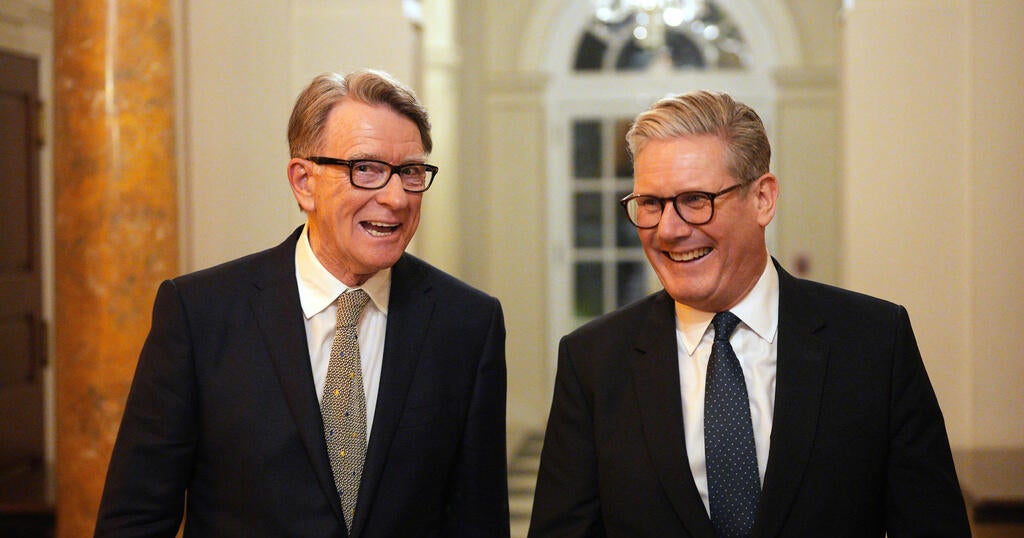
In a dramatic turn of events that has sent shockwaves through British politics, Morgan McSweeney, the chief of staff to Prime Minister Keir Starmer, resigned on Sunday amid mounting pressure over a controversial diplomatic appointment. The resignation centers on the decision to appoint Peter Mandelson, a 72-year-old veteran Labour politician, as Britain’s ambassador to the United States—a position considered the country’s most prestigious diplomatic post. What should have been a straightforward appointment of an experienced statesman has instead morphed into a full-blown political crisis, raising serious questions about judgment, transparency, and the vetting processes at the highest levels of British government. McSweeney’s statement was direct and unequivocal: he took full responsibility for advising Starmer to make the appointment, acknowledging that “the decision to appoint Peter Mandelson was wrong” and that the controversy has “damaged our party, our country and trust in politics itself.” The resignation represents not just a personal fall from grace for McSweeney, but a significant political wound for the prime minister, whose leadership and decision-making are now under intense scrutiny from both opposition politicians and the public at large.
The Epstein Connection That Changed Everything
At the heart of this political firestorm lies Peter Mandelson’s previously undisclosed connections to Jeffrey Epstein, the notorious financier and convicted sex offender whose criminal activities and high-profile associations have continued to generate headlines even after his death. Recently published documents—part of a massive collection of Epstein files released by American authorities—have revealed troubling details about the relationship between Mandelson and Epstein that were apparently unknown or inadequately examined when Mandelson was vetted for the ambassadorial position in 2024. The documents suggest something far more serious than mere social acquaintance: they indicate that Mandelson may have shared market-sensitive government information with Epstein during a critical period in 2008, when Mandelson served as the U.K. government’s business secretary and the world was in the grip of a devastating financial crisis. Additionally, records show payments totaling $75,000 that flowed from Epstein to accounts linked to either Mandelson or his husband, Reinaldo Avila da Silva, during 2003 and 2004. These revelations paint a picture of a relationship that went beyond casual friendship, raising serious questions about potential breaches of trust, conflicts of interest, and whether sensitive government information may have been improperly shared with a man who was already known to authorities as a dangerous predator.
A Prime Minister’s Apology and Damage Control
Facing intense pressure from all sides, Prime Minister Keir Starmer issued an extraordinary apology last week that was remarkable both for its directness and for what it revealed about the apparent failure of vetting procedures. Starmer told lawmakers that he had been deceived, stating bluntly that he was sorry for “having believed Mandelson’s lies.” He attempted to explain how such a catastrophic misjudgment could have occurred, saying that “none of us knew the depth of the darkness” that characterized the relationship between Mandelson and Epstein when the former politician was being considered and vetted for the diplomatic role. The prime minister’s statement was scathing in its assessment of Mandelson’s conduct, declaring that “Mandelson betrayed our country, our Parliament and my party” and that Mandelson had “lied repeatedly to my team when asked about his relationship with Epstein before and during his tenure as ambassador.” Starmer concluded with the simple but devastating admission: “I regret appointing him.” In an effort to demonstrate transparency and accountability, Starmer’s government has committed to releasing its own internal emails and documentation related to the appointment process, which officials say will clearly demonstrate how Mandelson deliberately misled those conducting the vetting process. However, for many critics, this response is too little, too late, and raises fundamental questions about why more thorough background checks weren’t conducted before appointing someone to such a sensitive position.
Calls for Accountability and Political Fallout
The political ramifications of this scandal have been swift and severe, with opposition politicians seizing on the controversy to question not just the specific appointment, but Starmer’s overall fitness for leadership. Kemi Badenoch, who leads the opposition Conservative Party, has been particularly vocal, arguing that “Keir Starmer has to take responsibility for his own terrible decisions” rather than allowing his chief of staff to take the fall alone. Several lawmakers from various parties have gone even further, calling for Starmer himself to resign over the matter, arguing that a prime minister who could make such a fundamental error in judgment about such an important position has demonstrated that he lacks the discernment necessary to lead the country. The controversy has also reignited longstanding questions about Peter Mandelson’s suitability for high office, given that this is far from his first scandal. Aside from his association with Epstein, Mandelson has a history of having to resign from senior government posts on two previous occasions because of controversies involving money or ethics. This track record makes the decision to appoint him to the ambassadorship appear even more puzzling and difficult to justify, and critics are asking why someone with such a checkered past was ever considered appropriate for representing Britain in Washington in the first place.
The Investigation Deepens
The Metropolitan Police has now launched a formal investigation into the matter, and the seriousness with which authorities are treating the case became dramatically apparent when officers searched Mandelson’s London home and another property connected to him on Friday. The police have made it clear that this is no superficial inquiry, describing the investigation as “complex” and stating that it will require “a significant amount of further evidence gathering and analysis.” It’s important to note that as of now, Mandelson has not been arrested or charged with any crime, and he retains the presumption of innocence that is fundamental to the justice system. However, the very fact that such a prominent political figure—a former Cabinet minister, ambassador, and elder statesman of the Labour Party—is now the subject of a serious police investigation represents an unprecedented crisis for the government. The investigation will presumably examine whether Mandelson violated any laws related to the sharing of sensitive government information, whether the payments from Epstein represented any form of corruption or conflict of interest, and whether Mandelson made false statements during the vetting process for the ambassadorial position. The outcome of this investigation could have profound implications not just for Mandelson personally, but for the Starmer government and for public confidence in the systems meant to ensure that only appropriate individuals are appointed to positions of trust and responsibility.
A Crisis of Confidence in British Politics
Beyond the specific details of this scandal lies a broader crisis of confidence in British politics and in the processes that are supposed to protect the integrity of government. The appointment and subsequent revelation about Mandelson has already forced Starmer to dismiss him from the ambassadorial role back in September when earlier, less damaging information about his Epstein ties first came to light. However, critics argue that the more recent emails published by the U.S. Justice Department have brought the most serious concerns to the surface, and they question why these issues weren’t uncovered during the initial vetting process. The fact that someone could be appointed to Britain’s most important diplomatic post despite having significant undisclosed connections to one of the most notorious criminals of recent times suggests a systemic failure that goes beyond any single individual’s poor judgment. McSweeney’s resignation, while demonstrating accountability, also raises questions about who else in the government should have caught these red flags before the appointment was finalized. As the investigation continues and more information potentially comes to light, this scandal threatens to become a defining moment for the Starmer government—one that raises fundamental questions about competence, judgment, and whether the systems designed to protect the public interest are actually working as they should. For a government that presumably came to power promising integrity and good governance, the Mandelson affair represents a devastating blow to credibility that may prove difficult to overcome.