
The Mandelson Affair: How an Epstein Connection Has Put Britain’s Prime Minister on the Ropes
A Diplomatic Appointment Comes Back to Haunt Downing Street
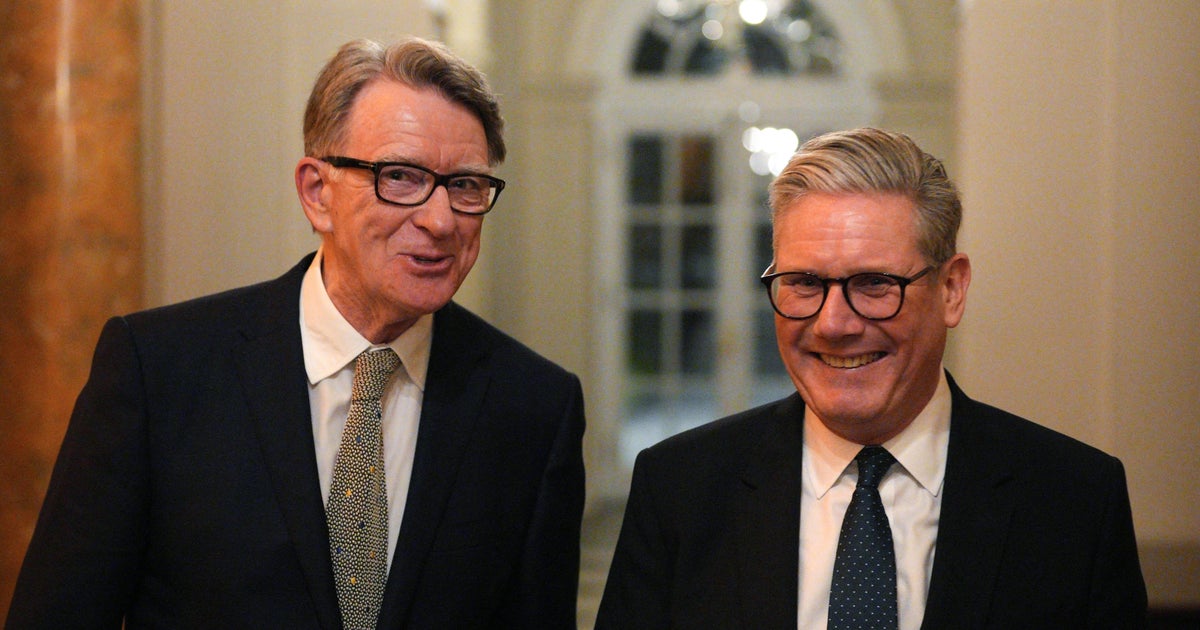
British Prime Minister Keir Starmer finds himself trapped in a political firestorm that simply won’t die down. The controversy centers on his decision to appoint Peter Mandelson, a longtime Labour Party stalwart, as Britain’s ambassador to the United States—a choice that has come back to haunt him in spectacular fashion. Mandelson’s close friendship with the late Jeffrey Epstein, the disgraced American financier and convicted sex offender, has turned what should have been a prestigious diplomatic posting into a scandal that threatens Starmer’s political future. The prime minister has been forced to apologize repeatedly to both Epstein’s victims and the British public, while facing withering criticism from across the political spectrum. Even President Trump, who had previously criticized Starmer over his stance on the Iran conflict, weighed in with lukewarm support, acknowledging that Mandelson was indeed “a really bad pick” while suggesting there was still “plenty of time to recover.” The situation took a dramatic turn when Starmer fired Mandelson in September after the full extent of his Epstein connections became public through documents released in Washington. Now, new revelations about the government’s security vetting process have reignited the controversy, with opponents questioning either Starmer’s honesty about what he knew or his competence in handling such a sensitive appointment.
The Central Question: What Did the Prime Minister Know?
At the heart of this scandal lies a question that has toppled governments before: what did Keir Starmer know about Peter Mandelson’s relationship with Jeffrey Epstein, and when did he know it? The prime minister has consistently maintained that he was completely in the dark about Mandelson’s close ties to Epstein when he selected him for the Washington ambassadorship. However, this claim has come under intense scrutiny following revelations about a formal security vetting process that apparently raised red flags about the appointment. On Monday, facing a hostile Parliament, Starmer blamed Britain’s Foreign Office for failing to inform him or his cabinet about concerns that emerged during Mandelson’s security clearance review in January 2025—several months after the appointment had been publicly announced. The prime minister expressed outrage that this information never reached him, calling it “frankly staggering” that Foreign Office officials kept him in the dark about Mandelson’s problematic history. Starmer insisted that had he been made aware of these concerns, he would have immediately reversed the appointment. But his critics aren’t buying this explanation, viewing it as either a convenient excuse or evidence of shocking incompetence at the highest levels of government.
From Party Grandee to Criminal Investigation
Peter Mandelson has been a fixture of the Labour Party since the 1990s, earning a reputation as one of the party’s most skilled political operators. His appointment to the prestigious Washington ambassadorship seemed like a natural capstone to a long career in British politics. But his world came crashing down when the infamous Epstein files were released, revealing the depth of his friendship with the convicted sex offender. The documents painted a picture of two men who were far more than casual acquaintances—photographs showed them together at social gatherings, including one image of Mandelson helping Epstein blow out candles on a birthday cake. The situation deteriorated further in February when London’s Metropolitan Police arrested Mandelson following the discovery of emails suggesting he had shared confidential, market-sensitive information with Epstein after the financier had already pleaded guilty to soliciting sex from a minor. While Mandelson remains under investigation and his bail conditions have been lifted, he has consistently denied any knowledge of or involvement in Epstein’s sexual crimes. Nevertheless, the association has proven toxic, forcing his dismissal from the ambassadorship and leaving a permanent stain on both his reputation and that of the prime minister who appointed him.
A Parliamentary Brawl and Accusations of Lying
The House of Commons witnessed scenes of genuine chaos during Monday’s parliamentary session, with lawmakers from across the political spectrum turning their fire on the beleaguered prime minister. The atmosphere was so heated that two Members of Parliament were actually expelled from the chamber for directly accusing Starmer of lying—a breach of Commons rules that nevertheless reflected the fury many felt about the situation. The attacks came from all directions, not just from the opposition benches but from politicians spanning the entire ideological spectrum. Lee Anderson of the far-right Reform Party delivered a particularly cutting jab, quipping that Starmer “couldn’t lie straight in bed.” Even more damaging was the intervention of Zarah Sultana, a former Labour MP who left the party in 2024 to join a new far-left faction. She accused the prime minister of “gaslighting the nation” and declared him “a bare-faced liar,” demanding that he resign if he had “any decency left.” Only Starmer’s own Labour MPs refrained from piling on, but their silence spoke volumes about the discomfort within the party ranks. The controversy has exposed Starmer to the classic political dilemma: either he’s guilty of lying about his knowledge of Mandelson’s background, or he’s guilty of extraordinary incompetence for not ensuring he had all the relevant information before making such a crucial appointment.
A Civil Servant Fights Back
If Keir Starmer hoped that firing Sir Olly Robbins, the Foreign Office’s top civil servant at the time of the Mandelson appointment, would help contain the damage, those hopes were quickly dashed. Robbins, facing his own grilling from MPs on the Foreign Affairs Committee, came out swinging with testimony that directly contradicted the prime minister’s narrative. He described an “atmosphere of pressure” emanating from Starmer’s office, with “a very, very strong expectation” that Mandelson needed to be installed in Washington “as quickly as possible.” Even more damaging, Robbins testified that the prime minister and his cabinet displayed “a generally dismissive attitude” toward the security vetting process—suggesting that concerns raised during that process were downplayed or ignored by political leadership. Robbins revealed that the Foreign Office had been “leaning toward recommending against” granting Mandelson the security clearance required for an ambassadorship, though he declined to specify exactly what those concerns were, stating only that they were not specifically related to the Epstein connection. This testimony paints a picture of a government in a hurry, pushing through an appointment despite warning signs and treating the formal vetting process as an inconvenient formality rather than a crucial safeguard.
Political Future Hangs in the Balance
Keir Starmer managed to weather the initial wave of outrage when the Mandelson-Epstein connection first became public earlier this year, including calls for his resignation from some within his own party. But the renewed controversy comes at a particularly vulnerable moment for both the prime minister and Labour. With local elections scheduled for May and opinion polls showing Labour’s support declining, opposition parties sense blood in the water and are unlikely to let this issue fade quietly. The timing couldn’t be worse for Starmer, who came to power promising integrity and competence after years of Conservative Party scandals. Instead, he finds himself mired in a controversy that touches on one of the most sensitive and emotionally charged issues imaginable—the crimes of Jeffrey Epstein and the culture of enablement that surrounded him. Even President Trump’s grudging acknowledgment that there’s still “plenty of time to recover” sounds more like damning with faint praise than genuine support. The fundamental question remains unanswered in a way that satisfies the British public: how could a prime minister, with all the resources of the British government at his disposal, appoint someone with such problematic connections to one of the highest-profile diplomatic positions without knowing the full story? Whether through incompetence or dishonesty, Starmer’s handling of the Mandelson appointment has severely damaged his credibility, and with elections looming, voters will soon have the opportunity to deliver their verdict on his judgment.