


America’s Tomahawk Missile Arsenal Under Strain: The Hidden Cost of Modern Conflict
Unprecedented Depletion of America’s Long-Range Strike Capability
The United States military has burned through an astonishing number of Tomahawk cruise missiles in its recent operations against Iran, raising serious questions about the sustainability of America’s weapons stockpiles and the country’s ability to respond to multiple threats simultaneously. According to sources familiar with the situation, over 850 Tomahawk missiles have been fired at Iranian targets so far—a staggering figure that represents nearly nine times the average annual procurement rate for these sophisticated weapons. To put this in perspective, the Pentagon typically purchases only about 90 Tomahawks per year, while the Navy’s budget request for fiscal year 2026 included just 57 missiles. This dramatic discrepancy between usage and production has exposed a critical vulnerability in America’s defense posture: the nation is consuming its military arsenal far faster than it can be replenished.
The situation becomes even more alarming when you consider the total inventory. Experts estimate that the Pentagon maintains approximately 3,100 Tomahawk missiles in its entire stockpile. If the current rate of usage continues, nearly one-third of America’s entire Tomahawk inventory could be depleted in a single extended conflict. Kelly Grieco, a senior fellow at the Stimson Center, captured the essence of this problem when she told CBS News: “It’s been recognized that we don’t have enough long-range strike capability, so we’ve been trying to build up these stockpiles, but we keep depleting them.” This cycle of attempting to build up reserves while simultaneously drawing them down has become a frustrating reality for military planners who are trying to prepare for potential conflicts with peer adversaries like China or Russia, while simultaneously managing ongoing operations in the Middle East and elsewhere around the globe.
The Tomahawk: America’s Go-To Weapon for Long-Range Strikes
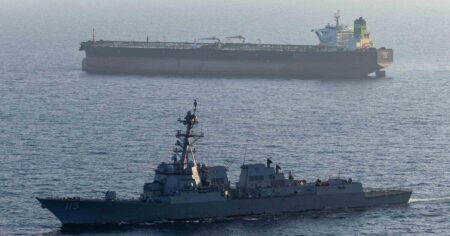
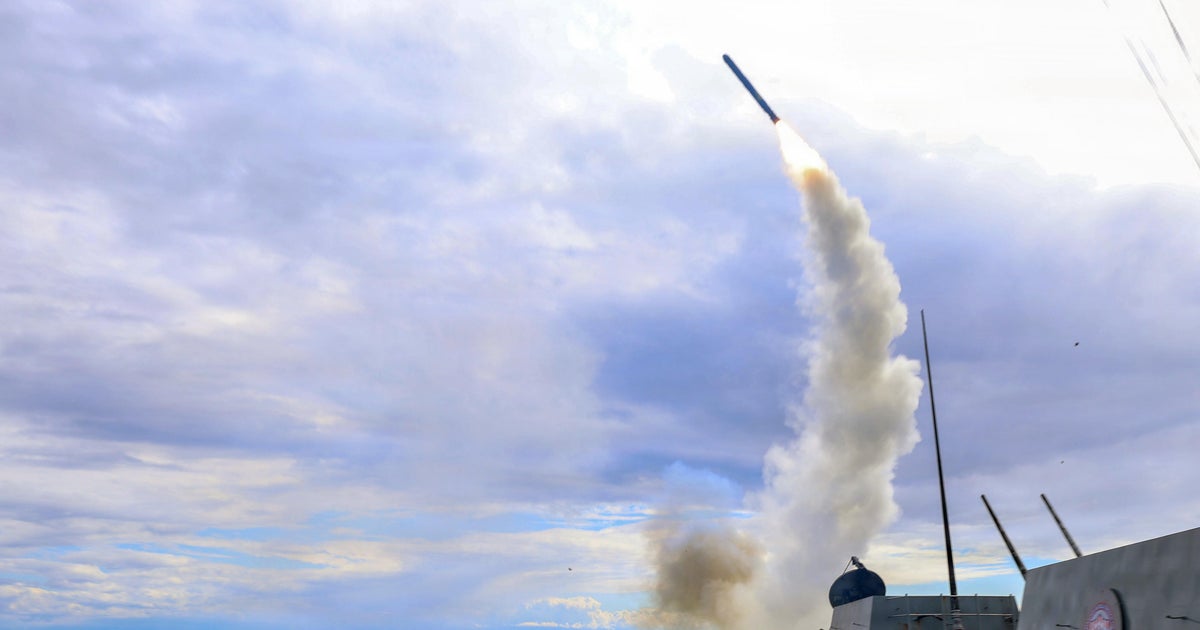
To understand why this depletion matters so much, it’s important to appreciate what the Tomahawk missile represents in America’s military arsenal. Developed during the Cold War era and continuously upgraded ever since, the Tomahawk cruise missile has evolved into one of the Pentagon’s most reliable and versatile long-range weapons systems. These missiles can be launched from Navy destroyers and submarines positioned hundreds of miles away from their targets, traveling more than 1,000 miles to strike with remarkable precision—even against targets protected by sophisticated air defense systems. This standoff capability means American forces can strike deeply into enemy territory without putting pilots at risk, making Tomahawks the weapon of first choice when commanders need to hit distant or heavily defended targets.
The Tomahawk’s operational history speaks to its effectiveness and reliability. According to Pentagon data and information from Raytheon, the defense contractor that manufactures the system, Tomahawks have been flight-tested more than 550 times and used in over 2,300 operational strikes across various conflicts. From the first Gulf War to operations in Iraq, Syria, Libya, and now in the conflict with Iran, these missiles have proven their worth time and again. Originally designed for the U.S. Navy, the Tomahawk has been so successful that in recent years it has been adopted by the Marine Corps and the Army as well, reflecting a broader strategic shift toward long-range precision weapons across all military services. Even allied nations, including Britain’s Royal Navy, have integrated Tomahawks into their arsenals, recognizing the strategic advantage these weapons provide in modern warfare.
The Eye-Watering Economics of Modern Missile Warfare
The financial implications of this missile consumption are equally sobering. Tomahawk missiles don’t come cheap—depending on the variant, each missile costs somewhere between $2.2 million and $4 million. The more advanced versions capable of striking moving ships from naval platforms can exceed $4 million per unit, and that doesn’t even include the cost of the launchers, which can run more than $6 million for ground-based systems. When you do the math on 850 missiles fired, you’re looking at somewhere between $1.87 billion and $3.4 billion worth of munitions expended in this conflict alone. That’s an enormous expenditure of both financial resources and military capability, representing years of procurement budgets consumed in a matter of months.
But Tomahawks are just one piece of a much larger munitions consumption puzzle. Democratic Senator Jack Reed of Rhode Island, the ranking member of the Senate Armed Services Committee, painted an even broader picture at a recent hearing when he stated that U.S. forces have fired “thousands of Tomahawks, Precision Strike Missiles, and other long-range offensive weapons into Iran, while also using Patriot, THAAD, and Standard Missile interceptors at an alarming rate.” When you add up all the advanced munitions being consumed—not just in operations against Iran, but also in ongoing missions in Yemen, the Red Sea, Nigeria, and other hotspots around the world since June 2025—weapons experts estimate the total could be approaching or even exceeding 1,000 Tomahawks alone, along with countless other sophisticated missiles and interceptors. This represents an unprecedented peacetime drawdown of America’s advanced weapons stockpiles.
The Production Bottleneck: Why We Can’t Just Make More Missiles Quickly
The obvious question that arises is: why can’t the United States simply produce more missiles to replenish what’s been used? The answer reveals some uncomfortable truths about America’s defense industrial base and how it’s structured. According to research from the Center for Strategic and International Studies, the theoretical maximum production capacity for Tomahawk missiles is approximately 2,330 per year. This figure is based on three contracts with Raytheon, each with a capacity for 600 missiles, plus a BAE contract that can produce up to 530 missiles annually. So the capacity exists on paper—the problem is that this capacity isn’t being utilized under normal peacetime procurement patterns.
In practice, actual production has been running at a fraction of this maximum capacity. In recent years, the defense industry has produced anywhere from a dozen to a few hundred Tomahawk missiles annually for U.S. forces under standard procurement cycles—nowhere near what gets expended in even a short, high-intensity conflict. The constraint isn’t simply a matter of funding, though budget considerations certainly play a role. Rather, the fundamental problem is structural: America’s defense industrial base has been optimized for predictable, steady-state demand rather than the rapid expansion needed during wartime. Manufacturing facilities, skilled workforce, supply chains for specialized components, quality control systems—all of these elements are calibrated for peacetime production rates. Suddenly ramping up to maximum capacity isn’t like flipping a switch; it requires time, investment, workforce expansion, and careful management to maintain quality standards on weapons systems where failure isn’t an option.
The Long Road to Ramping Up Production
Defense Secretary Pete Hegseth has acknowledged the problem and announced that the U.S. is working to ramp up the defense industrial base to produce critical munitions faster. “We’re reviving our defense industrial base and rebuilding the arsenal of freedom,” Hegseth said at a news conference, promising that new deals would cut “long lead times on exquisite munitions” and that stockpiles would be “refilled faster than anyone imagined.” The optimism in his statement reflects a genuine effort to address the problem. RTX (formerly Raytheon) announced just last month a framework agreement with the Defense Department to scale up annual Tomahawk production to more than 1,000 missiles per year for U.S. forces—a significant increase over current production rates.
However, the fine print tells a more sobering story. These production increases are planned to occur “over several years,” not immediately. A September 2025 Pentagon contract notice revealed that Raytheon received funding for engineering work to enhance the production capacity of the Tomahawk system, with that work not scheduled for completion until March 2028. This timeline means that even under accelerated production scenarios, it could be 2028 or beyond before the increased production capacity is fully operational and churning out missiles at the higher rate. In the meantime, if current consumption rates continue or even accelerate, the gap between what’s being used and what can be produced will continue to widen. This creates a dangerous window of vulnerability where America’s stockpiles could be drawn down to critically low levels, potentially limiting military options if another crisis emerges—say, in the Taiwan Strait or on NATO’s eastern flank—before production can catch up.
The situation with Tomahawk missiles illustrates a broader challenge facing the U.S. military and defense establishment: the tension between the modern era’s demand for precision, standoff weapons that can strike without risking American lives, and the industrial capacity to sustain their use in prolonged or multiple simultaneous conflicts. For decades, American military strategy has increasingly relied on technological superiority and precision weapons to substitute for mass and manpower. This approach has delivered remarkable battlefield success with minimal casualties, but it comes with a hidden cost—these sophisticated weapons are expensive, time-consuming to produce, and difficult to surge in wartime. As we’re now seeing, you can have the most advanced military technology in the world, but if you can’t produce these systems fast enough to replace what’s being used, those technological advantages can quickly evaporate in an extended conflict. The race is now on to rebuild America’s defense industrial capacity before the current stockpile situation becomes a genuine strategic liability.