

Four Years of War: Ukraine’s Struggle for Survival and the West’s Shifting Support
A Tense Beginning: Trump’s Ultimatum to Zelenskyy
Nearly a year ago, Ukrainian President Volodymyr Zelenskyy found himself in an uncomfortable position in the Oval Office, sitting with his arms crossed as President Donald Trump and Vice President JD Vance delivered a harsh rebuke. The meeting was remarkable not just for its confrontational tone, but for what it signaled about America’s changing commitment to Ukraine. Trump’s blunt warning—”You’re either going to make a deal or we’re out”—marked a fundamental shift in U.S. policy toward the war-torn nation. Under the Biden administration, support for Ukraine had been framed as essential to global security and democratic values. Now, under Trump’s leadership, that support was being recast as optional, a favor rather than a strategic necessity. This single meeting would set the tone for an entire year of high-stakes diplomatic maneuvering, with Ukraine’s fate hanging in the balance as Trump pushed both Zelenskyy and Russian President Vladimir Putin toward a peace deal that has proven frustratingly elusive.
The relationship between Trump and Zelenskyy has been complicated, to say the least. While the two leaders have since met again and appeared to patch things up publicly, Trump’s support for Ukraine has remained lukewarm at best, wavering at crucial moments over the past year. The American president has pressured both sides to make concessions, but observers note that the Trump administration has disproportionately placed the burden on Kyiv rather than Moscow to make the sacrifices necessary for peace. Despite a year of Trump-backed negotiations—including a dramatic face-to-face summit between Trump and Putin in Alaska—a deal to end the war that began four years ago remains out of reach. Experts believe this is exactly what Putin has been counting on. As Arne Westad, a professor of international and global history at Yale University, explained, Putin’s strategy has always been to wait out both Ukraine and the West, hoping that war fatigue would eventually force a ceasefire on terms favorable to Russia. However, the risks for Putin are growing higher as Russian battlefield losses mount and the country’s economy suffers under the strain of prolonged conflict.
Europe Steps Into the Breach
With America stepping back from its role as Ukraine’s primary defender, European nations have shouldered an increasingly heavy burden. The European Union has become Ukraine’s largest economic and military supporter, with Germany leading individual countries in arms contributions. This shift represents a dramatic change in transatlantic relations and European security policy. The United States is no longer simply providing weapons to Ukraine as aid; instead, it’s selling them to Kyiv and other partners through NATO’s PURL (Prioritised Ukraine Requirements List) initiative. This change from donor to vendor is more than symbolic—it reflects a fundamental reimagining of America’s role in European security under the Trump administration.
The “Coalition of the Willing,” dominated by European nations, has taken the lead in developing a multinational peacekeeping force to be deployed to Ukraine once the war ends. While Trump and his administration have made clear their reluctance to put American “boots on the ground,” U.S. support remains essential. Any foreign peacekeeping force deployed to Ukraine as part of Western security guarantees will need American logistical support, intelligence sharing, surveillance capabilities, and air support to be effective. European leaders have also positioned themselves as protectors of Ukrainian interests during the difficult peace negotiations. In August, a group of European leaders accompanied Zelenskyy to critical talks at the White House, apparently to prevent another harsh confrontation between the Ukrainian president and Trump’s team.
NATO Secretary-General Mark Rutte acknowledged earlier this month that Europeans are “stepping up” to meet the challenge. Several academic experts have expressed surprise at Europe’s resolve in the face of Trump’s pressure. Michael Kennedy, a professor of international affairs at Brown University, admitted he’s “frankly surprised that they have met the challenge Trump brings to this struggle by declaring that they will stand by Ukraine even if Trump will not.” This European commitment, he noted, gives Ukraine precious time even as the country continues to suffer brutal attacks. John Owen, a politics professor at the University of Virginia, believes that European unity will help Ukraine maintain its position as long as the United States continues selling military equipment to European countries for delivery to Ukraine. Western assistance has been crucial to Ukraine’s ability to maintain a stalemate with Russia, and European leaders—acutely aware of the Russian threat to their own security—show no signs of reducing their aid. The Kremlin has clearly noticed this European determination, with Putin and Russian officials carefully avoiding criticism of Trump while repeatedly framing European leaders as rogue actors who are “forcing” Ukraine to continue fighting and undermining White House peace efforts.
The Mounting Human Cost
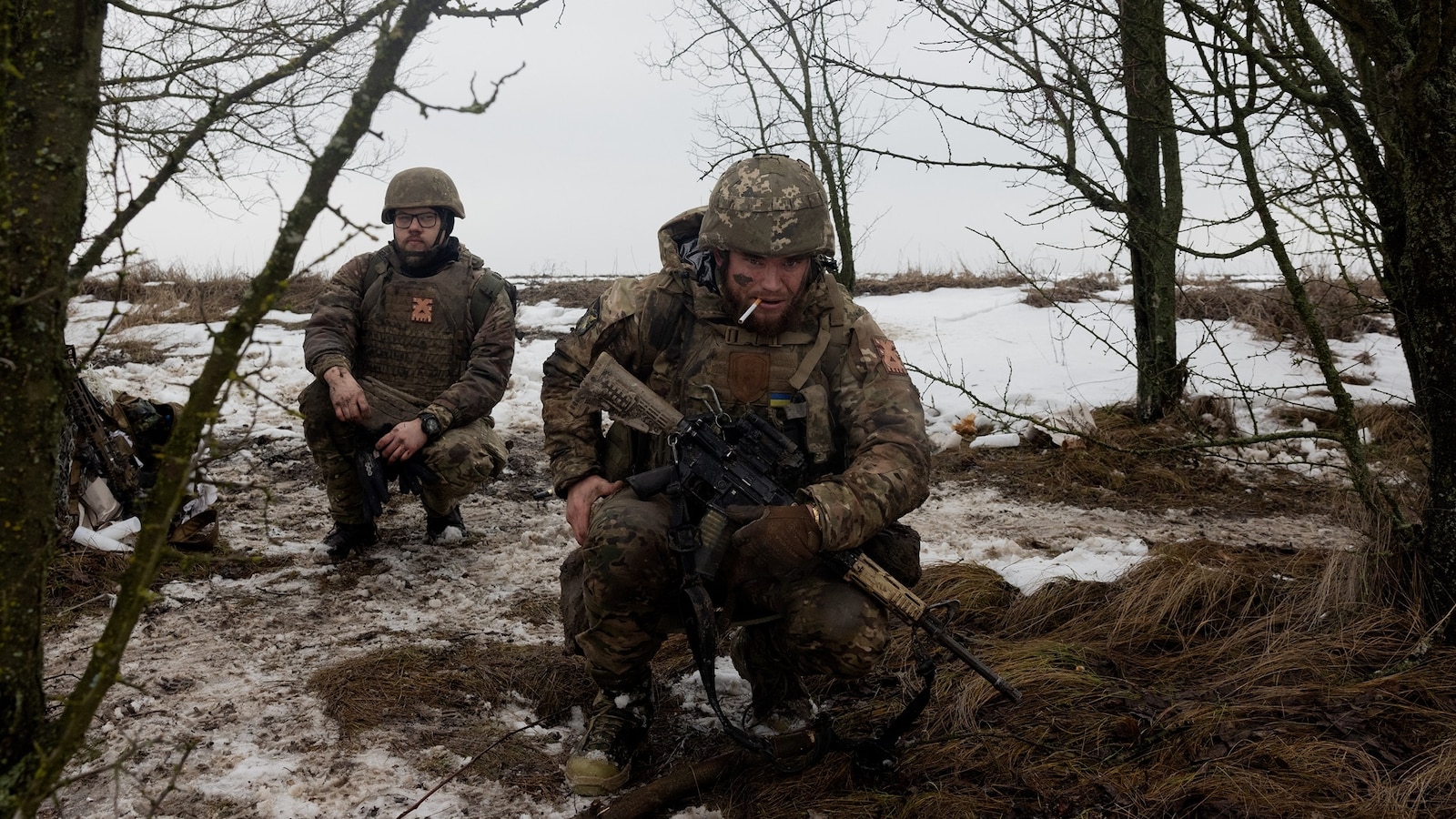
Four years into the war, the human toll continues to mount in what has become Europe’s most destructive conflict since World War II. What Putin apparently envisioned as a quick, surgical operation to topple the Ukrainian government and install a puppet regime has devolved into a grinding war of attrition that has consumed hundreds of thousands of lives on both sides. The true casualty figures may never be fully known, as neither Ukraine nor Russia regularly publishes comprehensive numbers, and both have strategic reasons to manipulate the data they do release. Last month, President Zelenskyy acknowledged that 55,000 Ukrainian soldiers are confirmed dead, though he added that many more remain missing and unaccounted for. Ukraine has claimed to have “eliminated” more than 1.26 million Russian troops—a figure that broadly aligns with estimates from U.S. and European intelligence agencies, suggesting catastrophic losses for the Russian military.
Beyond the staggering military casualties, civilians have paid a terrible price. The United Nations High Commissioner for Human Rights has verified at least 15,172 civilian deaths and 41,378 civilian injuries in Ukraine since the full-scale invasion began. Russian authorities have reported more than 1,000 civilian deaths inside Russia, including in occupied Crimea, though these figures are harder to verify and likely underestimate the true impact of Ukrainian counterstrikes. The warfare has evolved dramatically over four years, with both sides now employing drones on an unprecedented scale. Thousands of Ukrainian drones penetrate Russian airspace every month, according to data from the Russian Defense Ministry, often targeting the energy production and export facilities that fund Russia’s war machine. As Zelenskyy explained earlier this month, Ukraine faces a strategic choice: “We either build weapons and strike their weapons. Or we strike the source where their money is generated and multiplied. And that source is their energy sector. All of this is a legitimate target for us.” This drone warfare represents a new chapter in military conflict, one that has leveled the playing field in some respects, allowing Ukraine to strike deep into Russian territory despite having a smaller military overall.
Economic Devastation and Debt
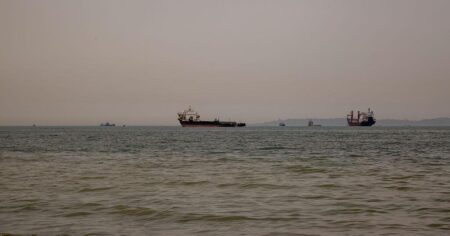
The prolonged conflict has taken a severe economic toll on both nations, though in different ways. Russia’s economy, while not collapsing as some Western officials once predicted, is showing increasing strain. President Putin claimed earlier this year that Russian economic growth was just 1% last year, though this figure cannot be independently verified and is likely optimistic. Inflation has been officially reported at 6%, but the base interest rate remains extraordinarily high at about 15.5%, according to Peter Rutland, a professor at Wesleyan University. What keeps the Russian economy afloat is revenue from oil exports, but even this lifeline is under pressure from low oil prices and intensified U.S. and European efforts to disrupt the “shadow fleet” of vessels carrying Russian crude to China and India. As Rutland noted, “The consensus is that the economy is far from ‘collapsing’ but the strains are increasing.” Whether these economic pressures will force Putin to genuinely negotiate remains uncertain, as the Russian leader has shown little urgency in reaching a deal.
Ukraine’s economic situation is even more dire, though for different reasons. The war has triggered both demographic and economic crises that will take generations to fully resolve. More than 5 million Ukrainian citizens have fled to other European countries, while over 10 million have been internally displaced, according to United Nations figures. This represents a massive brain drain and labor shortage that will hamper Ukraine’s recovery for years to come. The country is now largely dependent on financial support from abroad to keep functioning. Loans from foreign creditors—primarily the European Union—have skyrocketed from $30 billion in 2021 to just under $140 billion by the end of 2025, according to Ukrainian Finance Ministry data. The national debt has ballooned to more than $213 billion, roughly equivalent to Ukraine’s entire gross domestic product. Remarkably, this figure doesn’t even include a planned $106 billion loan from the EU that is currently being finalized. Ukraine faces the prospect of decades of debt repayment even if the war ended tomorrow, creating questions about the country’s long-term economic viability and the conditions that will be attached to reconstruction assistance.
The Diplomatic Dance: Bad Faith and Strategic Positioning
As negotiations have dragged on with little progress, experts increasingly believe that Putin is operating in bad faith, with no genuine intention of making significant concessions. So why engage in negotiations at all if Russia has no intention of compromising? According to John Owen from the University of Virginia, the answer is simple: “Because Putin needs to stay in Trump’s good graces.” This observation reveals the complex three-way dynamic that has developed between Putin, Zelenskyy, and Trump. If Putin were to reveal that he has no real interest in a genuine peace deal, Trump might turn against him, potentially restoring full U.S. aid to Ukraine or even escalating American support beyond previous levels. For Putin, maintaining the appearance of good-faith negotiations is essential to preventing this outcome, even if he has no intention of making the territorial concessions that Ukraine would require for a lasting peace.
The stakes are equally high for Zelenskyy, who must carefully manage his relationship with Trump while defending Ukrainian interests. If Trump were to decisively turn against the Ukrainian president, the United States could stop selling military equipment to European countries for delivery to Ukraine, which could break the current stalemate and potentially hand Russia victory. This precarious diplomatic situation means that all three leaders are engaged in an elaborate performance, with each trying to position themselves favorably in the eyes of the American public, European allies, and their own domestic audiences. For Putin specifically, the war in Ukraine has become inseparable from his historical legacy. Recent years have seen the Russian leader increasingly indulge in romanticized visions of Russian imperial history and his own potential place among the country’s great leaders. Just four months after launching what the Kremlin insists on calling a “special military operation,” Putin compared himself to 18th-century Russian Emperor Peter the Great, who fought the Great Northern War against Sweden for 21 years to “reclaim” Russian territory. As Putin told an audience at an exhibition dedicated to the influential tsar, “It seems it has fallen to us, too, to reclaim and strengthen.”
Putin’s All-In Bet and Ukraine’s Uncertain Future
Win or lose, the invasion of Ukraine will define the 73-year-old Putin’s legacy, and this reality shapes his negotiating position in fundamental ways. As Michael Kennedy from Brown University observed, “He can’t give up his quest for victory against Ukraine, his legitimacy before Russians—to the extent you can call it that—depends on his ability to call Ukraine beaten.” This means Putin is essentially all-in on the war, unable to accept anything that looks like defeat without undermining the foundation of his domestic authority. This creates an exceptionally dangerous situation, as a leader who cannot afford to lose is unlikely to make the compromises necessary for genuine peace. Meanwhile, Ukraine faces an uncertain future caught between America’s conditional support and Europe’s determination to prevent Russian aggression from succeeding.
As the war enters its fifth year, the situation remains deadlocked. Kaja Kallas, the EU’s foreign policy chief, summarized the fundamental problem on Monday: “Four years into its war, Moscow has failed to achieve any of its strategic objectives. The pressure in the peace talks seems to be falling on Ukraine. But if we want this war to stop and any peace to last, we need to see concessions from Russia. It’s not Ukraine’s army that is the obstacle to peace, Russia’s army is.” This statement captures the essential injustice of the current diplomatic situation, where the victim of aggression is being pressured to make concessions to the aggressor. The path forward remains unclear, with no resolution in sight despite a year of Trump-backed negotiations and Europe’s stepped-up support. Ukraine continues to fight for its survival while managing complex relationships with allies whose commitment varies dramatically. The coming months will reveal whether Putin’s strategy of waiting out the West will succeed, whether European unity can compensate for reduced American commitment, and whether Trump can be convinced that supporting Ukraine serves American interests—or whether the war will grind on indefinitely, consuming more lives and resources while the world watches and waits.