


U.S. Struggles to Evacuate Diplomats from Iraq Amid Escalating Iran Conflict
Chaotic Withdrawal Reveals Diplomatic Mission Under Siege
The evacuation of American diplomats from Iraq has turned into a far more complicated and dangerous operation than anyone anticipated. Nearly ten days after the State Department issued orders for non-emergency government employees to leave the country amid escalating tensions with Iran, U.S. officials are revealing just how difficult it has been to get everyone to safety. According to two officials speaking with ABC News, the process has been fraught with delays, security threats, and logistical nightmares that have left diplomatic personnel in harm’s way longer than expected. What should have been a straightforward evacuation has instead highlighted the precarious position of U.S. personnel in the region and raised serious questions about preparedness and planning.
The trouble began even before the evacuation orders were issued. Officials say that American diplomatic missions scattered across the Middle East received very little advance warning about the military strikes that would trigger the crisis. As conditions on the ground rapidly deteriorated—particularly in Iraq, where the security situation became increasingly dangerous—there was a puzzling delay before formal evacuation orders were given. Even when it became obvious that non-emergency personnel needed to leave immediately, bureaucratic processes seemed to lag behind the reality unfolding on the ground. This gap between recognizing danger and taking action meant that American diplomats and staff members spent additional days in increasingly risky circumstances, waiting for official permission to leave posts that were clearly becoming untenable.
Security Threats Ground Military Evacuation Flights
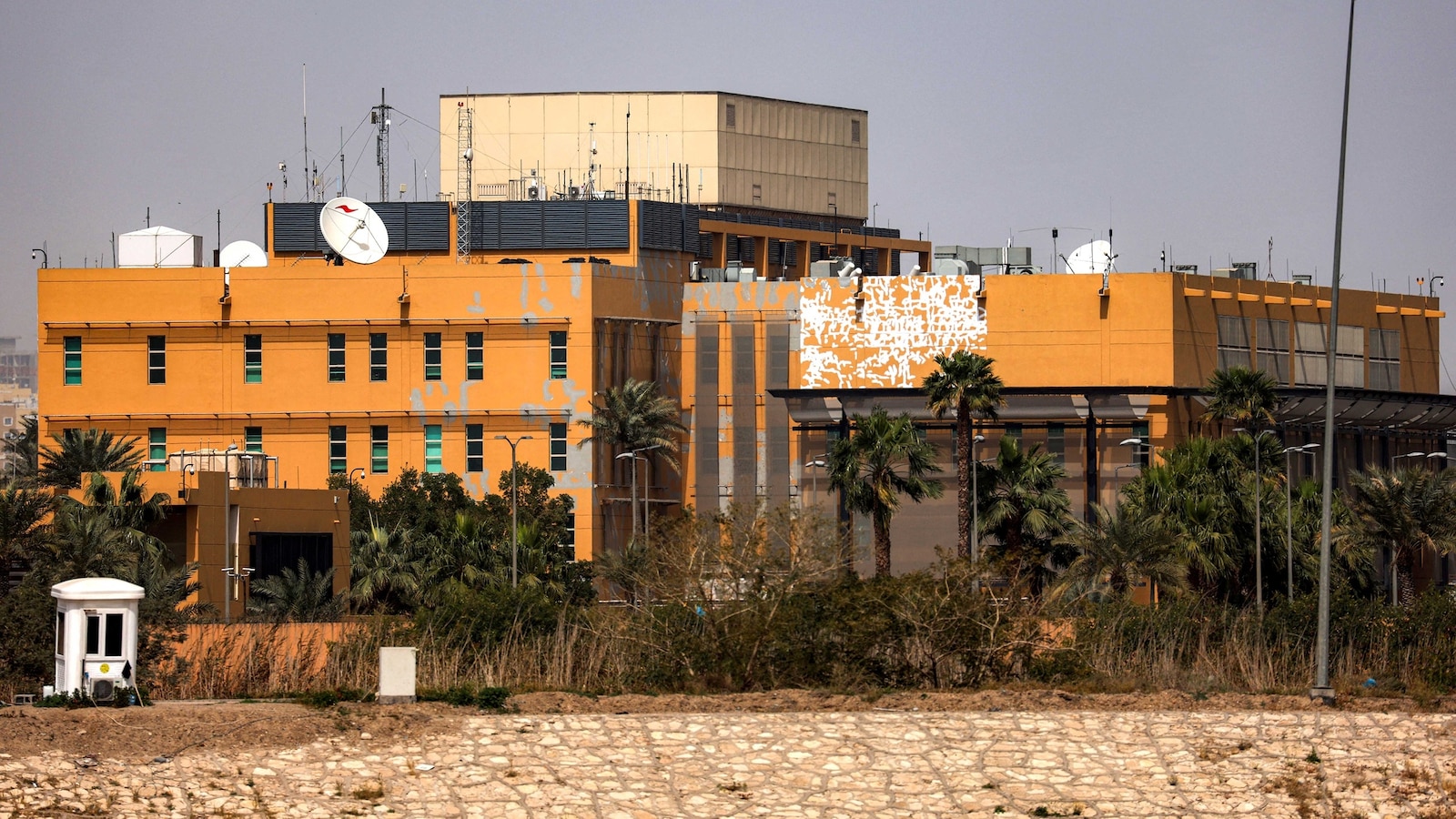
Once the evacuation orders were finally issued, the problems only multiplied. Military flights that were supposed to remove personnel from Baghdad—where the massive U.S. embassy sits within the fortified Green Zone—were grounded for several days because the security conditions were simply too dangerous. Think about that for a moment: the situation was so hazardous that even military aircraft, designed to operate in hostile environments, couldn’t safely land and take off. This delay left diplomatic staff essentially trapped in Baghdad, sheltering in place while the embassy and surrounding facilities came under repeated attack. The embassy itself, despite being one of the most heavily fortified diplomatic compounds in the world, has been targeted by Iran and militia groups aligned with Tehran almost constantly since the United States launched military operations against Iran on February 28.
The situation in Erbil, in northern Iraq, was even more dramatic and frankly alarming. American consulate staff there found themselves under direct attack from Iranian forces and were forced to shelter in place as the facility came under fire. When it came time to evacuate, the U.S. military—which would normally handle such a mission—was apparently stretched so thin or faced such operational constraints that they couldn’t carry out the evacuation themselves. In a remarkable development that speaks volumes about the challenges facing American forces in the region, it was actually the British Royal Air Force that came to the rescue, flying U.S. consulate staff and contractors from Iraq to the safety of Cyprus. The U.K. Ministry of Defense confirmed they transported “a number of US consulate staff and contractors, at their request,” though they declined to provide operational details for security reasons.
Drone Attacks Continue Despite Evacuation Efforts
Even as evacuation efforts continued, the attacks on American facilities in Iraq haven’t let up. Just this Wednesday, a major diplomatic support facility in Baghdad was struck by what officials believe was a drone attack. The damage assessment was still ongoing, but the fact that such a significant facility could be hit demonstrates just how vulnerable U.S. positions remain in the country. A State Department spokesperson confirmed the attack, stating that “the Baghdad Diplomatic Support Center was targeted by Iran-backed terrorist militias overnight” and that they remain in close contact with the Iraqi government about protecting American personnel and facilities. Three security guards were taken to the hospital following the attack for medical evaluation due to their proximity to where the drone struck. These guards, it’s important to note, are locally hired contractors rather than direct U.S. government employees—a detail that highlights the complex network of personnel that keeps these diplomatic operations running.
Drone attacks have become a signature threat in this conflict. Earlier in the crisis, on March 1st, a drone was intercepted near the former U.S. consulate and airport in Erbil around 4:30 in the afternoon. These unmanned aircraft, relatively cheap and easy to deploy, have proven to be an effective weapon for Iran and the militia groups it supports. They can evade some traditional air defenses, carry explosive payloads, and create a constant state of anxiety for anyone within a potential target area. For diplomats trying to carry out their work or pack up and leave, the threat of a drone strike at any moment adds an enormous psychological burden on top of the already stressful situation.
Limited Response from Iraqi Government Frustrates U.S. Officials
Adding to the frustration of American officials is what they see as an inadequate response from the Iraqi government itself. Despite repeated requests—and likely some pretty strong language behind closed doors—U.S. officials say the Trump administration has been deeply disappointed by Iraq’s efforts to defend American interests on Iraqi soil. This puts the United States in an extremely difficult position. Iraq is technically a sovereign nation and an American partner, but it’s also a country where Iranian influence runs deep, particularly through various militia groups that operate with varying degrees of independence from the official Iraqi security forces. Asking the Iraqi government to crack down on these militias is asking them to confront groups that have significant political power and that maintain close ties to Iran, Iraq’s powerful neighbor with which it shares religious and cultural connections.
The State Department has tried to put the best face on a difficult situation. When asked about the timing of the evacuation orders, a department official explained that such decisions “are based on real-time security assessments” between Washington and the diplomatic posts themselves. They emphasized that once the embassy in Baghdad requested an ordered departure, the department approved it within hours “in order to reduce our footprint and protect personnel.” A spokesperson also noted that “U.S. Mission Iraq continues to implement all needed steps to ensure the safety of our diplomatic personnel and facilities,” though they couldn’t comment on specific operational details. These carefully worded statements suggest an organization trying to project competence and control while dealing with an extremely fluid and dangerous situation that has, at times, seemed to spiral beyond anyone’s ability to fully manage.
The broader picture that emerges from this chaotic evacuation is sobering. It reveals an American diplomatic presence in Iraq that has been under siege, with personnel essentially trapped in fortified compounds while waiting for safe passage out of the country. It shows a military stretched thin, unable to carry out what should be routine evacuation operations without assistance from allies. It demonstrates that even with all the planning and resources the United States can bring to bear, the realities on the ground in a place like Iraq—caught between American interests and Iranian power, with a weak central government and powerful militia groups—can quickly overwhelm even the best-laid plans. For the diplomats and contractors who have lived through these frightening days, waiting for evacuation while drones flew overhead and explosions rocked their compounds, it has been a stark reminder that diplomatic service in conflict zones carries very real risks. As tensions with Iran continue and the situation remains volatile, the question of how to protect American personnel abroad while still maintaining a diplomatic presence becomes increasingly difficult to answer.