


Venezuelan Opposition Leader Juan Pablo Guanipa Released After Eight Months in Prison
A Long-Awaited Freedom
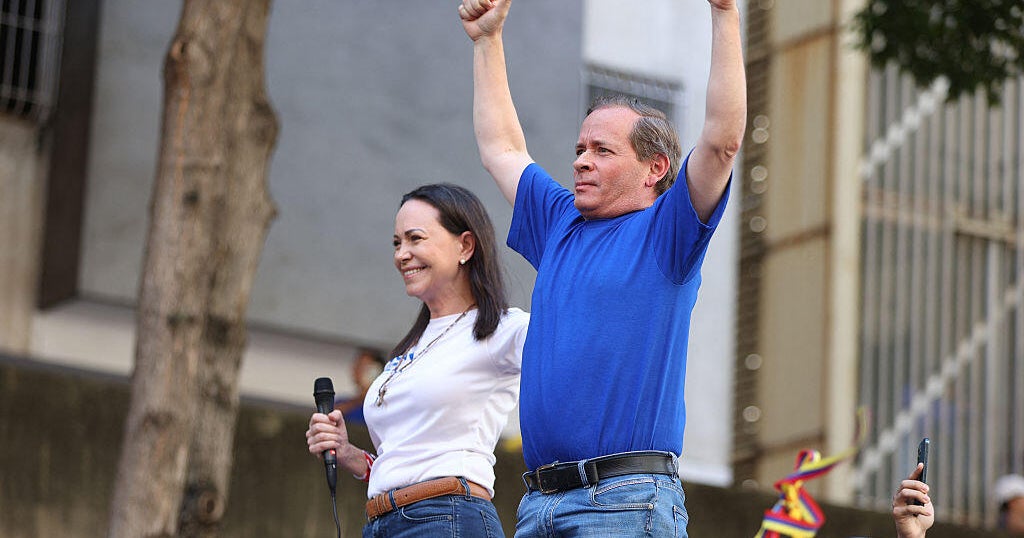
After spending more than eight months behind bars, Venezuelan opposition leader Juan Pablo Guanipa walked free on Sunday, sharing the news of his release through a video posted on social media. Guanipa, known as one of the most trusted and prominent allies of opposition powerhouse María Corina Machado, had been detained at a facility in Venezuela’s capital city of Caracas. In his video message posted on X (formerly Twitter), Guanipa expressed his relief while maintaining his commitment to Venezuela’s future, saying, “Today, we are being released. Much to discuss about the present and future of Venezuela, always with the truth at the forefront.” His words carried the weight of someone who had endured months of confinement for his political beliefs, yet remained unbowed in his dedication to his cause and his country.
The Controversial Arrest and Accusations
Guanipa’s detention in late May had sent shockwaves through Venezuela’s opposition movement and raised serious concerns among human rights advocates. The arrest came with serious allegations from Interior Minister Diosdado Cabello, who accused Guanipa of participating in what the government described as a “terrorist group” that was supposedly plotting to boycott the legislative elections scheduled for that month. These charges were vehemently rejected by Guanipa’s family and supporters, who viewed the arrest as nothing more than a political maneuver designed to silence dissent and intimidate opposition voices. The timing of the arrest, coming just before important elections, raised questions about the government’s true motives and its willingness to tolerate political opposition. For many observers, both inside and outside Venezuela, the charges appeared to be a transparent attempt to remove a vocal critic from the political arena during a crucial moment in the country’s democratic process.
A Prisoner of Conscience
In the aftermath of his brother’s arrest, Tomás Guanipa became a vocal advocate for Juan Pablo’s release, framing his detention in terms that resonated with international human rights standards. “Thinking differently cannot be criminalized in Venezuela, and today, Juan Pablo Guanipa is a prisoner of conscience of this regime,” Tomás declared in a powerful statement that captured the essence of the situation. He emphasized fundamental rights that should be universal: “He has the right to think as he thinks, the right to defend his ideas, and the right to be treated under a constitution that is not being enforced today.” These words highlighted a painful reality for many Venezuelans – that their country’s constitution, which guarantees freedom of expression and political participation, had become little more than words on paper, disregarded by those in power when convenient. The designation of Juan Pablo as a “prisoner of conscience” aligned him with countless other political detainees around the world who have been imprisoned simply for exercising their right to hold and express different political views from those of their governments.
Political Upheaval and New Leadership
The release of Guanipa occurs against a backdrop of dramatic political changes in Venezuela. The country is now under the leadership of acting President Delcy Rodríguez, who assumed power following an extraordinary event – the capture of then-President Nicolás Maduro by the U.S. military last month. This unprecedented development has created a new political landscape in Venezuela, one filled with both uncertainty and hope for those who have long opposed Maduro’s authoritarian rule. The transition has placed Rodríguez in a delicate position, facing mounting pressure from multiple directions: the opposition movement demanding the release of political prisoners, human rights organizations calling for respect of fundamental freedoms, and the international community, particularly the United States, pushing for democratic reforms. Guanipa’s release represents one response to these pressures, but many observers are watching closely to see whether it signals a genuine shift in the government’s approach to political dissent or merely a tactical concession to reduce international criticism.
Slow Progress on Prisoner Releases
While Guanipa’s release is certainly a positive development for his family and supporters, it comes amid widespread frustration over the pace of prisoner releases in Venezuela. Last month, Rodríguez’s government announced plans to free a significant number of prisoners, a move that was seen as a central demand not only of the country’s opposition but also of numerous human rights organizations, many of which have received backing and support from the United States. This announcement initially raised hopes among the families of political detainees and human rights advocates that a new chapter might be opening in Venezuela’s troubled political history. However, the reality on the ground has proven disappointing. Families of those still detained and rights watchdog organizations have been vocal in their criticism of authorities for what they describe as an unacceptably slow pace of releases. Many prisoners whose detentions have been linked by their families and nongovernmental organizations to their political beliefs remain behind bars, sometimes after months or even years of confinement without proper trials or due process. The gap between the government’s promises and its actions has become a source of ongoing tension and a test of whether the new leadership is genuinely committed to addressing human rights concerns or simply managing public relations.
The Road Ahead for Venezuela’s Opposition
As Juan Pablo Guanipa tastes freedom once again, his release symbolizes both progress and the long road that still lies ahead for Venezuela’s democratic opposition. His comment about having “much to discuss about the present and future of Venezuela” suggests that he and his allies, including María Corina Machado, are not backing down from their commitment to political change despite the risks and hardships they have endured. The opposition faces enormous challenges in a country where expressing dissenting views can result in imprisonment, where constitutional rights are selectively enforced, and where the political playing field remains heavily tilted in favor of the government. Yet leaders like Guanipa continue to press forward, motivated by a vision of a Venezuela that respects democratic principles, human rights, and the rule of law. His insistence on keeping “the truth at the forefront” reflects a determination to expose government abuses and maintain moral clarity even in the face of intimidation and persecution. For the countless Venezuelans who have suffered under authoritarian rule, who have seen family members imprisoned for their political beliefs, or who have been forced to flee their homeland, Guanipa’s release offers a glimmer of hope – a reminder that the struggle for freedom and democracy continues, and that even in the darkest times, the human spirit’s desire for liberty cannot be completely extinguished. Whether this moment represents a turning point in Venezuela’s political crisis or simply a temporary respite remains to be seen, but for now, Juan Pablo Guanipa stands as a testament to the resilience of those who refuse to be silenced.