


Major Drug Lab Bust in Mexico Highlights Ongoing Battle Against Cartels
Massive Methamphetamine Laboratory Discovered and Dismantled
In a significant victory against drug trafficking operations, Mexican naval forces uncovered and dismantled a clandestine drug laboratory hidden in the Durango region of Mexico this week. The operation, announced by officials on Wednesday, resulted in the seizure and neutralization of more than 5,000 pounds of methamphetamine—a staggering quantity that underscores the industrial scale of illegal drug production in the country. Beyond the methamphetamine itself, naval personnel discovered and confiscated thousands of liters and kilograms of chemical precursors used in drug manufacturing. These precursor chemicals are the building blocks for producing synthetic drugs, and their presence indicates this wasn’t just a simple operation but a sophisticated production facility capable of churning out massive quantities of illegal narcotics. According to official estimates, the total street value of the drugs and chemical materials seized during this single operation exceeded $265 million—a devastating financial blow to the criminal organizations behind it.
Inside the Hidden Drug Factory
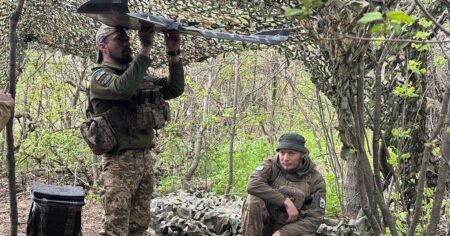
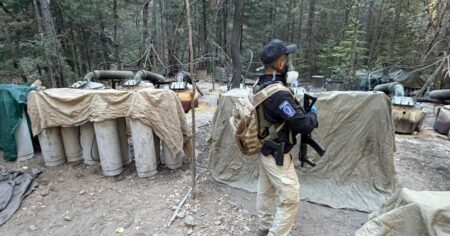
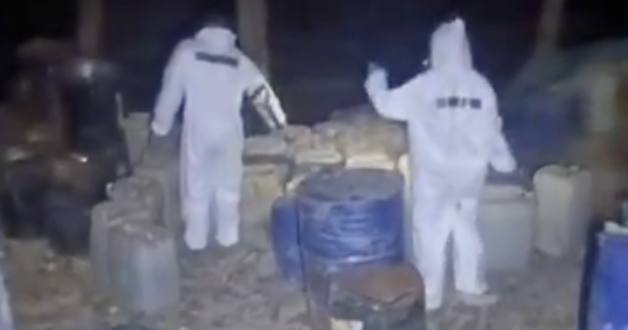
Footage released by Mexico’s navy provides a rare glimpse into the world of illegal drug manufacturing and reveals the concerning sophistication of these criminal enterprises. The video shows naval personnel dressed in full hazmat suits carefully inspecting the facility, a necessary precaution given the toxic and potentially explosive nature of the chemicals used in methamphetamine production. The laboratory itself was extensive, with dozens of containers scattered throughout the facility and numerous vessels filled with unidentified substances that likely represented various stages of the drug manufacturing process. An outdoor area of the compound contained large tanks and additional canisters, suggesting a production operation that extended well beyond what could be contained in a simple indoor space. The navy took deliberate steps to ensure this facility could never again serve its illicit purpose, systematically disabling all the infrastructure to prevent any possibility of the laboratory being reactivated by cartel operatives. This wasn’t just about seizing drugs—it was about permanently shutting down a key node in the drug trafficking network that supplies illegal narcotics to markets both within Mexico and abroad.
A Pattern of Discovery: Mexico’s Ongoing Laboratory Raids
This Durango laboratory bust is far from an isolated incident; rather, it’s part of a sustained campaign by Mexican authorities to locate and dismantle the infrastructure that drug cartels depend upon. Just weeks earlier in January, Mexican forces conducted raids on four separate clandestine laboratories in a matter of days, demonstrating both the prevalence of these operations and the government’s intensified efforts to combat them. One of these January raids, also in the Durango region, turned up massive stockpiles of chemical precursors discovered during a land patrol. In Sinaloa—home to the infamous cartel bearing the same name—authorities seized over 1,650 pounds of methamphetamine along with yet another cache of precursor chemicals. A separate operation in Michoacán yielded additional precursors and specialized laboratory equipment. The geographic spread of these laboratories across multiple states reveals the extensive reach of drug production networks throughout Mexico, while the frequency of these discoveries suggests that despite significant law enforcement pressure, cartels continue to establish new production facilities as quickly as old ones are shut down. This cat-and-mouse game between authorities and criminal organizations has become a defining feature of Mexico’s ongoing struggle against the drug trade.
The Death of “El Mencho” and Its Violent Aftermath
Recent days have seen Mexico gripped by violence following a military operation that resulted in the death of one of the country’s most powerful drug lords, Nemesio Rubén Oseguera Cervantes, known by his infamous nickname “El Mencho.” As the leader of the Jalisco New Generation Cartel, one of Mexico’s most powerful and rapidly expanding criminal organizations, El Mencho had been a primary target for both Mexican and U.S. law enforcement for years. The operation that led to his death took place in the western state of Jalisco, the cartel’s home base and stronghold. During an intense shootout with military forces, Oseguera Cervantes sustained injuries that would prove fatal; he died while being transported to Mexico City for medical treatment. According to sources with knowledge of the operation, the successful raid was the result of significantly enhanced cooperation between U.S. and Mexican authorities under Mexican President Claudia Sheinbaum’s administration. Intelligence sharing between the two countries has been markedly expanded in recent months, with the United States providing crucial information that helped locate the cartel leader, though no American personnel were present on the ground during the actual operation. This represents a delicate balance in U.S.-Mexico counter-narcotics cooperation, allowing for collaboration while respecting Mexican sovereignty.
Cartel Retaliation and Public Safety Concerns
The killing of such a high-profile cartel leader predictably triggered a violent response from the organization he led. For several hours following news of El Mencho’s death, cartel members erected roadblocks throughout affected regions, setting vehicles ablaze in a show of force and a tactic commonly employed to impede military operations and project power. The violence and chaos were significant enough that airlines temporarily suspended operations in some areas, unwilling to risk the safety of passengers and crew. Local authorities issued urgent warnings to both residents and tourists in affected areas, instructing them to shelter in place or remain at home until the situation stabilized. The disruption extended to daily life across several Mexican states, where schools were closed on Monday as a precautionary measure to protect children from potential violence. These dramatic responses to law enforcement actions against cartel leadership highlight the degree to which these criminal organizations have embedded themselves in certain regions, wielding sufficient power to effectively shut down normal life when they choose to flex their muscle. It also underscores the very real human cost of the drug war, as ordinary citizens find themselves caught between government forces and criminal organizations.
The Significance of Ongoing Anti-Cartel Operations
The Jalisco New Generation Cartel, which began operations around 2009, has distinguished itself as one of Mexico’s most formidable criminal enterprises, expanding its influence with remarkable speed over the past decade and a half. Mike Vigil, who served as the DEA’s Chief of International Operations and brings decades of experience tracking drug trafficking organizations, characterized the military operation that resulted in El Mencho’s death as “one of the most significant actions undertaken in the history of drug trafficking.” Vigil drew comparisons between Oseguera Cervantes and Joaquin “El Chapo” Guzman, the former Sinaloa Cartel leader whose capture and extradition to the United States was considered a major victory in the drug war. These recent operations—both the laboratory raids and the takedown of El Mencho—signal a potentially significant shift in Mexico’s approach to confronting the cartels, with enhanced international cooperation and more aggressive direct action against both the production infrastructure and leadership of these criminal organizations. However, history has shown that removing cartel leaders often leads to violent succession struggles and fragmentation that can actually increase violence in the short term, even as it disrupts operations. The true measure of success will be whether these operations can create sustained pressure that genuinely degrades cartel capabilities over time, rather than simply creating temporary disruptions that the organizations quickly recover from by promoting new leaders and establishing new laboratories to replace those that have been destroyed.