



The Ancient Practice of Orthodox Lent: A Modern Path to Healthier Eating
Understanding the Orthodox Lenten Tradition
Every year, millions of Orthodox Christians worldwide embark on a transformative six-week journey that goes far beyond simple dietary restriction. This centuries-old tradition, known as Orthodox Lent, requires adherents to adopt what essentially amounts to a Mediterranean vegan diet for the 40 days leading up to Orthodox Easter. Unlike the more flexible Catholic tradition where believers choose their own sacrifices—whether giving up chocolate, social media, or other personal indulgences—Orthodox Christians follow specific guidelines that eliminate meat, dairy products, eggs, and fish with backbones from their plates. Even more strictly, oil and wine are prohibited on weekdays during this period. The tradition is so deeply woven into the cultural fabric of Orthodox-majority countries that even global corporations adapt their offerings. In Greece, McDonald’s franchises annually introduce special Lenten menu items including shrimp wraps, vegetable spring rolls, and plant-based burgers, demonstrating how this ancient practice continues to shape contemporary life. This isn’t fasting in the sense of complete food abstention; rather, it’s a deliberate, mindful restriction of certain food categories that encourages participants to rediscover vegetables, legumes, and creative oil-free cooking methods that might otherwise be overlooked in their regular routines.
Life Inside the Monastery: Where Tradition Meets Practice
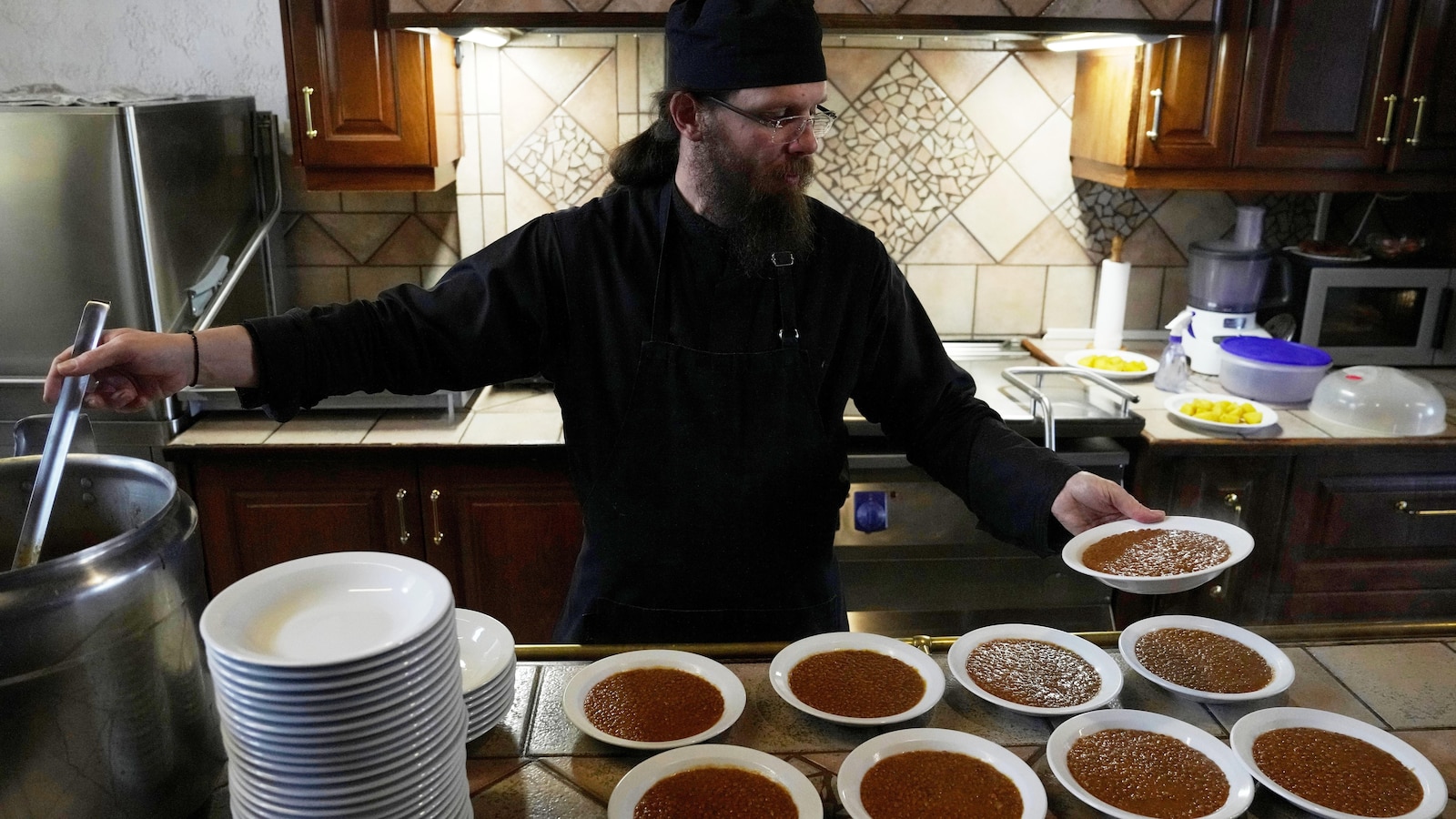
High on a lush coastal hillside in central Greece, the Monastery of St. Augustine and Seraphim provides a window into how Orthodox Lent is observed in its most dedicated form. Here, 40 monks clad in traditional black robes and full beards don’t just follow the Lenten guidelines—they live them with remarkable creativity and devotion. The monastery’s extensive gardens yield abundant zucchini, tomatoes, and other produce that form the foundation of their meals. What’s remarkable is how these monks have mastered the art of making restricted eating genuinely enjoyable. They’ve developed ingenious techniques to replicate familiar tastes and textures within their dietary constraints: oven-roasted potatoes are coated with tahini instead of oil to achieve that satisfying crunch, while vegetable stock prepared from scratch transforms simple lentil dishes into hearty, flavorful meals. Father Nektarios Moulatsiotis, the monastery’s welcoming abbot, offers a compelling framework for understanding this practice. He compares the church to a gym—not for the body, but for the soul. Just as physical training builds strength and endurance, he explains, dietary discipline sharpens spiritual focus and clarity. The monks eat their meals while listening to prayers read aloud, and even the hunger pangs that occasionally arise are viewed not as discomfort to be avoided but as part of the spiritual exercise. “You cannot really pray, study, chant or do any spiritual exercise with a full stomach,” Father Nektarios explains with characteristic good humor, articulating a principle that many modern practitioners of intermittent fasting might recognize.
The Science Behind the Spiritual Practice
While Orthodox Lent has spiritual origins dating back centuries, modern researchers have taken considerable interest in its potential health benefits. Scientists have spent decades studying Orthodox monks and their extended fasting periods—which actually extend well beyond Lent to cover most of the year—to determine whether their customs offer insights into preventing heart disease, type 2 diabetes, and strokes. Father Nektarios himself draws parallels between the spiritual and physical benefits, suggesting that the discipline and self-control developed through dietary restriction can enhance awareness and self-mastery in all areas of life, religious or secular. The nutritional profile of the Orthodox Lenten diet shares much with eating patterns already celebrated by health professionals: it emphasizes whole grains, vegetables, fruits, and legumes while dramatically reducing consumption of meat, saturated fats, and processed foods. When the body is given a six-week respite from these heavier foods, positive changes typically follow. Eirini Babaroutsi, a sports nutritionist with the Hellenic Athletics Federation, confirms that fasting done correctly certainly offers benefits. For instance, Orthodox Christians typically consume significantly more fiber during Lent, which supports better digestive function. However, she emphasizes an important principle: “It also matters what we do eat, not simply what we avoid. With the right combinations, we can get all the nutrients we need.” This perspective transforms Lent from a practice of deprivation into one of intentional, creative eating—a reframe that makes the tradition more accessible to those approaching it from a health rather than religious perspective.
Making It Work: Practical Considerations and Adaptations
The Orthodox Lenten diet, while beneficial for many, isn’t a one-size-fits-all solution, and the church itself recognizes this reality. The Eastern Orthodox Church exempts several groups from strict observance, including older adults, young children, people with serious health conditions or special dietary requirements, and pregnant or nursing women. This flexibility acknowledges that what serves as spiritual discipline for healthy adults might pose genuine health risks for vulnerable populations. Sports nutritionist Babaroutsi offers practical guidance for those interested in adopting similar eating patterns. The diet needn’t be limited to ingredients traditionally found in Orthodox-majority countries of Southern and Eastern Europe. International additions like porridge with oat milk, vegetable wraps with olive paste, and high-quality peanut butter can provide variety while meeting the guidelines. She also warns against a common pitfall: post-Lent binging. The temptation to “reward” oneself after six weeks of restriction by loading up on previously forbidden foods can actually strain the body and negate many of the benefits achieved. For those hesitant to commit to the full six-week period, there’s a middle path that many Greeks themselves follow. While Orthodox Lent officially began on February 23rd this year, many participants observe only Holy Week, the intense final stretch from Palm Sunday (April 5th) through the day before Easter (April 11th). This abbreviated version offers a taste of the practice without the daunting commitment of a month and a half of dietary restriction.
A Culture Transformed: How Greece Embraces Lenten Living
Walking through Greece during Lent offers a fascinating glimpse into how an ancient religious practice continues to shape modern consumer culture. Supermarkets and bakeries stock their shelves with fast, family-friendly Lenten meals and an impressive assortment of seasonal goods specifically marketed for this period. Shoppers fill their baskets with jars of pickles and olives, bags of chickpeas and other pulses, packages of squid sliced into convenient rings in the freezer section, creamy pink taramosalata (fish roe spread), and distinctive slabs of unleavened bread shaped like small surfboards. These aren’t specialty items tucked away in obscure corners but prominent displays that reflect the widespread participation in Lenten eating. The transformation is perhaps most vivid in Athens’ central fish market, where vendors energetically call out their wares over impressive piles of Lent-compliant clams, octopus, and mussels, shoveling seafood into paper cones for customers navigating the market’s characteristically slippery floors. Gerasimos Mantalvanos, the market’s general manager, observes this annual rhythm with a practical eye. He notes that many customers do tend to overindulge when Easter Sunday arrives with its traditional lamb dishes and elaborate sweets—a recognition of human nature that the church tradition itself seems to anticipate and accommodate. But for most people, Mantalvanos says, a spirit of moderation eventually reasserts itself. His perspective on the practice is refreshingly pragmatic: “It is good for eating habits to change from time to time during the year. So a period of fasting, a little fish and some abstinence from meat, I think these are good for the body. It is a kind of small detox, a little break.”
Lessons for the Modern Plate: Beyond Religion to Sustainable Eating
The Orthodox Lenten tradition offers valuable lessons that extend well beyond its religious context, particularly for people struggling to maintain New Year’s resolutions about healthier eating as spring approaches. At its core, this practice demonstrates the power of structured, time-limited dietary changes supported by community and culture. Unlike many modern diets that rely on individual willpower alone, Orthodox Lent benefits from centuries of accumulated recipes, cooking techniques, social acceptance, and institutional support that make adherence easier. The communal aspect cannot be overstated—when your neighbors, coworkers, and even McDonald’s are acknowledging and accommodating your dietary choices, maintaining those choices becomes significantly less challenging. The practice also offers a middle path between the extremes that often characterize contemporary diet culture. It’s neither the anything-goes approach that can lead to health problems nor the punishing restriction of many crash diets. Instead, it’s a disciplined yet creative engagement with food that emphasizes abundance within certain boundaries. The monks’ tahini-coated potatoes and richly flavored lentil soups exemplify how restriction can actually spark culinary creativity rather than leading to bland, unsatisfying meals. Perhaps most importantly, the Orthodox Lenten tradition reminds us that how we eat is connected to larger questions of purpose, community, and self-understanding. Whether or not one shares the spiritual motivations of Orthodox Christians, the idea that periodic dietary discipline can cultivate broader qualities like self-control, awareness, and clarity has relevance across belief systems. In an age of constant abundance and endless food choices, the Lenten practice offers something increasingly rare: permission to say no, structure within which to make that refusal, and a community to support the journey. For those intrigued by this approach, the path forward might involve borrowing elements of the tradition while adapting them to personal circumstances—perhaps trying a week of Lenten-style eating, exploring the remarkably diverse world of plant-based Mediterranean cooking, or simply becoming more mindful about when and why we choose the foods we eat. The centuries-old wisdom suggests that such experiments in disciplined eating might nourish more than just the body.