


The Unstoppable Rise of Wind Power: Why Renewable Energy Continues to Thrive Despite Political Headwinds
A Controversial $928 Million Pivot Away from Offshore Wind
In a move that surprised many in the renewable energy sector, the U.S. Department of the Interior recently struck a nearly billion-dollar agreement with French energy giant TotalEnergies that fundamentally redirects the company’s American energy strategy. The deal, valued at $928 million, essentially pays TotalEnergies to abandon its offshore wind development plans along the East Coast and instead funnel that same investment into domestic fossil fuel projects. The administration has framed this “landmark agreement” as a pathway to reduce energy costs and bolster national energy security, but the decision has ignited fierce debate about the future direction of American energy policy. Under the terms of this arrangement, TotalEnergies commits to investing $928 million in fossil fuel development within the United States—an amount that precisely matches what the company previously paid for offshore wind leases. Once TotalEnergies fulfills these commitments, the federal government has promised to reimburse the company up to the full value of those original lease payments. Perhaps most significantly, citing national security concerns, the Interior Department secured TotalEnergies’ pledge to cease all new offshore wind project development in American waters. Interior Secretary Doug Burgum defended the agreement by characterizing offshore wind as “one of the most expensive, unreliable, environmentally disruptive, and subsidy-dependent schemes ever forced on American ratepayers and taxpayers.”
An Administration at Odds with Renewable Energy Momentum
This deal with TotalEnergies represents just the latest salvo in a broader campaign by the Trump administration to slow the advance of renewable energy across multiple fronts. Earlier this month, the Department of Justice filed suit against California over its electric vehicle mandate, challenging the state’s ambitious clean transportation goals. Last month, an executive order directed the Department of Defense to purchase electricity from coal-fired power plants, seemingly prioritizing coal despite its declining economic competitiveness. Perhaps most controversially, the Environmental Protection Agency took the extraordinary step of rescinding the landmark “endangerment finding”—a scientific and legal cornerstone that has underpinned federal regulations on carbon dioxide and five other heat-trapping greenhouse gases for more than sixteen years. These actions collectively signal an administration determined to reverse course on climate policy, yet experts remain surprisingly optimistic about the renewable energy sector’s resilience. Erin Baker, a distinguished professor and faculty director at the Energy Transition Institute at the University of Massachusetts Amherst, acknowledges that offshore wind faces the most significant “headwinds” from federal policy, but emphasizes that the industry continues to persevere regardless. Most tellingly, Baker notes that the Trump administration’s actions have had “very little impact” on the global increase in renewable energy production, suggesting that market forces and state-level policies are proving more powerful than federal interference.
Why Wind Energy Makes Both Environmental and Business Sense
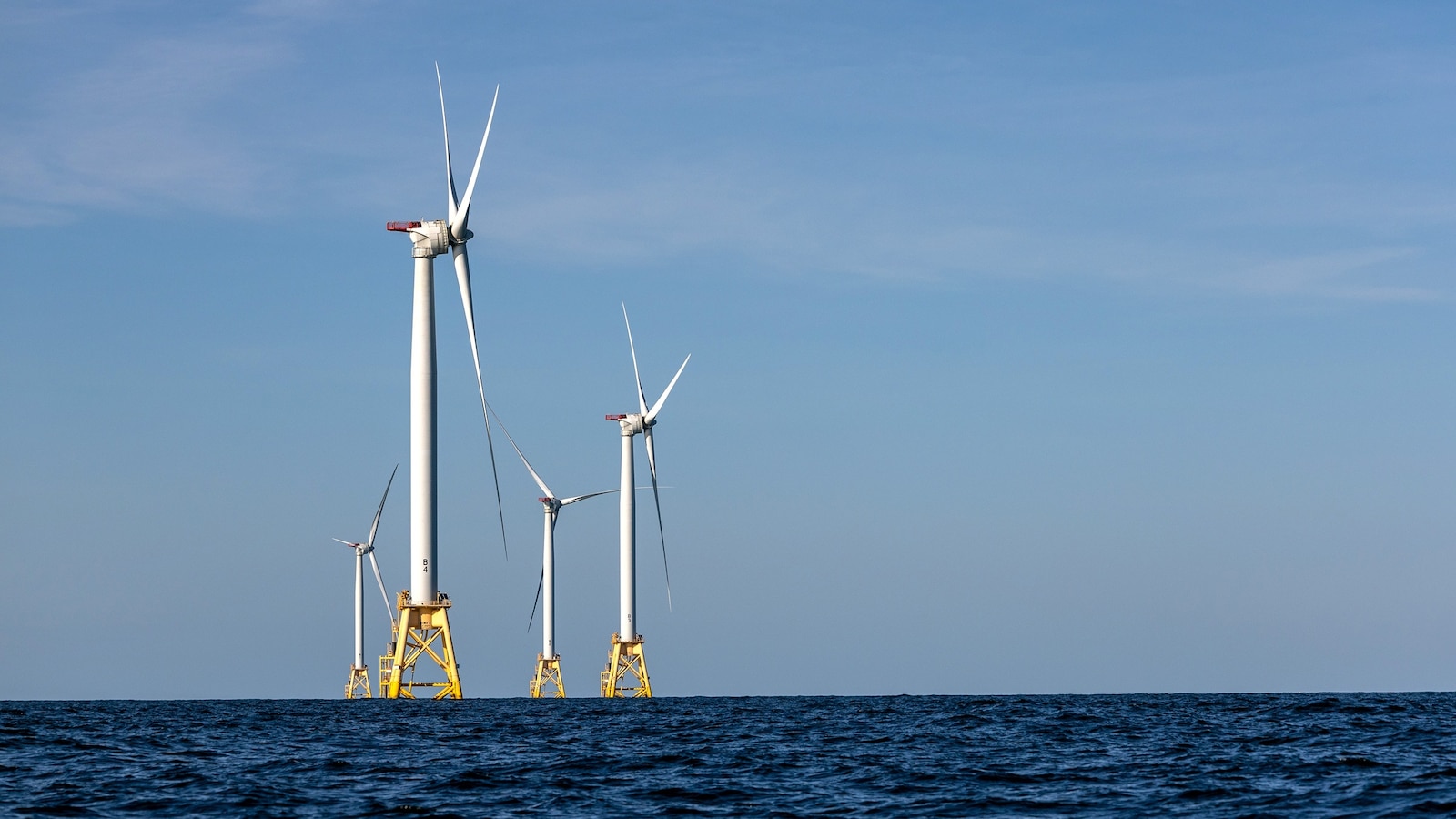
The case for wind energy extends far beyond environmental considerations—it’s increasingly a matter of simple economics and energy reliability. Wind has emerged as the largest and most dependable source of renewable energy in the United States, and its capacity to produce fuel-free electricity helps stabilize energy bills during periods of extreme weather when fossil fuel prices typically spike. Michelle Solomon, senior policy analyst at Energy Innovation, a nonpartisan clean energy research organization, explains that offshore wind represents “a really, really reliable resource that can really help mitigate spiking fossil fuel prices in the winter.” The economics of wind power have become so compelling that energy companies are pursuing it primarily for business reasons rather than environmental motivations. The power purchase agreements that offshore wind companies sign actually suppress electricity prices for consumers. These agreements commit utilities to purchase wind-generated electricity whenever it’s available, which then reduces the overall cost of electricity procurement across the board. As Baker puts it, “They’re not doing it for environmental reasons—they’re doing it just for business reasons.” This market-driven adoption of wind energy has created momentum that proves difficult to reverse through policy alone. In 2025, wind and solar energy together generated a record 17% of electricity in the United States—a dramatic increase from less than 1% in 2005, according to the Energy Information Administration. The total net generation from wind and solar reached 760,000 gigawatt-hours last year, sufficient to power tens of millions of average American homes. Wind power alone generated 464,000 gigawatt-hours, representing a 3% increase over 2024, demonstrating continued growth despite political opposition.
The Practical Advantages That Keep Wind Energy Growing
Beyond economics, wind energy offers practical advantages that make it particularly valuable for meeting America’s rapidly growing electricity demands. One of wind power’s most significant benefits is that it can “come online the most quickly” after construction is completed, according to Solomon. In an era when electricity demand is surging due to data centers, artificial intelligence applications, and general economic growth, the ability to rapidly deploy new generation capacity becomes critically important. Wind and solar facilities can be constructed and connected to the grid far faster than traditional fossil fuel or nuclear plants, making them the logical choice for utilities trying to meet near-term demand increases. This responsiveness to market needs explains why wind and solar comprised nearly 90% of new U.S. electricity capacity additions in 2025, according to the Federal Energy Regulatory Commission. That trend shows no signs of reversing—experts anticipate it will continue into 2026 and beyond. On a global scale, renewable energy capacity is projected to more than double by 2030, according to the Energy Information Administration, reflecting worldwide recognition of renewables’ economic and practical advantages. Even in the face of policy changes that include early phase-outs of renewable tax incentives and various regulatory modifications, the fundamental market forces driving wind energy adoption remain powerful. As Baker observed, “Even though [the Trump administration] was actively trying to stop those industries, they still were growing.”
A Long-Standing Presidential Opposition to Wind Turbines
President Trump’s antagonism toward wind energy predates his current term, extending back to his first presidency and even earlier. His criticisms have ranged from the scientifically dubious to the economically questionable, revealing a persistent hostility that appears both personal and political in nature. In 2019, Trump made the widely debunked claim that noises from wind turbines “cause cancer” and negatively impact property values near wind farms. During his 2024 presidential campaign, he insisted that wind turbines “kill whales” and promised to issue an executive order on “Day 1” of his presidency to end offshore wind projects. True to his word, on January 20, 2025—the first day of his second term—Trump signed an executive order withdrawing all areas of the outer continental shelf from offshore wind leasing consideration. However, the administration quickly discovered that presidential declarations don’t automatically translate into enforceable policy. A federal judge in the U.S. District of Massachusetts ruled in December that the administration’s halt to permits for wind farms was illegal, dealing a significant blow to the president’s anti-wind agenda. The TotalEnergies deal represents the administration’s latest attempt to curb wind power growth through alternative means—using financial incentives rather than regulatory prohibition.
Legal Victories and Economic Realities Shape the Future
Despite the administration’s efforts, offshore wind developers have achieved significant legal victories that demonstrate the limits of executive power in this arena. In December 2025, the Interior Department attempted to freeze five large offshore wind projects on the East Coast, once again citing national security concerns as justification. Federal judges examined these claims and ultimately ruled that all five projects could resume construction, concluding that the government failed to demonstrate that the alleged security risks were sufficiently imminent to justify halting the developments. Among these projects were Empire Wind, a substantial wind farm under construction 15 to 30 miles south of Long Island’s coast, and the Coastal Virginia Offshore Wind project, which began delivering electricity to Virginia’s power grid on Monday, according to developer Dominion Energy’s announcement. These legal victories represent important precedents that may protect future renewable energy projects from similar regulatory interference. However, the delays caused by these legal battles have not been without consequence. The uncertainty created by the administration’s actions has led to what Solomon describes as “an uncertain investment environment,” which has increased both construction costs for developers and ultimately the energy bills paid by consumers. Ironically, the administration’s stated goal of lowering energy costs may be undermined by its own policies. Solomon warns that “the impact of these actions will raise energy costs in the end,” as project delays translate into higher financing costs, supply chain disruptions, and lost momentum on economies of scale. North Carolina Governor Josh Stein echoed this concern, describing the TotalEnergies deal as “a terrible deal for the people of North Carolina and our country” in a social media post. The fundamental reality is that while the federal government maintains significant authority over offshore wind projects because they’re constructed in federal waters, the broader momentum behind renewable energy—driven by economics, state policies, corporate commitments, and global trends—appears too strong to be derailed by any single administration’s opposition. As both Baker and Solomon emphasized, the momentum is “definitely still there,” and wind power production will continue its advance regardless of political headwinds from Washington.