

Iran Signals Willingness to Negotiate with United States Amid Rising Tensions
A Cautious Opening for Diplomatic Talks
After weeks of escalating confrontation between Tehran and Washington, Iranian President Masoud Pezeshkian announced Tuesday that he has directed the country’s foreign minister to engage in what he called “fair and equitable negotiations” with the United States. This statement marks the first clear indication that Iran might be willing to come to the negotiating table, potentially defusing a crisis that has brought the two nations to the brink of conflict once again. The Iranian president’s announcement came in response to what he described as “requests from friendly governments in the region” following President Trump’s proposal for negotiations. However, Pezeshkian was careful to set conditions for these talks, emphasizing that any discussions must take place in “a suitable environment” that is “free from threats and unreasonable expectations.” He stressed that Iran’s approach would be guided by principles of “dignity, prudence, and expediency,” signaling that while Tehran is open to dialogue, it won’t accept what it views as dictated terms or negotiations conducted under duress.
Trump’s Strategy of Pressure and Diplomacy
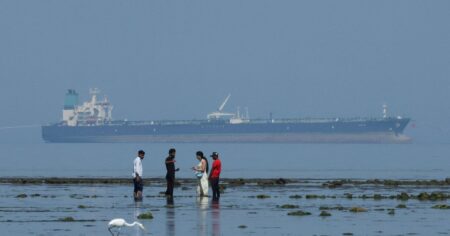
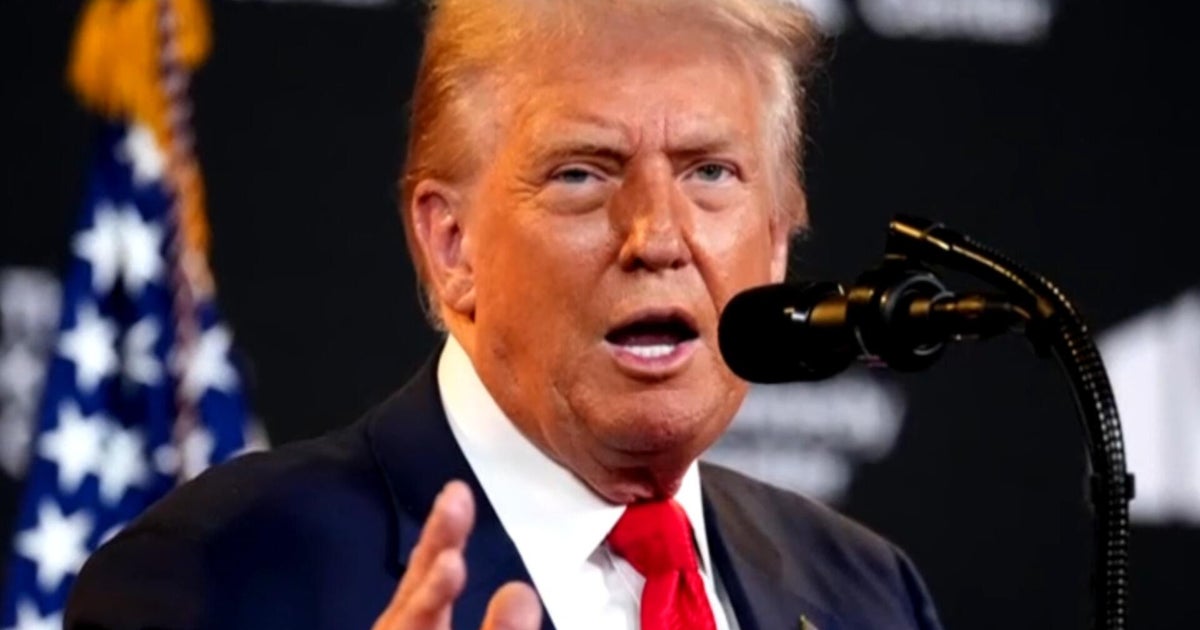
President Trump has adopted a dual approach of military threats combined with offers of negotiation, a strategy he has employed before with other adversaries. On Monday, he expressed his preference for a diplomatic solution, stating, “I’d like to see a deal negotiated. Right now, we’re talking to them, we’re talking to Iran, and if we could work something out, that’d be great. And if we can’t, probably bad things would happen.” This carrot-and-stick approach has been underscored by the deployment of what Trump has called an “armada” of U.S. warships heading toward the Persian Gulf, a show of force designed to back up his diplomatic overtures with credible military pressure. The President has issued various ultimatums to Iran in recent weeks, initially threatening military action if Iranian authorities killed protesters during the brutal government crackdown on anti-government demonstrations that erupted in early January. More recently, Trump shifted the threat, suggesting that military strikes could be launched if Iran refuses to negotiate a new agreement addressing its nuclear program. This evolving set of red lines reflects the complex and multifaceted nature of U.S.-Iran tensions, which encompass not just nuclear concerns but also human rights issues and regional security.
Regional Mediators Work Behind the Scenes
The potential for negotiations has been facilitated by intensive diplomatic efforts from regional powers seeking to prevent another military confrontation in the Middle East. U.S. senior envoy Steve Witkoff is traveling to the region to participate in these diplomatic initiatives, though the White House has not officially confirmed whether he will directly meet with Iranian officials. According to reports from The Associated Press, Gulf countries including Turkey and Qatar have been working diligently to arrange talks that could take place later this week. The proposed negotiations would include not just U.S. and Iranian representatives but also foreign ministers from Qatar, the United Arab Emirates, Oman, Pakistan, and Saudi Arabia, according to an unnamed regional official. This multilateral approach reflects the reality that any U.S.-Iran agreement would have significant implications for the entire Middle East region. These countries have a vested interest in preventing conflict in their neighborhood and are using their diplomatic channels and relationships with both Washington and Tehran to create conditions for productive dialogue.
Voices from Iran’s Streets: Protesters Demand Change
While diplomatic negotiations proceed at the governmental level, the voices of ordinary Iranians who took to the streets in protest reveal the depth of dissatisfaction with the current regime. Zahra, a pseudonym used to protect the identity of a protester who participated in the demonstrations that peaked on January 8 and 9, spoke to CBS News about the motivations and hopes of those who risked their lives to demand change. She expressed a widespread fear among protesters that if the current government remains in power, it will seek revenge against those who dared to challenge it by taking to the streets and chanting slogans like “death to Khamenei and Islamic Republic.” According to Zahra, many Iranians without ties to the regime want it removed “at any expense,” whether that means the arrest or removal of Supreme Leader Ayatollah Ali Khamenei or the complete dismantling of the Islamic Republic system. She emphasized that protesters aren’t distinguishing between hardliners close to Khamenei and so-called reformists within the system, viewing all factions as complicit participants in an oppressive structure that needs to go entirely.
The Complex Question of Foreign Intervention
Zahra’s comments reveal a controversial reality: some Iranians would support U.S. intervention to topple the regime, a sentiment that complicates the diplomatic picture. She explained that during the protests, Iranians watched President Trump’s tweets on satellite television and read his messages promising that “help is on the way.” Many people, she said, “trusted him big time” and were emboldened to take to the streets based on these assurances. Now, she asks Trump to “keep his word,” explaining that Iranian protesters “tried every possibility, and all of that was peaceful,” but were met with violence as unarmed demonstrators “were shot in big crowds.” This has led to a growing understanding among many Iranians that “we can’t do it by our own,” suggesting openness to external support for regime change. However, this sentiment among protesters doesn’t necessarily represent all Iranians, and the question of foreign intervention remains deeply divisive and fraught with historical baggage, given the 1953 CIA-backed coup that overthrew Iran’s democratically elected prime minister and installed the Shah, whose rule eventually gave rise to the 1979 Islamic Revolution.
The Road Ahead: Uncertainty and Consequences
As potential negotiations loom, the outcome remains highly uncertain, with significant consequences regardless of whether talks succeed or fail. If negotiations do take place and result in an agreement, it could potentially address multiple issues including Iran’s nuclear program, regional security concerns, and possibly even create space for the Iranian government to address internal grievances without losing face internationally. However, the conditions both sides have set suggest that finding common ground will be extremely challenging. Iran insists on negotiations free from threats and conducted with respect for its dignity, while the United States has made clear that military action remains an option if diplomacy fails. The involvement of regional mediators could help bridge these gaps, but it also adds complexity to an already difficult negotiating environment. Meanwhile, the Iranian people remain caught between their government’s international standoff and their own demands for change, having demonstrated their willingness to risk everything for a different future. The deployment of U.S. naval forces to the Persian Gulf serves as a constant reminder that the window for diplomacy, while open, may not remain so indefinitely. President Trump’s characteristically blunt assessment that failure to reach a deal would mean “probably bad things would happen” underscores the stakes involved for all parties—the United States, Iran, regional powers, and most importantly, the Iranian people whose lives and futures hang in the balance.