

The Standoff with Iran: Regional Allies Push for Diplomacy as Military Tensions Mount
Regional Powers Work to Prevent Military Escalation
As tensions between the United States and Iran reach a critical point, several Middle Eastern nations are working behind the scenes to prevent what could become a devastating military confrontation. Turkey, Oman, and Qatar have stepped forward as mediators, attempting to facilitate diplomatic conversations between Washington and Tehran. According to multiple regional officials who spoke with CBS News, these nations are acutely aware of the dangers posed by potential military action and are using their diplomatic channels to create space for dialogue. Despite these efforts, the path to meaningful negotiations remains fraught with challenges. Three regional officials, speaking anonymously to maintain the confidentiality needed for sensitive diplomatic work, indicated that direct talks between the United States and Iran regarding Tehran’s nuclear program and ballistic missile capabilities have yet to gain any real momentum. The situation is further complicated by recent high-level military consultations, including a visit to Washington by Israeli military intelligence chief General Shlomi Binder, who held meetings at the Pentagon, CIA, and White House. This visit, which was not publicly announced by the Trump administration, signals the seriousness with which both nations are approaching the Iranian situation. Additionally, Saudi Arabia’s Defense Minister traveled to Washington for meetings, demonstrating the regional nature of the crisis and the involvement of key American allies in whatever decisions may lie ahead.
Domestic Crisis in Iran Adds Urgency to International Tensions
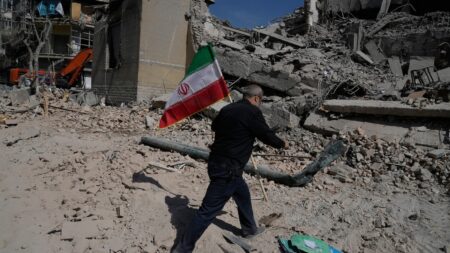
The international standoff is occurring against a backdrop of tremendous internal turmoil within Iran itself. The country has been wracked by widespread protests triggered by severe economic hardship and political repression, and the government’s response has been nothing short of brutal. Thousands of protesters are believed to have been killed in a sweeping crackdown by Iranian authorities, with countless others detained in what human rights observers describe as one of the most severe periods of domestic repression in recent Iranian history. The Iranian government has imposed a near-total communications blackout, cutting internet and phone services for over two weeks in an apparent attempt to prevent protesters from organizing and to keep information about the crackdown from reaching the outside world. Only small numbers of Iranians have recently managed to establish connections to the outside world, making it extremely difficult to verify the full extent of the violence and repression. This information vacuum has added to the uncertainty surrounding the situation and has made it challenging for international observers to assess what is truly happening on the ground. President Trump has used this domestic crisis as leverage in his public messaging, posting on social media that a “massive armada” was heading toward Iran and urging the government to “come to the table” for negotiations. Iran’s foreign minister, Seyed Abbas Araghchi, responded defiantly, stating that Iranian security forces “are prepared—with their fingers on the trigger—to immediately and powerfully respond to ANY aggression against our beloved land, air, and sea.” This exchange of increasingly heated rhetoric has done little to calm fears that the situation could spiral into open conflict.
Regional Allies Set Clear Boundaries on Military Action
While the United States has been building up its military presence in the region, some of America’s key regional allies have made clear that they will not support direct military strikes against Iran, even as they maintain their strategic partnerships with Washington. Saudi Arabia and the United Arab Emirates have explicitly stated that their airspace and territory cannot be used to launch attacks on the Islamic Republic, reflecting both their complex relationships with Iran and their concerns about becoming targets themselves in any broader conflict. In a phone call between Saudi Crown Prince Mohammed bin Salman and Iranian President Masoud Pezeshkian, the Saudi leader reportedly told his Iranian counterpart that he had explicitly forbidden “any party” from using Saudi territory to strike Iran. This statement represents a significant diplomatic development, as Saudi Arabia and Iran have historically been regional rivals with fundamentally different visions for the Middle East. Similarly, the UAE has pledged not to allow its waters, airspace, or territory to be used for military operations against Iran, and has committed to withholding logistical support for any such attack. These positions by Saudi Arabia and the UAE demonstrate the delicate balancing act these nations must perform—maintaining their security partnerships with the United States while avoiding actions that could make them direct targets of Iranian retaliation or destabilize the broader region in ways that could harm their own interests.
Intelligence Assessments and Iran’s Vulnerability
Recent U.S. intelligence assessments paint a picture of an Iranian government facing unprecedented challenges to its authority and stability. According to these evaluations, the regime is in its weakest position since the 1979 revolution that brought Ayatollah Khomeini back from exile and established the Islamic Republic. This vulnerability stems from a combination of factors: a collapsing economy devastated by years of international sanctions, widespread domestic discontent that has erupted into massive protests, the loss of key regional proxies following Israeli and American military operations, and the degradation of Iran’s nuclear infrastructure through bombing campaigns. However, this apparent weakness has not translated into a willingness to engage in diplomatic negotiations. Iran’s foreign minister is scheduled to travel to Turkey for diplomatic meetings, but multiple diplomatic officials in the region report that Tehran remains deeply skeptical of any diplomatic overtures from the United States. This skepticism is rooted in recent history, particularly events from last June when the Trump administration joined Israel’s bombing campaign targeting Iranian nuclear facilities even though diplomatic talks had been scheduled. From Iran’s perspective, this sequence of events demonstrated that American offers of negotiation cannot be trusted and may simply serve as cover for military planning. This lack of trust on both sides creates a dangerous situation where miscalculation or misunderstanding could lead to escalation that neither party truly desires.
Military Buildup and Uncertain Objectives
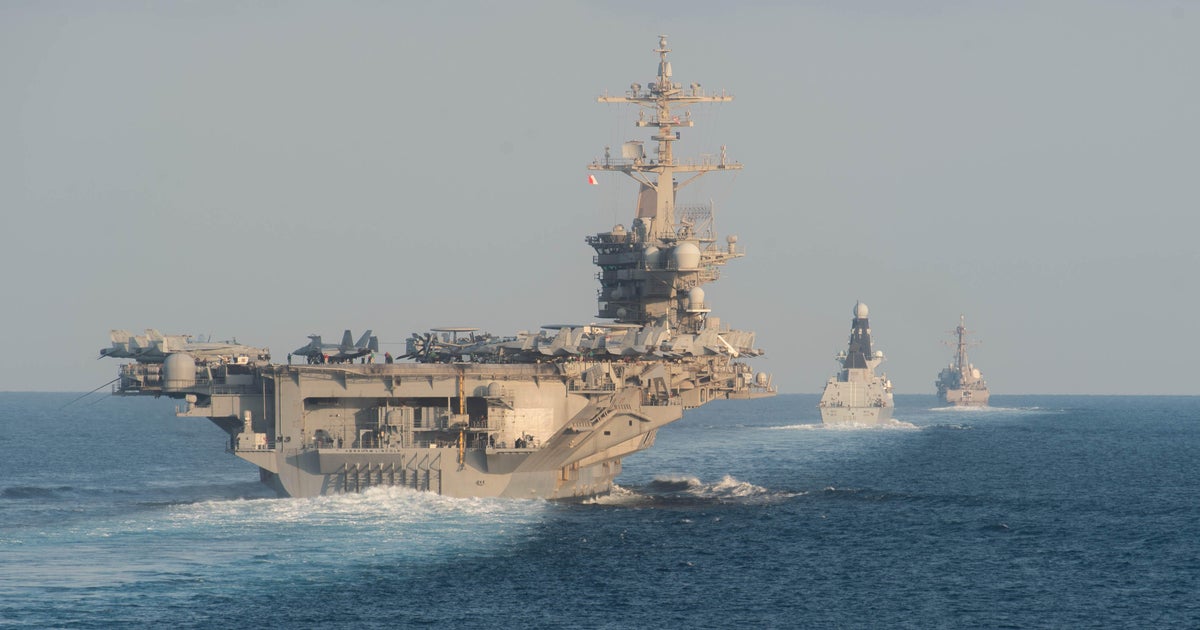
President Trump has ordered a significant buildup of American military forces in the Middle East, sending unmistakable signals about the seriousness of U.S. intentions. An additional destroyer and the Lincoln Carrier Strike Group arrived in the region this week, bringing the USS Abraham Lincoln aircraft carrier with its squadrons of fighter jets and three escort destroyers. This deployment supplements the two destroyers and three littoral combat ships already operating in the area under U.S. Central Command, creating a formidable concentration of American military power. Despite this show of force, significant uncertainty remains about what actual military action might entail. President Trump has repeatedly raised the possibility of strikes against Iran, but it remains unclear what the specific targets would be or whether the United States might pursue the kind of “decapitation strikes” designed to eliminate regime leadership and facilitate regime change. While Trump initially made public threats of military action to pressure the Iranian government to stop its brutal crackdown on protesters, the demonstrations have largely been suppressed without American intervention. Speaking at the premiere of “Melania,” a documentary about the first lady, President Trump confirmed to CBS News that he has had recent conversations with Iran and plans to have more. He stated that in these discussions, he communicated two clear demands: “No. 1, no nuclear. And No. 2, stop killing protesters. They’re killing them by the thousands.” Trump also emphasized the military pressure, saying, “We have a lot of very big, very powerful ships sailing to Iran right now. And it would be great if we didn’t have to use them.”
The Path Forward Remains Unclear
The Trump administration’s ultimate objectives remain somewhat ambiguous, creating uncertainty both in the region and in Washington itself. During testimony before the Senate Foreign Relations Committee, Secretary of State Marco Rubio struggled to answer questions about contingency planning, specifically regarding who might take over if Supreme Leader Ayatollah Ali Khamenei and the regime were to fall. He could only express “hope that there would be some ability to have somebody within their systems” who could work constructively toward a transition—a response that revealed the lack of clear planning for post-regime scenarios. Rubio described Iran’s government as “weaker than it has ever been” with an economy “in collapse,” but he downplayed the likelihood that the regime could actually be overthrown through the current wave of protests. He suggested that Iranian authorities may have effectively suppressed the uprising through sheer brutality, noting grimly that “regimes, including that one in Iran, have learned that when you start shooting people in the head with snipers, it’s effective.” The human cost of this repression may be staggering—a source inside Iran told CBS News that activist groups believe the death toll has reached at least 12,000 and possibly as high as 20,000, based on reports from medical officials across the country, though these figures cannot be independently verified. Rubio also informed Congress that the United States currently maintains 30,000 to 40,000 troops stationed across eight or nine facilities in the Middle East, characterizing the military buildup as defensive in nature given that all these facilities are at risk of Iranian strikes using short-range ballistic missiles or one-way attack drones. As regional mediators continue their efforts and military forces move into position, the international community watches anxiously to see whether diplomacy can prevail or whether the Middle East is heading toward another devastating conflict.