

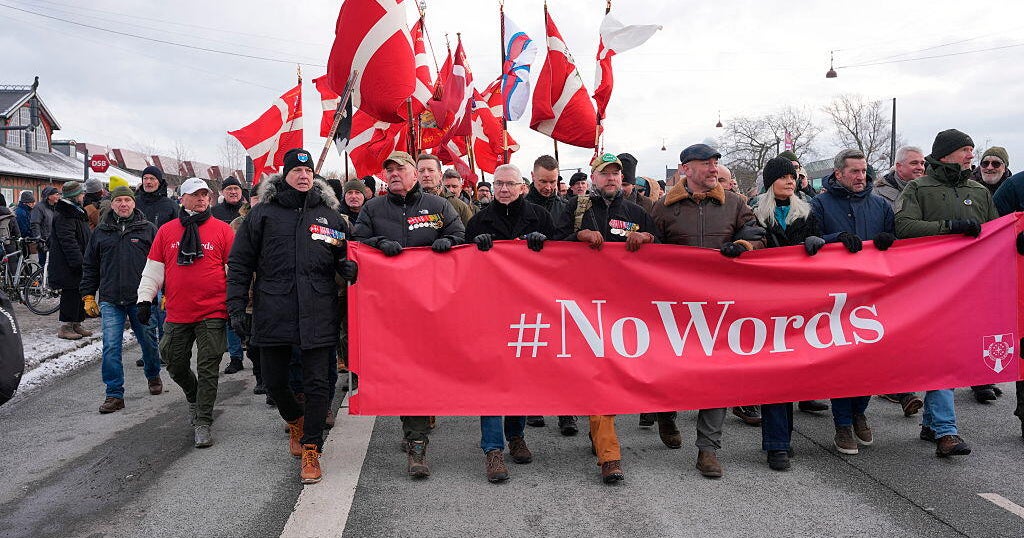

Danish Veterans Stage Silent Protest Against Trump’s Greenland Rhetoric
A Breach of Trust Between Longtime Allies
The bond between Denmark and the United States, forged through decades of military cooperation and shared sacrifice, has been deeply shaken by recent events. On a cold Saturday in Copenhagen, hundreds of Danish military veterans gathered outside the U.S. Embassy in a powerful display of quiet dignity and disappointment. These were not ordinary protesters shouting slogans or carrying angry banners. Instead, they stood in complete silence, their presence speaking volumes about the depth of betrayal they felt. Many of these men and women had fought shoulder-to-shoulder with American troops in some of the world’s most dangerous conflict zones, answering America’s call when it mattered most. Now, they feel their contributions have been dismissed and forgotten by the Trump administration, which has made controversial statements about taking over Greenland while questioning Denmark’s ability to protect Western security interests in the Arctic region.
The Danish Veterans & Veteran Support organization issued a heartfelt statement that captured the emotions of those assembled: “Denmark has always stood side by side with the USA — and we have showed up in the world’s crisis zones when the USA has asked us to. We feel let down and ridiculed by the Trump Administration, which is deliberately disregarding Denmark’s combat side by side with the USA.” The statement continued with even more poignant words: “Words cannot describe how much it hurts us that Denmark’s contributions and sacrifices in the fight for democracy, peace and freedom are being forgotten in the White House.” For these veterans, the issue goes far beyond political posturing or territorial disputes. It strikes at the very heart of their service, their sacrifices, and the losses they’ve endured in the name of an alliance they believed was built on mutual respect and shared values.
The Solemn March and Its Symbolic Significance
The protest was carefully choreographed to reflect both respect and profound disappointment. Veterans first assembled at a monument dedicated to fallen Danish service members, paying tribute to those who never returned home from distant battlefields. From there, they marched together to the nearby American Embassy, their footsteps echoing through Copenhagen’s streets in measured, dignified procession. Upon arriving at the embassy, they observed five minutes of complete silence—each minute dedicated to a different branch of Denmark’s service: the army, air force, navy, emergency management agency, and police. This symbolic gesture underscored the comprehensive nature of Denmark’s commitment to international security operations and its partnership with the United States.
Soren Knudsen, vice president of Denmark’s veterans association, spoke to the press about the deeper meaning behind their demonstration. “We also want to tell Americans that what Trump said is an insult to us and the values that we defended together,” he explained to Agence France-Presse. Knudsen also expressed surprise at how quickly support for the protest had grown. What began as a small initiative within the veterans association rapidly transformed into a significant event that captured national attention. The overwhelming response demonstrated that the feelings of hurt and betrayal weren’t limited to a small group of disgruntled veterans but represented a broader sentiment among those who had served Denmark in international operations. The silence of their protest made their message even more powerful—sometimes, what isn’t said speaks louder than any words could.
Personal Stories of Sacrifice and Betrayal
Among the protesters was Martin Aaholm, a Danish combat veteran whose story embodies the profound sacrifice that many Danish soldiers have made in support of American-led missions. Aaholm served in Afghanistan alongside U.S. troops, where he lost both of his legs to an improvised explosive device. When he spoke to CBS News earlier in the week, his words carried the weight of someone who had given nearly everything in service of an alliance he believed in. “I have sacrificed a lot of friends, family, girlfriends, all because I was placed on the path of helping America after 9/11,” Aaholm said. Despite his injuries and losses, he had always believed his sacrifice was worthwhile, adding that he was “amazed that we would answer the call, us little Denmark. I was amazed that we were able to fight with the big guys.”
However, recent events have fundamentally altered Aaholm’s perspective on the relationship between Denmark and the United States. His subsequent comments revealed a deep disillusionment with the direction America has taken: “I think America has lost its soul. It’s not the America I grew up with, where America was the defender of peace in the world and wanted to spread democracy.” For Aaholm and many of his fellow veterans, the America they fought alongside represented ideals worth defending—democracy, freedom, mutual respect, and loyalty to allies. The Trump administration’s dismissive rhetoric about Denmark and its aggressive posturing toward Greenland seems to contradict everything these veterans believed they were fighting for. When someone has lost their legs, watched friends die, and sacrificed personal relationships in service of an alliance, being told that their contributions don’t matter or that their country is inadequate cuts deeper than any political disagreement.
The Staggering Cost of Denmark’s Commitment
The statistics surrounding Denmark’s military contributions tell a story of disproportionate sacrifice that makes the current tensions even more painful. During the war in Afghanistan, 44 Danish soldiers were killed in action. While this number might seem small compared to the losses suffered by larger nations, when adjusted for population size, Denmark suffered the highest per capita death toll among all coalition forces in Afghanistan. Additionally, eight Danish soldiers died in Iraq. These numbers represent real people—sons and daughters, husbands and wives, fathers and mothers—who left behind grieving families and communities forever changed by their loss. For a relatively small nation like Denmark, with a population of less than six million people, these casualties touched communities across the country.
The veterans and their families carried these losses with pride, believing that their loved ones had died for a meaningful cause—defending shared values and supporting a crucial ally in its time of need. Denmark didn’t have to participate so actively in these conflicts. The country could have offered token support or limited its involvement to safer, less combat-intensive roles. Instead, Denmark chose to deploy its forces to some of the most dangerous areas, fighting in direct combat operations alongside American troops. This wasn’t about national self-interest or territorial expansion; it was about honoring an alliance and standing up for principles that both nations claimed to share. Now, when the Trump administration casually dismisses Denmark’s contributions and questions the country’s capabilities, it feels like those 52 lives were lost for nothing—or worse, for an ally that never truly valued their sacrifice. This is why the protest resonated so deeply, not just with veterans but with Danish society as a whole.
The Flag Incident That Intensified Emotions
If the underlying tensions weren’t already significant enough, an incident earlier in the week added fuel to the fire and intensified the emotional response among Danish veterans and the general public. On Tuesday, someone placed 44 Danish flags in front of the U.S. Embassy in Copenhagen—one flag for each Danish soldier killed in Afghanistan. It was a simple but powerful memorial, a visual reminder of the cost Denmark had paid in support of American-led operations. However, embassy staff removed the flags, an action that was perceived by many as yet another sign of disrespect toward Danish sacrifices. The timing couldn’t have been worse, coming amid already heightened tensions over the Greenland controversy and President Trump’s dismissive comments about Denmark.
The public outcry was immediate and intense. Social media lit up with outraged comments from veterans, military families, and ordinary Danish citizens who saw the removal as symbolic of America’s disregard for its allies. Recognizing the severity of the situation, the U.S. Embassy quickly issued an apology and replaced the flags. “We have nothing but the deepest respect for Danish veterans and the sacrifices Danish soldiers have made for our shared security. There was no ill intent behind the removal of the flags,” the embassy stated in a Facebook post. The State Department later clarified that embassy guard staff routinely remove items left behind following demonstrations and other legitimate exercises of free speech, and that the flags had been returned to those who left them. While the explanation was technically reasonable from a procedural standpoint, the optics were terrible, and the damage to an already strained relationship had been done. For many, the incident perfectly encapsulated the broader problem: technical correctness doesn’t erase the feeling of being disrespected and undervalued.
The Deeper Questions About Alliance and Values
This conflict between Denmark and the United States raises fundamental questions about the nature of international alliances and the values that supposedly bind democratic nations together. When smaller nations commit troops to support larger allies, they do so based on trust—trust that their contributions will be valued, that their sacrifices will be remembered, and that the relationship works both ways. Denmark answered America’s call after 9/11, not because it had to, but because it believed in the alliance and the shared principles that underpinned it. Danish soldiers fought in some of the most dangerous regions of Afghanistan and Iraq, taking casualties at a higher per capita rate than any other coalition partner, all in the name of friendship and shared values.
Now, many Danes are questioning whether that trust was misplaced. When President Trump speaks of potentially taking over Greenland—a territory of a NATO ally with its own right to self-determination—and dismisses Denmark’s ability to protect Western security interests in the Arctic, it sends a message that power matters more than partnership, that might makes right, and that previous sacrifices count for nothing when geopolitical interests are at stake. For veterans like Martin Aaholm, who gave his legs and watched friends die, this represents a fundamental betrayal of everything they thought they were fighting for. The silent protest outside the embassy wasn’t just about Greenland or political rhetoric; it was about the soul of the alliance itself and whether the values of democracy, mutual respect, and loyalty to allies still mean anything in the modern world. As these veterans stood in silence in front of the embassy, they weren’t just expressing anger—they were mourning the loss of an ideal they had believed in deeply enough to sacrifice everything for it. The question now is whether that relationship can be repaired, or whether the damage done will fundamentally alter how smaller democratic nations view their partnerships with the United States for generations to come.