

Tragic Collision Off Greek Coast Claims 15 Lives in Migrant Boat Disaster
A Devastating Accident in the Aegean Sea
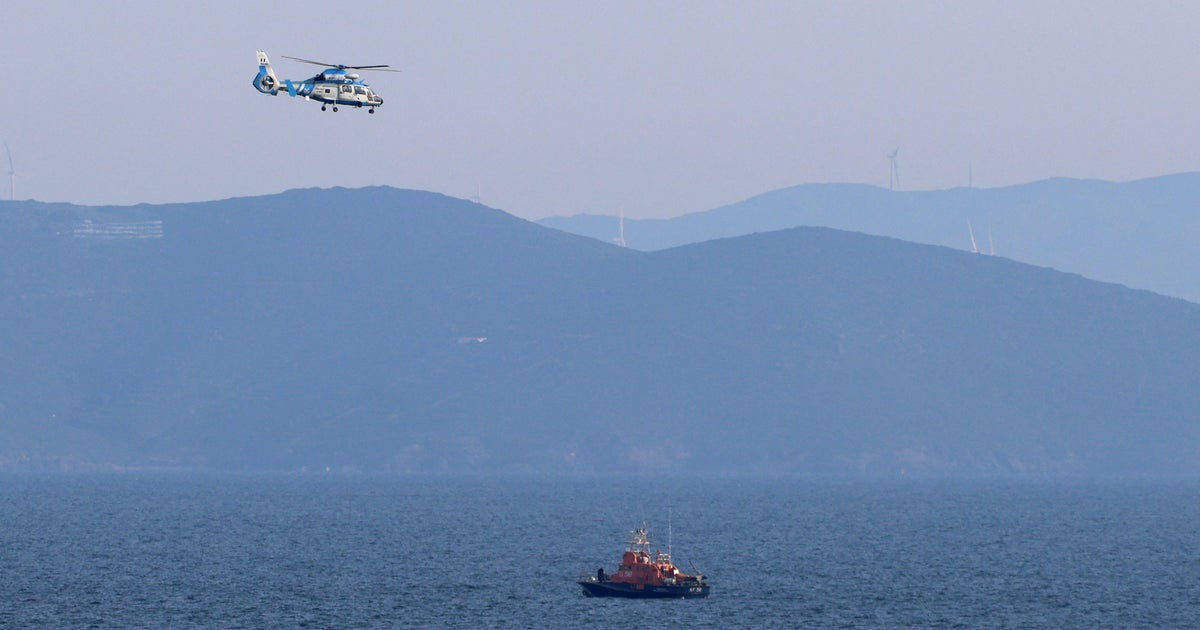
In a heartbreaking incident that underscores the ongoing humanitarian crisis in the Mediterranean, at least 15 people have lost their lives following a collision between a speedboat carrying migrants and a Greek coast guard patrol vessel near the eastern Aegean island of Chios. The tragedy unfolded late Tuesday evening when the two vessels collided under circumstances that remain under investigation. The Greek coast guard initially recovered the bodies of 14 people from the sea—11 men and three women—while desperately working to rescue survivors from the dark waters. Tragically, one of the women who had been rescued and transported to the local hospital later succumbed to her injuries, bringing the death toll to at least 15. The collision has sparked an extensive search and rescue operation involving multiple coast guard patrol boats, an air force helicopter, and even private vessels carrying divers, all working around the clock to find anyone who might still be missing from the speedboat.
The Rescue Effort and Survivors
Despite the devastating loss of life, there were survivors pulled from the water in the immediate aftermath of the collision. Twenty-five migrants, including approximately 11 children, were rescued from the sea and quickly transported to the hospital on Chios for emergency medical treatment. The rescue wasn’t limited to the migrants—two coast guard officers who were injured during the incident also required hospitalization, highlighting the chaotic and dangerous nature of the collision. Local news footage captured the harrowing scene at the jetty, showing emergency responders carrying at least one person wrapped in a blanket from a moored boat toward a waiting coast guard vehicle with its blue lights flashing urgently through the darkness. In the same footage, other rescuers could be seen carefully leading two children toward the vehicle, one of them visibly limping from injuries sustained in the accident. Michalis Giannakos, the head of Greece’s public hospital workers’ union, reported that the medical staff at the Chios hospital had been placed on high alert to handle the sudden influx of injured patients. Speaking on Greece’s Open TV channel, he confirmed that several of the injured required immediate surgical intervention, and the entire medical team remained on standby in case more victims were discovered and brought to shore.
The Unclear Circumstances of the Collision
As rescue operations continued through the night, many critical questions remained unanswered. The Greek coast guard has not yet provided detailed information about exactly how the collision occurred, leaving investigators to piece together the sequence of events that led to this deadly accident. The total number of people who had been aboard the speedboat at the time of the collision also remains uncertain, complicating efforts to determine whether all passengers have been accounted for. This uncertainty has intensified the search and rescue operation, with four patrol vessels, an air force helicopter, and a private boat carrying divers all scouring the waters around Chios for any potential missing passengers. The collision raises troubling questions about maritime safety in these heavily trafficked waters, where desperate migrants in overloaded and often unseaworthy vessels frequently cross paths with coast guard patrols. Whether the collision was the result of darkness, rough seas, the erratic movement of the migrant vessel, or other factors will presumably be determined through the ongoing investigation, but answers may be slow in coming as authorities focus their immediate efforts on ensuring no one remains missing at sea.
Greece at the Crossroads of a Migration Crisis
This tragedy is far from an isolated incident but rather reflects Greece’s position as a major entry point into the European Union for people fleeing conflict, persecution, and poverty across the Middle East, Africa, and Asia. For years, desperate migrants and refugees have undertaken the short but perilous crossing from the Turkish coast to the nearby Greek islands scattered across the eastern Aegean Sea. While the distance may be measured in mere miles, the journey is fraught with danger—overcrowded boats, unpredictable weather, strong currents, and the darkness of night crossings create conditions where fatal accidents have become tragically common. The route has claimed countless lives over the years, with bodies washing up on beaches that were once known primarily as tourist destinations. However, the dynamics of migration in this region have shifted in recent years due to increased patrols by Greek authorities and persistent allegations of pushbacks—summary deportations without allowing asylum seekers the opportunity to apply for protection, a practice Greece denies but which human rights organizations have documented. These tightened enforcement measures have succeeded in reducing the number of attempted crossings, but they have also pushed migrants toward even riskier routes and methods, potentially making the journeys more dangerous for those who still attempt them.
Europe’s Hardening Stance on Migration
The collision off Chios occurred against the backdrop of increasingly restrictive migration policies across Europe. Greece, like several other European Union countries, has been steadily tightening its regulations regarding asylum seekers and migrants. In December, the European Union completed a major overhaul of its migration system, implementing measures that include streamlining deportation procedures and increasing the use of detention for asylum seekers while their claims are processed. This policy shift reflects a broader change in the political landscape across Europe, where public debate on migration has evolved significantly since the surge of asylum seekers and other migrants that peaked about a decade ago. In the intervening years, far-right political parties that campaign on anti-immigration platforms have gained substantial political power in numerous EU member states, fundamentally changing the conversation around asylum and border protection. As a result, EU migration policies have hardened considerably, with increased emphasis on preventing arrivals, speeding up returns, and establishing processing centers outside Europe’s borders. The number of asylum seekers reaching Europe has declined from the record levels seen during the 2015-2016 migration crisis, but this reduction has come at a significant human cost, as evidenced by the continued loss of life in the Mediterranean.
The Mediterranean: World’s Deadliest Migration Route
The tragedy off Chios is part of a much larger pattern of death in the Mediterranean Sea, which has earned the grim distinction of being the world’s deadliest migration corridor. Just last month, the United Nations’ migration agency issued a stark warning that hundreds of migrants might be missing at sea or feared dead following reports of multiple deadly shipwrecks in the central Mediterranean during January alone. The International Organization for Migration (IOM) expressed deep concern about these reports and indicated it was working to verify the full extent of the losses. According to the agency’s preliminary information, several boats were believed to have been involved in incidents over a ten-day period, with hundreds of people potentially missing or dead. The IOM’s statement carried a sobering warning: “In just the first weeks of 2026, hundreds of people are already feared to be missing,” with the acknowledgment that “the final toll may be significantly higher.” The agency emphasized that the Central Mediterranean remains the world’s deadliest migration route, with at least 1,340 people losing their lives there in 2025 alone. Taking a longer historical view, the scope of the tragedy becomes even more apparent—between 2014 and the end of 2025, more than 33,000 migrants died or went missing in the Mediterranean according to the IOM’s Missing Migrants Project. These numbers represent not just statistics but thousands of individual human tragedies—people seeking safety, opportunity, or simply survival who instead found death in the waters between Africa and Europe. Each number represents someone’s child, parent, sibling, or friend who set out hoping for a better future and never arrived. As rescue operations continue off the coast of Chios and investigators work to understand exactly what happened in this latest tragedy, these broader statistics serve as a reminder that until the underlying issues driving migration are addressed and safer, legal pathways are established, the Mediterranean will continue to claim lives with heartbreaking regularity.