
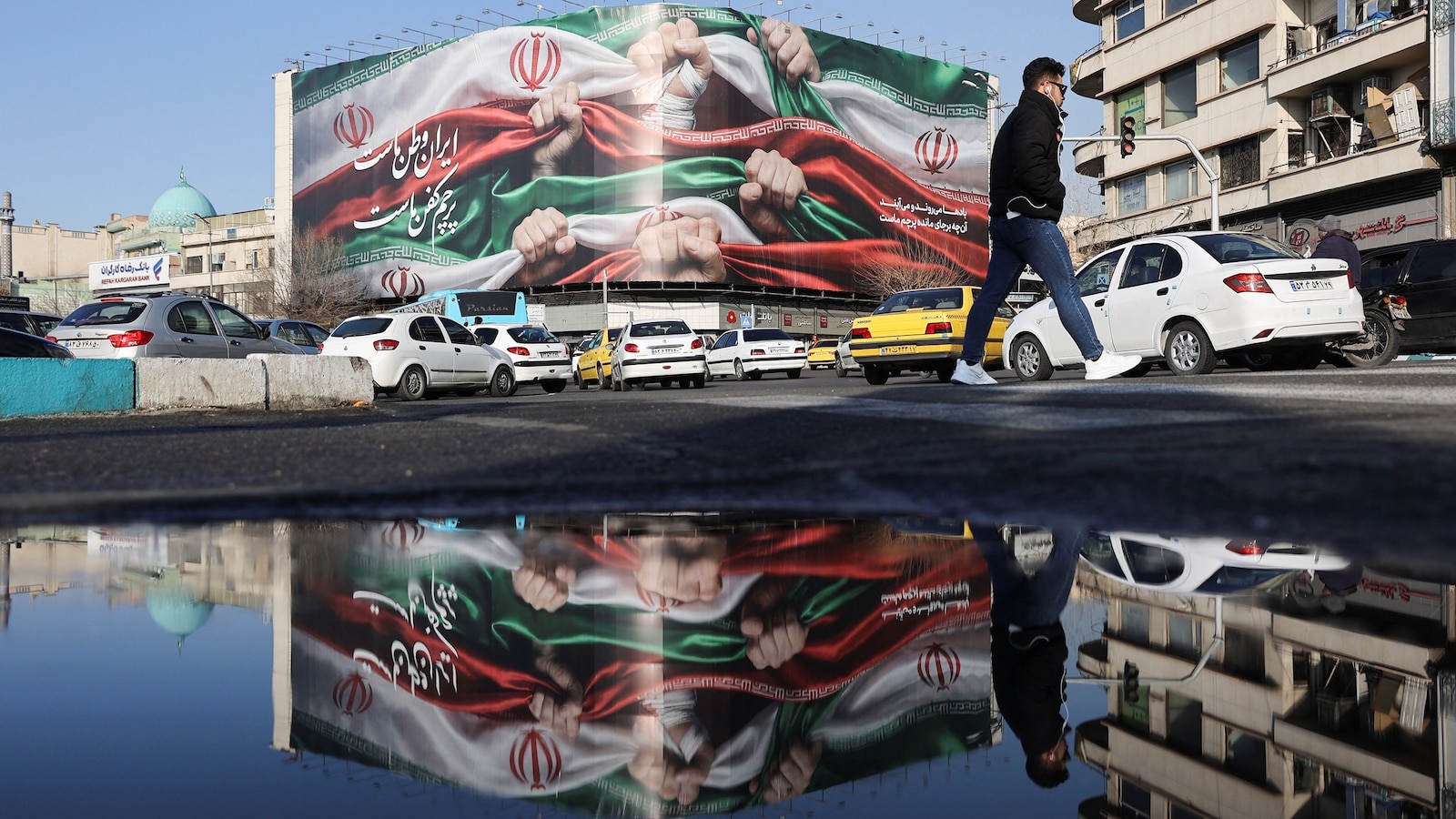

Iran’s Darkest Hour: Inside the Regime’s Brutal Crackdown on Protesters
A Nation Emerges from Digital Darkness
After weeks of being cut off from the world, Iran is slowly reconnecting to the internet, and what’s emerging from that digital darkness is nothing short of horrifying. The Islamic Republic has carried out what appears to be its deadliest crackdown in decades, leaving families shattered and a nation traumatized. According to the Human Rights Activists News Agency, a U.S.-based organization with deep connections inside Iran, more than 5,700 protesters have been killed since January 8th. Even more chilling is that another 17,000 death cases are still being investigated and verified. While these numbers cannot be independently confirmed by international media, sources suggest the actual death toll could be even higher. What started as economic protests in late December—triggered by the collapse of Iran’s currency and deteriorating living conditions—quickly evolved into something much bigger: open calls for regime change. Citizens who had endured years of economic hardship finally reached their breaking point, taking to the streets in cities across the country to demand not just better conditions, but an entirely new government. The regime’s response was swift and merciless, deploying security forces with orders that seem to have been simple: crush the uprising at any cost.
The Bazaar Burning: A Symbol of State Violence
Among the many horrific accounts emerging from Iran, the story of what happened in Rasht—a major city on the Caspian Sea coast—stands out as particularly shocking. Saman, a witness who spoke to ABC News but asked that his full name not be used for safety reasons, described scenes that sound more like a war zone than a response to civil protests. On January 8th, when tens of thousands of people flooded the streets of Rasht, something unprecedented happened at the city’s iconic bazaar. The bazaar, a traditional marketplace that serves as the economic and social heart of many Iranian cities, became a trap. According to Saman, when shop owners refused to end their strikes and instead joined the protesters, regime forces made a calculated decision: they set the bazaar on fire. But this wasn’t just an attempt to destroy property—it was an apparent attempt to kill those inside. As flames spread through the market, people naturally tried to flee, but government forces had blocked the main exits. Those who attempted to escape were shot. “There was smoke everywhere, a huge fire was there,” Saman recalled, his voice conveying the horror of what he witnessed. “As people were going to leave, they shot them all. Maybe some of them were not even protesters. And some were normal people who had raised their hands up.” Satellite imagery later confirmed significant fire damage at the site of Rasht’s bazaar. For Saman and countless others, what happened that day wasn’t crowd control or even excessive force—it was a massacre.
The Disappeared and the Dead
In the aftermath of the violent crackdown, Iranian families face a nightmare that extends beyond grief: many simply don’t know what happened to their loved ones. Some protesters who left their homes on January 8th never returned, and their families have been left searching morgues, hospitals, and prisons with little information and even less hope. Saman told ABC News that the regime has been “very strict in returning corpses,” and ominously added, “Some people have really disappeared.” For those families who have been able to locate and retrieve their loved ones’ bodies, the experience has been degrading and traumatic. According to witnesses, bodies have been transported in freight trucks, stripped of clothing and dignity, dumped unceremoniously at cemeteries. One of Saman’s friends, who lost two sons in the violence, described the heartbreaking scene at Rasht’s Bagh-e Rezvan cemetery, where parents were forced to identify their children among piles of bodies. Some families have reportedly been charged fees simply to reclaim the remains of their loved ones. Adding to the anguish, families of the dead have been warned by authorities not to hold funerals—events that in the past have become focal points for renewed protests. This denial of the basic right to mourn reflects the regime’s fear that even in death, these protesters might inspire further resistance. Martial law remains in effect across much of Iran, with anti-riot vehicles stationed at intersections and heavily armed police patrolling the streets. As one recent emigrant named Hadi put it: “Everyone has either lost someone in their circle, or knows someone who has. There is fear and pain in the air.”
Conflicting Narratives and Rising Tensions
With international journalists and independent observers denied access to Iran during the protests, getting accurate information has been extremely difficult, and the reported death tolls have varied significantly. However, as networks of international human rights organizations work to verify accounts from inside the country, the numbers have been steadily climbing, painting a picture of violence on a scale not seen in Iran for decades. The Iranian government, meanwhile, has offered its own version of events that differs dramatically from what witnesses describe. Foreign Minister Abbas Araghchi characterized the protests as a “terrorist operation” and claimed the death toll included 3,117 civilians, 2,427 members of security forces, and 690 “terrorists.” The regime has accused American and Israeli agents of killing protesters and has warned the United States against any intervention. President Donald Trump has responded by announcing that the U.S. has an aircraft carrier “armada” heading toward Iran, though he expressed hope it wouldn’t need to be used. This came after Trump publicly warned the Iranian regime not to kill protesters. In response, Araghchi pushed back on social media, stating: “Iran’s message to President Trump is clear: The U.S. has tried every conceivable hostile act, from sanctions and cyber assaults to outright military attack—and, most recently, it clearly fanned a major terrorist operation—all of which failed. It is time to think differently. Try respect.”
A Population Divided on Foreign Intervention
As tensions escalate between Washington and Tehran, ordinary Iranians find themselves grappling with an agonizing question: is foreign military intervention the only path to freedom from what they see as a brutal autocratic regime? On social media, many Iranians are openly expressing that they feel there are no options left, that decades of sanctions, diplomatic pressure, and internal resistance have failed to bring meaningful change. Some are explicitly calling for U.S. military action to remove the regime from power, a remarkable shift in a country where anti-American sentiment has long been a pillar of the Islamic Republic’s identity. However, not all Iranians support this approach. Critics worry that foreign intervention could plunge the country into deeper, longer-lasting chaos, potentially making things worse rather than better. As journalist and analyst Omid Memarian wrote in The Atlantic, “For the Iranian government, confronting an external enemy is far easier than confronting its own people. Domestic protests threaten internal cohesion; war produces unity.” Memarian cautioned that if Trump follows through on his threats but fails to dismantle Iran’s “machinery of repression,” the result could be counterproductive, actually strengthening the regime’s support base and justifying “even greater violence against the country’s civilians.” This debate reflects the desperation many Iranians feel—caught between a regime they see as murderous and oppressive, and the uncertain consequences of foreign military action that could bring its own terrible costs.
A Nation Traumatized
Whatever happens next on the geopolitical stage, the immediate reality for millions of Iranians is one of trauma, grief, and fear. The country that has emerged from its longest-ever internet blackout—which stretched past 400 hours according to NetBlocks, an independent tracking company—is fundamentally changed. The scale of violence inflicted by the regime on its own citizens has left psychological scars that will take generations to heal. People describe living in what feels like a post-war environment, even though the “war” was waged by their own government against them. The streets may have been emptied of protesters, at least for now, but that silence comes not from acceptance or resolution—it comes from fear, exhaustion, and overwhelming loss. Saman’s words capture the essence of what so many witnessed: “It was a war. The regime’s war against its own people. People were unarmed, but they came with their machine guns.” As the world watches and waits to see whether this crisis will escalate into international conflict, the people of Iran are left to count their dead, search for their missing, and wonder whether the massive sacrifice they’ve already made will ultimately lead to the change they’ve been seeking, or simply to more suffering. The protesters who took to the streets in late December wanted economic relief and political freedom. What they got instead was a reminder of just how far their government is willing to go to maintain power—and a question that hangs heavy over the nation: what comes next?