

Rising Tensions: Iran Warns of Regional Conflict Amid U.S. Military Threats
Supreme Leader Issues Stark Warning
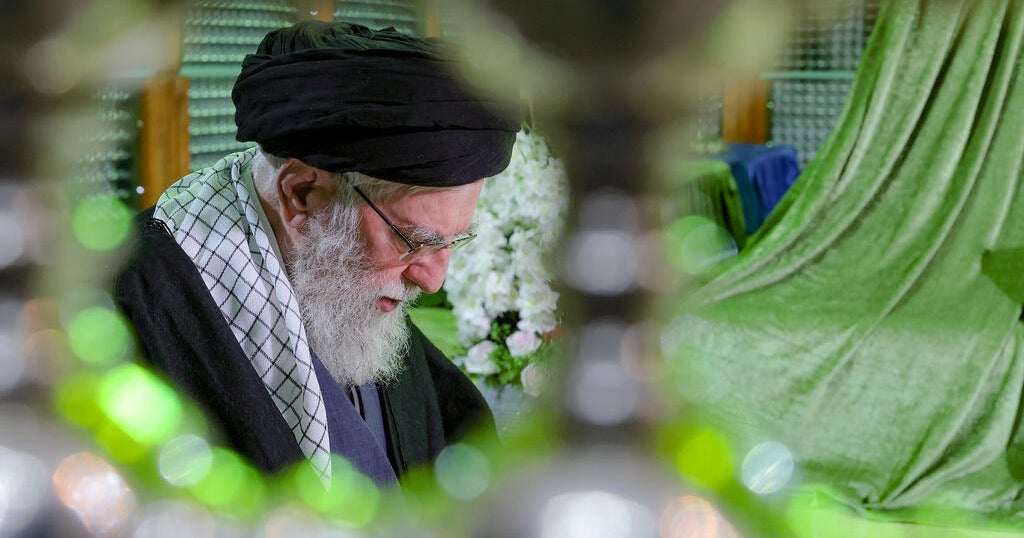
The shadow of potential military conflict looms large over the Middle East as Iran’s highest religious and political authority, Ayatollah Ali Khamenei, delivered a stark warning that any American military action against his country would ignite a devastating “regional war.” This bold declaration came in response to President Trump’s increasingly aggressive rhetoric about potential military intervention, triggered by Iran’s harsh response to widespread protests that have shaken the Islamic Republic to its core. Speaking to supporters gathered at his compound in Tehran, Khamenei’s words represented his most direct and confrontational threat since American naval power, led by the formidable USS Abraham Lincoln aircraft carrier strike group, took up position in the Persian Gulf’s international waters. The supreme leader’s message was clear: Iran would not back down in the face of American pressure, and any military confrontation would have consequences far beyond the borders of the two nations involved.
The Nuclear Question and Trump’s Uncertain Strategy
At the heart of this escalating crisis lies the complex and unresolved question of Iran’s nuclear ambitions. President Trump has repeatedly emphasized his determination to prevent Iran from developing nuclear weapons, yet his actual strategy remains frustratingly unclear to both allies and adversaries alike. The American president has sent mixed signals, alternating between threats of military force and expressions of optimism about diplomatic negotiations. This ambiguity reached a peak when Trump, speaking to reporters during a flight to Florida, refused to confirm whether he had made any final decisions regarding military action against Iran. When pressed about whether backing away from strikes might embolden Tehran, he offered only an equivocal response: “Some people think that. Some people don’t.” He indicated that Iran should negotiate what he termed a “satisfactory” deal to permanently prevent nuclear weapons development, but then immediately undercut this demand by acknowledging uncertainty about whether Iran would comply, though he noted they were “seriously talking to us.” This diplomatic dance recalls Trump’s previous handling of the Iran situation, including his support for Israel’s 12-day military campaign against Iranian nuclear facilities the previous June, demonstrating a pattern of unpredictable decision-making that keeps all parties guessing about America’s next move.
Iran’s Perspective: Resources and National Sovereignty
From Tehran’s perspective, American interest in Iran extends far beyond concerns about nuclear proliferation or regional stability. Ayatollah Khamenei accused the United States of harboring designs on Iran’s considerable natural wealth, including its vast oil reserves, natural gas deposits, and mineral resources. The supreme leader framed American actions as part of a broader neo-colonial project, claiming that Washington wants to “seize this country, just as they controlled it before”—a reference to the period before Iran’s 1979 Islamic Revolution when the U.S.-backed Shah ruled the country. This historical grievance runs deep in Iran’s national consciousness and shapes how its leadership interprets American actions today. Khamenei positioned Iran as a defensive actor rather than an aggressor, stating firmly: “We are not the instigators, we are not going to be unfair to anyone, we don’t plan to attack any country.” However, he immediately followed this with a threat wrapped in the language of self-defense: “But if anyone shows greed and wants to attack or harass, the Iranian nation will deal a heavy blow to them.” This rhetorical framing allows Iran to present itself as the victim of foreign aggression while simultaneously warning of its military capabilities and willingness to use them if provoked.
The Protest Crisis That Sparked the Confrontation
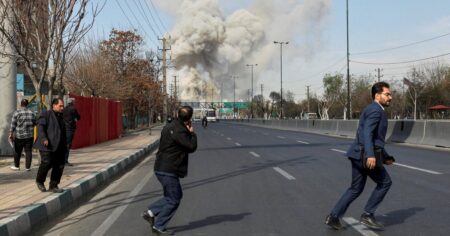
The current international crisis cannot be separated from the domestic turmoil that has rocked Iran in recent months. What began on December 28th as protests focused on economic grievances—particularly the catastrophic collapse of Iran’s rial currency—rapidly evolved into something far more threatening to the regime: a direct challenge to Ayatollah Khamenei’s authority and the entire system of clerical rule. Initially, the supreme leader had acknowledged that some protesters had legitimate economic complaints, showing a degree of understanding that is rare from Iran’s top leadership. However, as the demonstrations intensified and spread nationwide, Khamenei’s tone hardened dramatically. In his recent remarks, he characterized the protests not as expressions of popular discontent but as an organized attempt to overthrow the government, describing them as “similar to a coup.” He claimed that protesters had targeted “sensitive and effective centers involved in running the country,” including police stations, government buildings, Revolutionary Guard facilities, banks, and even mosques. Most inflammatory was his allegation that demonstrators had burned copies of the Quran, Islam’s holiest text—a charge designed to delegitimize the protests by framing them as attacks on religion itself rather than political dissent.
The Devastating Human Cost
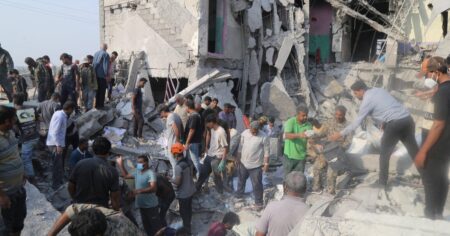
The human toll of Iran’s crackdown on the protests has been staggering, though the exact numbers remain disputed and difficult to verify independently. The U.S.-based Human Rights Activists News Agency, which maintains a network of sources throughout Iran, has documented deaths numbering 6,713 people, with the vast majority being peaceful demonstrators rather than security forces. Additionally, they report that at least 49,500 people have been detained by authorities—a massive sweep that has sent shockwaves through Iranian society. These figures cannot be independently confirmed by major news organizations like the Associated Press because Iranian authorities have taken the extraordinary step of severing the country’s internet connection to the outside world, creating an information blackout that serves both to prevent protesters from organizing and to hide the extent of the government’s violent response from international scrutiny. The Iranian government has acknowledged a death toll, but their official figure of 3,117 is less than half the number reported by human rights monitors. Of these, the government claims 2,427 were civilians and security forces, while labeling the remaining victims “terrorists”—a designation that conveniently justifies their deaths. Iran’s theocratic government has a documented history of undercounting or simply not reporting casualties from civil unrest, making their official statistics highly suspect. Even accepting the government’s lower figure, this represents the deadliest period of internal conflict in Iran since the chaotic days of the 1979 revolution that brought the current regime to power.
Military Posturing and the Strait of Hormuz
As diplomatic tensions rise and rhetoric escalates on both sides, military actions speak louder than words. Iran has scheduled live-fire military exercises in one of the world’s most strategically vital waterways: the Strait of Hormuz. This narrow passage represents the only sea route out of the Persian Gulf and serves as a critical chokepoint for global energy markets, with approximately one-fifth of all internationally traded oil passing through its waters. The timing of these exercises—set for a Sunday and Monday as tensions with the United States reach a fever pitch—sends an unmistakable message about Iran’s willingness to disrupt global commerce if pushed into a corner. The U.S. military’s Central Command, responsible for all American military operations in the Middle East, has responded by issuing warnings against any Iranian actions that might threaten American warships or aircraft during the exercises or that might disrupt the free passage of commercial shipping. This military face-off in confined waters, where American and Iranian forces will operate in close proximity, creates exactly the kind of situation where miscalculation, misunderstanding, or an overly aggressive action by either side could spark the very conflict both nations claim they wish to avoid. The world watches nervously as two proud nations, each convinced of the righteousness of their position and unwilling to show weakness, edge closer to a confrontation that could reshape the entire Middle East and send shockwaves through the global economy.