



Ancient Survivors: Discovery of Nearly 100 New Species From Half a Billion Years Ago
A Treasure Trove Hidden in Stone
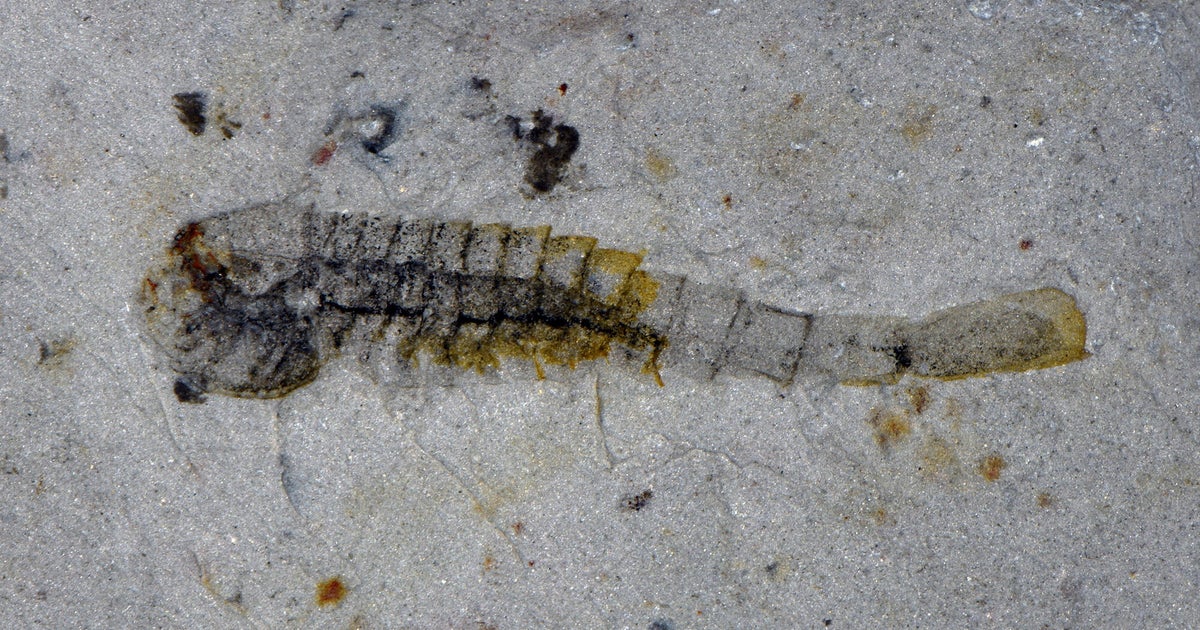
In what scientists are calling an extraordinary discovery, researchers have uncovered nearly 100 previously unknown animal species preserved in fossils at a remarkably small quarry in China’s Hunan province. These ancient creatures lived approximately 512 million years ago, surviving one of Earth’s most catastrophic events—a mass extinction that abruptly halted what had been the greatest explosion of life our planet has ever witnessed. The find is particularly remarkable because of its scale and preservation quality: in a space measuring just 12 meters high, 30 meters long, and 8 meters wide, scientists collected over 50,000 fossil specimens representing more than 150 different species between 2021 and 2024. Of these species, 91 were completely new to science, offering researchers an unprecedented window into a pivotal moment in Earth’s evolutionary history. Han Zeng of the Chinese Academy of Sciences, who led the research published in the journal Nature, described the experience of discovering these ancient animals as wonderful, noting that many fossils preserved incredibly delicate features including gills, internal organs, eyes, and even nerve tissues—details that rarely survive the fossilization process.
Life’s Greatest Explosion and Sudden Halt
To understand why this discovery matters so much, we need to look back at one of the most dramatic periods in Earth’s history. For most of our planet’s existence—stretching back more than 3.5 billion years—life was remarkably simple, little more than layers of microbial slime coating rocks and ocean floors. Then, approximately 540 million years ago, something extraordinary happened. Known as the Cambrian explosion or evolution’s “big bang,” this period saw the sudden emergence and rapid diversification of most major animal groups that exist today, including the ancestors of vertebrates like ourselves. Scientists believe this unprecedented burst of biological creativity was triggered by rising oxygen levels in Earth’s atmosphere, which enabled the evolution of larger, more complex organisms. For the first time, the oceans teemed with diverse life forms, from strange arthropods to early relatives of modern animals. However, this biological renaissance came to a sudden and devastating end roughly 513 million years ago during what scientists call the Sinsk event, a mass extinction that killed off up to half of all animal species. This catastrophe is thought to have been caused by declining oxygen levels, essentially reversing the environmental conditions that had sparked the Cambrian explosion in the first place.
Remarkable Preservation of Ancient Life
The Chinese quarry discovery is particularly significant because these fossils represent the first major collection of soft-bodied organisms from the period immediately following the Sinsk event. Named the Huayuan biota after the county where they were found, these specimens offer scientists their first clear look at which creatures managed to survive this ancient apocalypse and how life recovered in its aftermath. Among the newly discovered species were ancient relatives of worms, sponges, and jellyfish, as well as numerous arthropods—the group that today includes crabs, insects, and spiders. Particularly fascinating were the radiodonts, spiny creatures with eyes mounted on stalks that served as the apex predators of their time, the ancient ocean’s equivalent of modern sharks or orcas. The exceptional preservation of these fossils, including their soft tissues that normally decay rapidly after death, provides researchers with detailed information about the anatomy and biology of these ancient animals that is rarely available from fossils of this age. This level of detail allows scientists to understand not just what these creatures looked like, but potentially how they lived, what they ate, and how they moved through their underwater world.
Survival in the Deep: Lessons From Ancient Extinctions
Michael Lee, an evolutionary biologist at the South Australian Museum who was not involved in the research, offered valuable context for understanding what these fossils reveal about survival during mass extinctions. The new Chinese fossils demonstrate that the Sinsk event affected shallow-water organisms most severely, while deep-water species had better survival rates—a pattern that has repeated during other mass extinctions throughout Earth’s history. Lee compared this phenomenon to the survival of coelacanths, deep-water fish that lived through the asteroid impact that killed the dinosaurs 66 million years ago. The deep ocean, he explained, functions like the cellar of a house, buffered from rapid environmental changes and experiencing far less temperature fluctuation than surface waters or shallow coastal areas. This stability makes deep-water environments refuge zones during periods of dramatic climate change or ecological catastrophe. The Chinese quarry, which preserved deep-water species from after the Sinsk event, thus captures a snapshot of the survivors—the resilient species that weathered the storm and would go on to repopulate the oceans as conditions improved. Understanding which types of organisms survive mass extinctions and why remains crucial for modern conservation efforts, as we face our own period of rapid environmental change and biodiversity loss.
Ancient Globetrotters: Surprising Connections Across Oceans
One of the most unexpected findings from the Huayuan biota was the discovery that several species found in the Chinese quarry had also been identified at Canada’s Burgess Shale, one of the world’s most famous fossil sites, which dates from an earlier period of the Cambrian explosion. This revelation surprised researchers because it suggests that even at this early stage in animal evolution, some species had already developed the ability to spread across vast distances—essentially traveling halfway around the world. Han Zeng told Reuters that finding arthropods like Helmetia and Surusicaris, previously known only from the Burgess Shale in Canada, was particularly astonishing. The research team’s best explanation for this global distribution is that these early animals had larval stages—immature forms of the organism—that could be carried by ocean currents across enormous distances, much like many modern marine invertebrates disperse today. This finding fundamentally changes our understanding of early animal ecology, suggesting that complex patterns of dispersal, colonization, and biogeography were already in place during the earliest days of complex animal life. It also implies that the Cambrian oceans had current systems capable of transporting organisms between distant continents, and that these primitive animals possessed life cycles sophisticated enough to take advantage of these transportation networks.
Placing Extinction in Perspective: Lessons for Today
While the Sinsk event isn’t counted among the “Big Five” mass extinctions that typically dominate discussions of Earth’s catastrophic episodes, Han emphasized that scientists have identified evidence for 18 or more mass extinction events over the past 540 million years. This sobering statistic underscores that devastating loss of biodiversity has been a recurring feature of Earth’s history, not an aberration. The researcher called for greater attention to these immensely destructive events, particularly as we face what many scientists consider a sixth mass extinction currently underway, this one driven by human activity. Understanding the mechanisms, patterns, and recovery processes of past extinctions provides crucial context for addressing today’s biodiversity crisis. The fossil record shows us that life is remarkably resilient over geological timescales—the oceans recovered from the Sinsk event, just as they eventually recovered from the asteroid impact that ended the dinosaurs’ reign 66 million years ago. However, these recoveries took millions of years, and the world that emerged was fundamentally different from what came before. Recent research on the dinosaur extinction, which some scientists have debated for years, suggests that dinosaur populations were still thriving in North America right up until the asteroid strike, followed by a chaotic day of fires, earthquakes, and tsunamis that triggered a prolonged period of global cooling. The Chinese quarry fossils, frozen in time from 512 million years ago, remind us that Earth’s story has been punctuated by both catastrophe and renewal, and that understanding these ancient events helps us contextualize the environmental challenges we face today.