


Crisis in the Strait of Hormuz: A Breakdown of Rising Tensions
The Escalation of Military Confrontation
The situation in the Strait of Hormuz reached a dangerous new threshold on Wednesday when Iran’s naval forces openly acknowledged attacking commercial vessels navigating through these critical waters. The Iranian Revolutionary Guard Corps (IRGC) confirmed striking at least two of three ships that came under fire in the narrow passage that serves as a vital artery for global oil transportation. Meanwhile, President Donald Trump announced that U.S. military forces had destroyed numerous Iranian mine-laying vessels in the same area, marking a significant escalation in what has become an increasingly volatile standoff. This latest round of military action came just days after President Trump issued a stark warning to Iran through social media, threatening that any attempt to obstruct oil shipments through the Strait would result in retaliation “twenty times harder” than anything Iran had experienced previously. The timing of these events underscores how quickly diplomatic tensions can transform into actual military confrontations, with both nations now actively engaging in hostile operations within this strategically vital waterway that the world depends upon for energy security.
Iran’s Justification and the Targeted Vessels
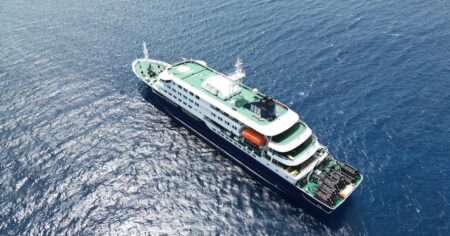
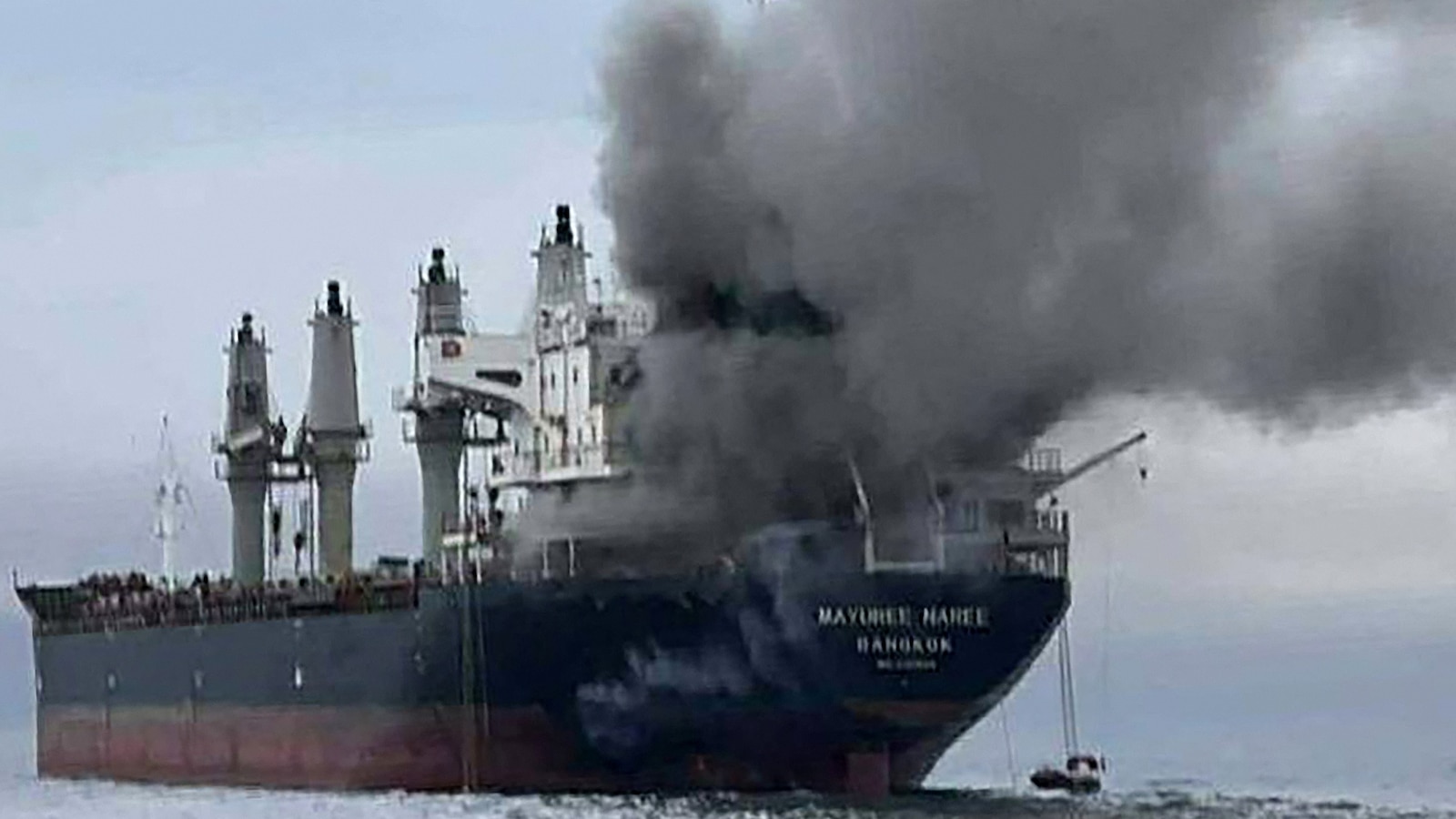
Iran’s Islamic Revolutionary Guard Corps didn’t hide behind ambiguity when it came to explaining its actions. Through an official spokesperson, the IRGC stated that its naval forces targeted two specific commercial vessels—the Express Room and the Mayuree Naree—because both ships allegedly ignored repeated warnings and alerts from Iranian naval authorities. According to IRGC naval commander Admiral Alireza Tangsiri, Iran has established a new protocol requiring all vessels intending to pass through the Strait to obtain explicit permission from Iranian authorities, fundamentally challenging the long-established principle of free navigation through international waters. The Express Room, a container ship sailing under the Liberian flag, was struck after Iranian forces claimed it ignored their warnings and subsequently came to a halt. The situation with the Thai-flagged Mayuree Naree was even more serious, with Thai officials reporting that three crew members went missing following the attack on their vessel, which Iran accused of “unlawfully insisting on transiting” without proper authorization. The IRGC spokesperson made Iran’s position crystal clear in a statement declaring that “the Strait of Hormuz is, without a doubt and without a moment’s neglect, under the intelligent management of the brave naval forces of the IRGC. American aggressors and their allies have no right of passage.” This bold declaration represents a fundamental challenge to decades of international maritime law and the principle of freedom of navigation in what has traditionally been considered international waters, even though the strait passes through Iran’s territorial boundaries.
The American Military Response and Broader Campaign
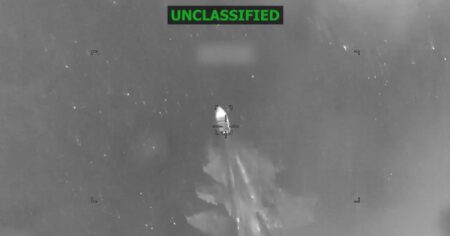
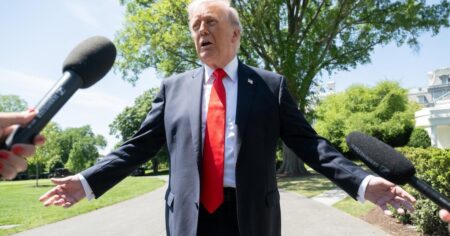
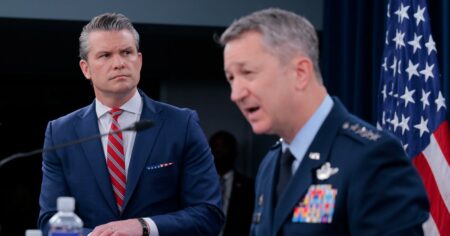
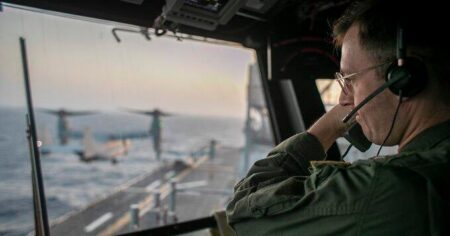
The United States hasn’t been passive in this confrontation. U.S. Central Command (CENTCOM) released dramatic video footage showing American forces conducting strikes against what they described as “multiple Iranian naval vessels,” including sixteen mine-laying boats operating near the Strait of Hormuz. This represents just the latest phase in what has apparently been an extensive military campaign against Iranian capabilities. CENTCOM Commander Admiral Brad Cooper revealed the staggering scope of American military operations, stating that U.S. forces have struck more than 5,500 targets inside Iran, including over sixty ships, utilizing a variety of precision weapons systems. President Trump himself characterized the American campaign in stark terms while speaking to reporters at the White House, boasting that U.S. forces had taken out “just about all of their mine ships in one night” and claiming American strikes had effectively knocked out Iran’s navy, air force, and air defense systems. When pressed by journalists about whether he was encouraging oil company CEOs to continue using the Strait despite the obvious dangers, Trump responded affirmatively, saying “I think they should use the Strait,” projecting confidence that American military power had neutralized the Iranian threat. Regarding the critical question of whether Iran had actually laid mines in the waterway—a concern that could make passage genuinely life-threatening for commercial vessels—the president stated, “We don’t think so,” though he had previously demanded on social media that any mines be removed immediately or face “military consequences to Iran at a level never seen before.”
The Humanitarian Concerns and Expanding Targets
As military operations intensified, concern grew about the safety of civilians caught in the crossfire of this escalating conflict. CENTCOM took the unusual step of issuing a direct warning to Iranian civilians, advising them to stay away from all port facilities where Iranian naval forces were conducting military operations along the Strait of Hormuz. The warning specifically mentioned Iranian dockworkers, administrative personnel, and crews of commercial vessels, urging them to avoid Iranian naval vessels and military equipment. CENTCOM justified this unprecedented civilian warning by stating that “the Iranian regime is using civilian ports along the Strait of Hormuz to conduct military operations that threaten international shipping. This dangerous action risks the lives of innocent people.” Iran’s response to this warning was defiant and threatening. A spokesperson for Iran’s armed forces declared that if Iranian ports came under attack, “all ports and docks in the region will be our legitimate targets,” effectively threatening to expand the conflict to include civilian infrastructure throughout the Persian Gulf region. In an interview with Iranian state television, General Abolfazl Shekarchi denied American claims that Iranian naval forces were using civilian economic ports as shields, while simultaneously threatening to intensify operations if Iran’s ports were targeted by U.S. forces. This exchange highlights the dangerous escalation spiral at work, with each side issuing increasingly serious threats and both apparently willing to risk civilian casualties in pursuit of their military objectives in this critical region.
The Global Economic Implications
The chaos unfolding in the Strait of Hormuz carries implications that extend far beyond the immediate military confrontation between the United States and Iran. This narrow waterway—just twenty-one miles wide at its narrowest point—serves as the only shipping route connecting the Persian Gulf to the open ocean, making it an absolutely critical chokepoint for global commerce. Under normal circumstances, approximately one-fifth of the world’s crude oil supply and liquid natural gas passes through this strait, with about twenty million barrels of oil transiting the passage each day before the current conflict began. These energy resources have major implications for everyday life around the world, affecting gasoline prices at the pump, the cost of plastics used in countless products, electricity prices throughout Europe, and a vast array of other goods that depend on petroleum products or are manufactured in the oil-rich Gulf states. The economic consequences of this conflict were already being felt globally, with oil traders fearful of a prolonged blockade of this maritime passage, causing energy prices to soar. The International Energy Agency, recognizing the severity of the crisis, announced on Wednesday morning that it would release 400 million barrels of oil from its strategic reserve—the largest such release in the organization’s entire history. Fatih Birol, the IEA’s executive director, painted a grim picture at a press conference, revealing that tanker traffic through the Strait of Hormuz has now “all but stopped,” meaning the flow of oil that powers much of the global economy has been reduced to a trickle.
The Broader Context and Future Uncertainty
This crisis in the Strait of Hormuz didn’t emerge in a vacuum but rather represents the culmination of escalating tensions between the United States and Iran that have deep historical roots and have been exacerbated by what some sources describe as a broader U.S.-Israeli war with Iran. The current confrontation forces the international community to grapple with fundamental questions about maritime law, sovereignty, and the balance between national security interests and the global economic system’s need for stable energy supplies. Iran’s claim that it has the right to control passage through the strait challenges decades of international consensus about freedom of navigation, while the United States’ extensive military campaign inside Iranian territory raises equally serious questions about the limits of military intervention. The human cost of this conflict is already evident in the missing crew members from attacked vessels and the civilians being warned away from their workplaces at ports throughout the region. As both sides continue to escalate their military operations and rhetoric, the international community faces the frightening prospect of a prolonged conflict that could fundamentally reshape global energy markets, drive inflation worldwide, and potentially draw other nations into a widening war. The stakes couldn’t be higher—not just for the United States and Iran, but for every nation and individual whose daily life depends on the stable flow of energy resources through this narrow passage of water that has suddenly become one of the world’s most dangerous flashpoints.