



Arctic Polar Bears Show Surprising Resilience Despite Melting Ice
A Glimmer of Hope in a Warming World
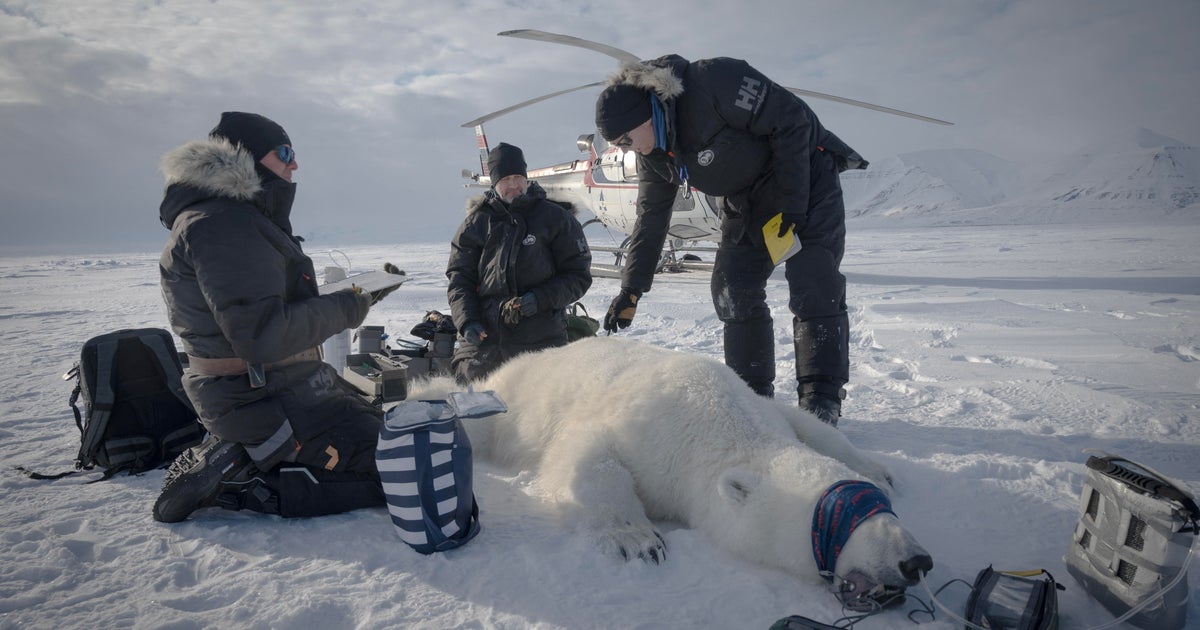
In a rare piece of positive environmental news emerging from the Arctic, scientists have discovered that polar bears in one particular region are not just surviving but actually thriving despite the dramatic climate changes affecting their icy habitat. Jon Aars, a senior scientist with the Norwegian Polar Institute who has dedicated over two decades to studying these magnificent creatures, has led groundbreaking research revealing that polar bears on Norway’s remote Svalbard archipelago are adapting remarkably well to their changing environment. His team meticulously tracked nearly 800 bears over a 27-year period from 1992 to 2019, measuring their weight, size, and overall health. The results were unexpectedly encouraging: these polar giants are maintaining healthy body weights, successfully reproducing, and raising cubs despite significant losses in sea ice coverage. As Aars succinctly put it, “A fat bear is a healthy bear,” and by this measure, the Svalbard bears are doing quite well indeed. This discovery comes as a welcome surprise in an era where most Arctic news tends to be overwhelmingly negative, offering a glimpse of hope that these iconic animals may possess more resilience than previously thought.
Defying Scientific Predictions
The findings from Svalbard have genuinely surprised the scientific community, including Aars himself, who admitted his astonishment at the bears’ robust condition given the dramatic environmental changes he’s witnessed firsthand. “I was quite surprised because we have lost so much sea ice since I started,” he confessed, acknowledging that the extent of ice loss should theoretically have put these animals under severe stress. For years, climate scientists and wildlife biologists have sounded alarms about the existential threat posed to polar bears by shrinking sea ice, which serves as their primary hunting platform for catching seals, their main food source. The conventional wisdom suggested that as ice coverage diminished, polar bears would struggle to find adequate nutrition, leading to declining body conditions, reduced reproductive success, and potentially population collapse. Aars acknowledged this expectation, noting that “some of us would predict that they should be in trouble already.” However, the real-world data from Svalbard tells a different, more optimistic story. Rather than declining in health, these bears have demonstrated an impressive ability to adapt their hunting strategies to work with the ice that remains, no matter how fragmented or reduced it has become.
Adapting Hunting Strategies to Changing Ice Conditions
The key to the Svalbard bears’ success appears to lie in their ability to adapt their hunting behaviors to the new ice conditions. While there’s less ice overall, the bears have apparently learned to use what remains more efficiently. Aars and his team theorize that the concentration of ice into smaller patches may actually be creating unexpected hunting advantages. As the ice retreats and fragments, the seals that polar bears prey upon are forced to concentrate in these smaller remaining ice areas, potentially making them easier targets for the bears. This phenomenon may be allowing bears to hunt more efficiently than when ice was more widespread and their prey more dispersed across vast frozen expanses. The research suggests a fundamental shift in our understanding of polar bear ice requirements. “I think what this shows is they need less sea ice than we thought,” Aars explained to CBS News, indicating that these animals may have a broader tolerance for varying ice conditions than conservation models previously assumed. This doesn’t mean ice is unimportant to their survival, but rather that the relationship between ice coverage and bear health may be more complex and nuanced than the straightforward correlation scientists once believed existed.
Expanding Diets and Increasing Time on Land
Perhaps the most striking behavioral change documented in the Svalbard polar bear population is their dramatic shift toward spending more time on land and diversifying their diets beyond their traditional seal prey. The research revealed that some individual bears now spend up to 90% of their time on land rather than on sea ice—a remarkable transformation for an animal traditionally classified as a marine mammal. This extended time ashore has pushed the bears to become more opportunistic and creative in their feeding strategies, leading them to prey on animals they would have historically ignored. The Svalbard bears have been documented hunting and consuming reindeer, despite having no evolutionary history as land-based caribou hunters like their brown bear cousins. They’ve also been observed targeting walruses, massive marine mammals that can weigh over a ton and are dangerous to attack. This dietary flexibility represents a significant behavioral adaptation that may be key to their continued survival in a rapidly changing Arctic. Rather than rigidly adhering to their ancestral seal-hunting lifestyle, these bears are demonstrating the kind of behavioral plasticity that allows species to persist through environmental upheaval, finding new food sources and developing new hunting techniques in response to the challenges their changing world presents.
Important Caveats and Regional Limitations
Despite the encouraging findings from Svalbard, Aars and his colleagues are careful to emphasize several important limitations and caveats to their research that prevent any sweeping conclusions about polar bears across the Arctic. First and foremost, this study examines only one specific population in one particular region, and the conditions in Svalbard may not be representative of the broader circumpolar Arctic. Polar bears across their range face different environmental conditions, prey availability, human pressures, and rates of climate change, meaning that the success story in Svalbard may not be replicated elsewhere. Some polar bear populations in other regions, particularly in places like Hudson Bay in Canada, have shown worrying signs of declining body condition and reduced reproductive success, painting a very different picture from the Norwegian archipelago. Aars stressed that more research is urgently needed to understand how polar bears in other parts of the Arctic are faring and whether they too are developing adaptive strategies or are instead suffering the predicted consequences of habitat loss. Additionally, the Svalbard research examined bear conditions only through 2019, meaning it doesn’t capture the most recent years of Arctic warming or predict how these animals will cope with future changes.
A Temporary Reprieve or a New Normal?
While the thriving condition of Svalbard’s polar bears offers genuine cause for cautious optimism, both Aars and the broader scientific community remain deeply concerned about the long-term future of these iconic Arctic predators. The research demonstrates that “bears are still able to cope with the situation as it is today,” as Aars noted, but this present-tense formulation is deliberate and important. Current success doesn’t guarantee future survival, particularly given the pace and trajectory of Arctic warming. “The bad news is that predictions [are that] we’re going to lose sea ice fast in Svalbard,” Aars warned, indicating that the ice loss that has occurred so far may be only the beginning of much more dramatic changes to come. Climate models consistently predict that the Arctic will continue warming at a rate roughly twice the global average, with projections suggesting that summer sea ice could largely or entirely disappear within coming decades. The question then becomes whether there’s a tipping point beyond which even the most adaptable bears can no longer cope—a threshold where ice becomes so scarce or land prey so insufficient that the current success story transforms into the crisis scientists have long feared. The bears’ current resilience may represent a temporary reprieve rather than a permanent solution, buying time but not eliminating the underlying threat. Aars and many other researchers worry that the gains observed in Svalbard could prove fleeting and reversible, with today’s well-fed bears potentially becoming tomorrow’s struggling population if ice loss accelerates beyond their capacity to adapt. This makes the Svalbard findings both encouraging and sobering: encouraging because they demonstrate polar bear resilience and adaptability that offers some hope for the species’ near-term survival, but sobering because they also underscore just how dramatically Arctic ecosystems are already changing and raise urgent questions about whether any amount of behavioral adaptation will ultimately be sufficient if we don’t address the root causes of climate change.