



Norway’s Royal Family Faces Its Darkest Hour: The Marius Borg Høiby Scandal
A Kingdom Shaken to Its Core
Norway’s usually picture-perfect monarchy is experiencing its most devastating scandal in over a century of existence. At the center of this crisis stands Marius Borg Høiby, the 29-year-old son of Crown Princess Mette-Marit, who is facing trial on shocking charges that include raping four women, along with numerous drug and assault offenses. This isn’t just another tabloid story about royal misbehavior—it represents an unprecedented legal and moral crisis for one of Europe’s most beloved royal families. The trial, which began Tuesday in Oslo’s district court and is scheduled to run until March 19, has captivated the nation and could result in Høiby spending up to 16 years behind bars if convicted. According to historian and monarchy expert Trond Noren Isaksen, this is unquestionably the biggest scandal in the Norwegian royal family’s 120-year history. While previous controversies involved relatively minor issues like controversial marriages or palace renovation expenses, nothing has ever approached this level of serious criminal allegations involving violence and sexual assault.
The Disturbing Details Behind the Charges
The charges against Høiby paint a deeply troubling picture that extends back to 2018. Prosecutors have filed an astonishing 38 separate counts against him, with the most serious allegations involving the rape of four different women who were either asleep or passed out from alcohol consumption at the time of the assaults. What makes these allegations even more disturbing is that some of these rapes were reportedly filmed. The investigation began on August 4, 2024, when police arrested Høiby on suspicion of assaulting his girlfriend the previous night. Several days after his arrest, he released a statement admitting to acting “under the influence of alcohol and cocaine after an argument,” citing long-standing struggles with substance abuse and mental health issues. However, this initial admission was only the beginning. As investigators dug deeper into his background, they uncovered a pattern of alleged criminal behavior spanning six years. The four rapes allegedly occurred in 2018, 2023, and 2024—with one taking place even after the police investigation had already begun. Last week, authorities added six more counts to the indictment, including a “serious narcotics offense” from 2020 involving the transportation of 3.5 kilograms of marijuana. Høiby has confessed to this particular crime, though he maintains the drug transport was done without financial compensation. So far, he has only admitted guilt to some of the lesser charges, with his legal team stating that “Høiby is saving his version of events for the court.”
The Bad Boy Prince Without a Crown
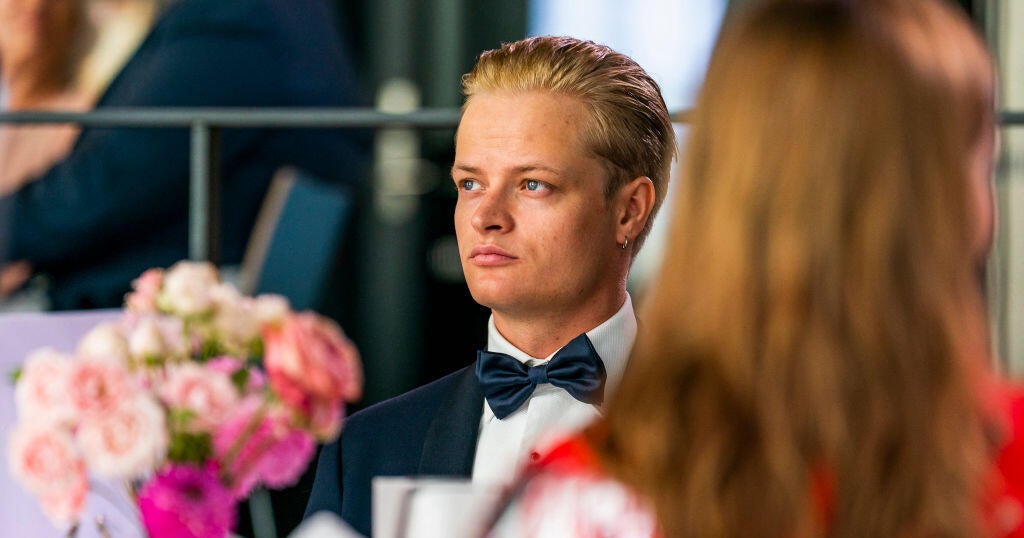
Marius Borg Høiby cuts an unusual figure in royal circles—a tall, blond young man who deliberately cultivates a “bad boy” image complete with slicked-back hair, multiple earrings, rings, and tattoos. Unlike his half-siblings Princess Ingrid Alexandra and Prince Sverre Magnus, Høiby holds no royal title, performs no official duties, and has no established professional career. He is the product of Crown Princess Mette-Marit’s relationship before she married Crown Prince Haakon, and while he was raised alongside his step-siblings in the royal household, his life has taken a dramatically different trajectory. The investigation has revealed that Høiby kept troubling company and lived a lifestyle far removed from royal responsibility. Financially dependent on the Crown Prince couple, he appears to have struggled to find his place in the world—neither fully royal nor entirely free from the expectations and scrutiny that come with his family connections. The charges also include allegations of physical and psychological abuse of several ex-girlfriends, suggesting a pattern of violent and controlling behavior in his intimate relationships. This combination of alleged sexual violence, substance abuse, and emotional manipulation presents a portrait of someone who, despite every advantage of privilege and support, descended into a pattern of harmful and criminal behavior that has now devastated multiple victims and thrown his family into crisis.
A Mother and Future Queen Torn Between Two Worlds
Perhaps no one faces a more agonizing position in this scandal than Crown Princess Mette-Marit herself. Already battling an incurable lung illness, she now finds herself caught between her unconditional love as a mother and her responsibilities as a future queen of Norway. The emotional toll of watching her son face such serious criminal charges while simultaneously representing a nation must be almost unbearable. Crown Prince Haakon released a carefully worded statement last Wednesday announcing that neither he nor Mette-Marit would attend the trial. In the statement, he acknowledged the pain affecting everyone involved: “Our thoughts are with everyone who is affected by this case. It has an impact on the individuals, their families and all those who care about them. We understand that this is a difficult time for many of you, and we sympathise.” The Crown Prince’s statement also emphasized his confidence in Norway’s legal system: “At the same time, it is reassuring to know that we live in a state governed by the rule of law. I am confident that those responsible for overseeing the proceedings will ensure that the trial is conducted in as orderly, proper, and just a manner as possible.” Significantly, Haakon carefully delineated his stepson’s autonomous status: “Marius Borg Høiby is not a member of the Royal House of Norway and is therefore autonomous. We care about him, and he is an important member of our family. He is a citizen of Norway and, as such, has the same responsibilities as everyone else—as well as the same rights.” This delicate balancing act—expressing family loyalty while maintaining distance from the legal proceedings—reflects the impossible position the royal couple finds themselves in as they navigate this unprecedented crisis.
Equal Justice Under Norwegian Law
Prosecutor Sturla Henriksbo has been emphatic that this case will be handled like any other criminal matter, regardless of the defendant’s family connections. He told reporters that all people are equal in the eyes of the law, “regardless of their social status, origin or family ties,” adding that “this means that Høiby should neither be treated more leniently nor more severely because of his family” affiliations. The most serious crimes Høiby faces carry sentences of up to 10 years in prison, which can be extended to a maximum of 16 years if the court finds him guilty on multiple counts. This potential sentence reflects the gravity of the allegations and the Norwegian justice system’s commitment to holding even those connected to royalty accountable for their actions. The trial itself is expected to generate intense media coverage both in Norway and internationally. The proceedings will lay bare the details of the alleged assaults, the evidence collected by investigators, and the testimonies of the victims—women whose lives have been forever altered by their encounters with someone raised in the shadow of the throne. For legal observers, this case represents an important test of Norway’s democratic principles. Can a nation that deeply respects its monarchy also ensure that someone connected to that institution receives the same treatment as any other citizen? The answer to that question will be closely watched not just in Norway but throughout Europe, where several other monarchies face their own questions about accountability and privilege.
A Monarchy’s Resilience Tested in Turbulent Times
This scandal couldn’t have come at a worse time for Norway’s royal family, which was already dealing with controversy surrounding Princess Martha Louise, Crown Prince Haakon’s older sister, who married a self-proclaimed American shaman in 2024—a union that raised eyebrows and questions about the royal family’s judgment. Yet despite these compounding scandals, opinion polling suggests that the Norwegian monarchy retains substantial public support, though it has eroded somewhat from previous highs. A poll published Wednesday by public broadcaster NRK found that 70% of respondents still support the monarchy, down from 81% in 2017. Carl-Erik Grimstad, a former palace employee who now writes about the royal family, believes this resilience stems partly from public sympathy for King Harald and Queen Sonja, both 88 years old and widely regarded as unifying national figures who are “obviously completely innocent in this matter.” Grimstad also noted that “in times of geopolitical turbulence, people often rally around the symbols closest to them”—a reference to the various international challenges Norway currently faces. The verdict in Høiby’s trial is expected several weeks after the proceedings conclude in mid-March. Whatever the outcome, this case has already left an indelible mark on Norway’s royal family and has forced difficult conversations about privilege, accountability, violence against women, and the responsibilities that come with proximity to power. For the victims at the center of this case, the trial represents an opportunity for justice and acknowledgment of the harm they’ve suffered. For Norway’s monarchy, it’s a test of whether an ancient institution can survive the failures of one of its own while maintaining the trust and affection of the people it serves.