

Uganda’s Political Crisis: Opposition Leader in Hiding as Military Tensions Escalate
Growing Confrontation Between Government Forces and Opposition
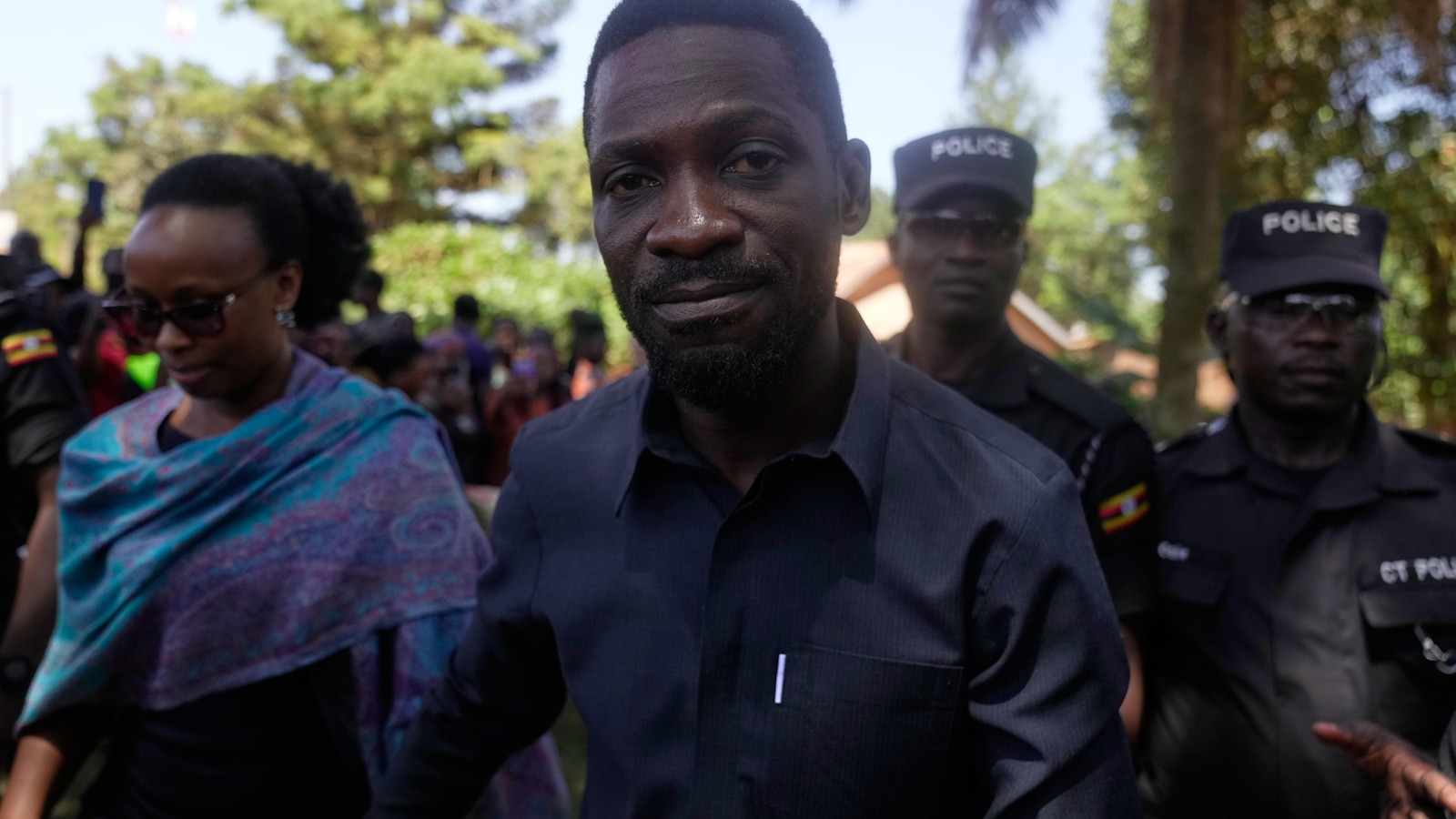
In the wake of Uganda’s highly contested presidential election on January 15th, the East African nation finds itself gripped by escalating political tensions that have sent shockwaves through its population. At the center of this unfolding drama is Bobi Wine, the charismatic 43-year-old opposition leader whose real name is Kyagulanyi Ssentamu, who has gone into hiding citing fears for his personal safety. The situation took a dramatic turn when General Muhoozi Kainerugaba, the son of President Yoweri Museveni and widely viewed as his father’s successor, made startling accusations against U.S. Embassy officials, claiming they were actively assisting Wine in evading capture. In a series of posts on social media platform X (formerly Twitter), many of which were later deleted, Kainerugaba launched scathing attacks on American diplomatic personnel, describing them as “unimaginative bureaucrats” who have spent years undermining the security relationship between Uganda and the United States. The general went so far as to claim, citing intelligence sources, that Wine had “kidnapped himself” in coordination with officials at the U.S. Embassy. These inflammatory accusations mark a significant deterioration in diplomatic relations and highlight the government’s frustration at their inability to locate the opposition leader who has become a symbol of resistance for many young Ugandans.
The Election Results and Wine’s Defiant Response
The presidential election that sparked this crisis saw incumbent President Yoweri Museveni, now 81 years old, claim a landslide victory with 71.6% of the vote according to official results. This outcome would secure Museveni a seventh term in office, extending his rule and potentially bringing him close to five decades in power—a reign that began in 1986. Bobi Wine, who emerged as the most prominent among seven opposition candidates challenging Museveni’s continued grip on power, officially received 24.7% of the vote. However, Wine has categorically rejected these results as fraudulent, joining a chorus of opposition voices and international observers who have questioned the legitimacy of the electoral process. The campaign period itself was marked by violence and intimidation, with Wine feeling compelled to campaign in a flak jacket and protective helmet due to credible threats against his life. Following the election, Wine made the decision to go underground, recognizing that remaining visible could put him in grave danger. Since disappearing from public view, he has maintained an active presence on social media, posting videos from various undisclosed locations across Uganda, using these platforms to denounce what he describes as fundamental injustices and to mock the military’s failure to apprehend him.
The Military’s Manhunt and International Implications
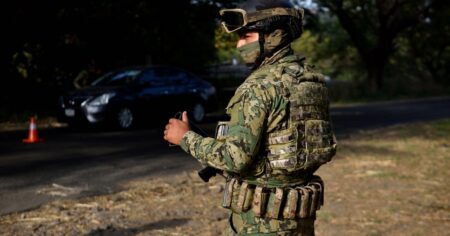
General Kainerugaba’s declaration that Wine was wanted “dead or alive” has sent chills through the Ugandan population and drawn international concern about the potential for violence and civil unrest. The general’s provocative language, referring to Wine derogatorily as “Kabobi” and calling him a “baboon,” “coward,” and “terrorist,” reflects the deeply personal nature this confrontation has assumed for the ruling elite. Kainerugaba has publicly stated that “the whole army” is searching for Wine and has warned that any foreign powers attempting to smuggle the opposition leader out of the country would face a complete rupture in diplomatic relations—a thinly veiled threat directed at Western nations, particularly the United States. Notably, the U.S. Embassy has declined to comment on the accusations leveled against its officials, maintaining diplomatic silence in what has become an increasingly volatile situation. What makes this manhunt particularly troubling is the lack of clarity regarding what specific crimes Wine is accused of committing. Both police officials and the government’s information minister have stated publicly that Wine has committed no crime, raising serious questions about the legal basis for the military’s pursuit and the “dead or alive” designation that typically applies only to individuals accused of serious criminal offenses.
Wine’s Popular Support and the Generational Divide
Bobi Wine’s appeal extends far beyond his official vote tally, particularly among Uganda’s youth population concentrated in urban centers. A former musician and entertainer who transitioned into politics, Wine has become a powerful voice for a generation of young Ugandans who feel economically marginalized and politically disenfranchised. His supporters are largely composed of unemployed or underemployed young people who are deeply frustrated with government corruption, lack of economic opportunities, and the absence of meaningful political alternatives after four decades under the same leadership. This demographic represents a significant portion of Uganda’s population—one of the youngest populations in the world—and their growing restiveness poses a genuine challenge to the established order. Wine’s ability to evade capture has only enhanced his legendary status among his followers, transforming what could have been a simple police matter into a cat-and-mouse game that has captured national attention. His social media posts from hiding, including a recent visit to his family graveyard in a remote part of central Uganda, serve both as proof of life and as symbolic gestures of defiance. Many Ugandans worry that any harm coming to Wine could trigger widespread unrest and violence, potentially destabilizing a country that has served as a relatively peaceful refuge for hundreds of thousands of people fleeing conflicts elsewhere in the region.
The Raid on Wine’s Home and Crackdown on Supporters
The tensions reached a boiling point on January 23rd when military forces conducted a nighttime raid on Wine’s residence in what they claimed was an attempt to locate and arrest the opposition leader. During this operation, Wine’s wife, Barbara Kyagulanyi, reported being physically assaulted by soldiers, sustaining injuries that required hospitalization for treatment of anxiety and bruises. General Kainerugaba took personal responsibility for ordering the raid but denied that Barbara Kyagulanyi was beaten, contradicting her account and medical documentation. This incident at the Wine family home represents just one element of a broader crackdown targeting the opposition leader’s supporters and political organization. According to police sources, hundreds of individuals associated with Wine’s National Unity Platform party have been detained on various alleged offenses committed during and after the election period. The charges against these supporters range from relatively minor infractions to serious accusations, including terrorism charges filed against Muwanga Kivumbi, one of Wine’s key deputies in the party. Kivumbi, who was attempting to retain his seat as an opposition member of Parliament, faces terrorism allegations related to a violent incident in central Uganda, charges that critics view as politically motivated attempts to decapitate the opposition’s leadership structure and intimidate its grassroots supporters.
Uganda’s Crossroads and the Path Forward
Uganda now stands at a critical juncture, caught between President Museveni’s supporters who credit him with maintaining relative peace and stability in a volatile region, and a growing movement—embodied by Bobi Wine—that demands political change and generational renewal. Museveni’s four-decade tenure has indeed provided Uganda with a level of security that has made it a destination for refugees from neighboring countries experiencing conflict and instability. However, this stability has come at the cost of democratic freedoms, with opposition voices systematically suppressed and electoral processes widely questioned by international observers. The current crisis, with a wanted opposition leader in hiding, military forces conducting raids on civilian homes, mass arrests of political activists, and deteriorating relations with Western diplomatic missions, suggests that the foundations of this stability may be more fragile than they appear. Wine himself has made this very point in his taunting messages from hiding, arguing that the army’s failure to locate him demonstrates the government’s weakness rather than strength. As this standoff continues with no clear resolution in sight, the international community watches nervously, aware that Uganda’s trajectory in the coming weeks and months could have significant implications for regional stability. The question remains whether Uganda can find a peaceful path through this crisis or whether the confrontation between an aging president determined to maintain power and a young opposition leader who has captured the imagination of a new generation will lead to the violence and upheaval that so many fear.