


Air Canada Plane Crash Update: Recovery Efforts Underway at LaGuardia Airport
Most Injured Passengers Released as Investigation Continues
In the aftermath of Sunday’s tragic collision between an Air Canada aircraft and a fire truck at New York’s LaGuardia Airport, there’s been a significant development in the recovery of those injured. Air Canada announced on Wednesday that the vast majority of passengers who sustained injuries in the deadly crash have been discharged from area hospitals. Out of approximately 40 people who required medical treatment for injuries ranging from minor to serious, only four remained hospitalized as of Wednesday. The airline has not yet provided specific details about the conditions of these four individuals or the nature of their ongoing medical needs. This positive news offers some relief in what has been a devastating incident that claimed the lives of two pilots and left an indelible mark on everyone involved. The crash occurred when the Montreal-originating flight, carrying 76 people including crew members, collided with a fire truck that had entered the runway just moments before the plane was landing.
Massive Cleanup Operation to Restore Airport Operations
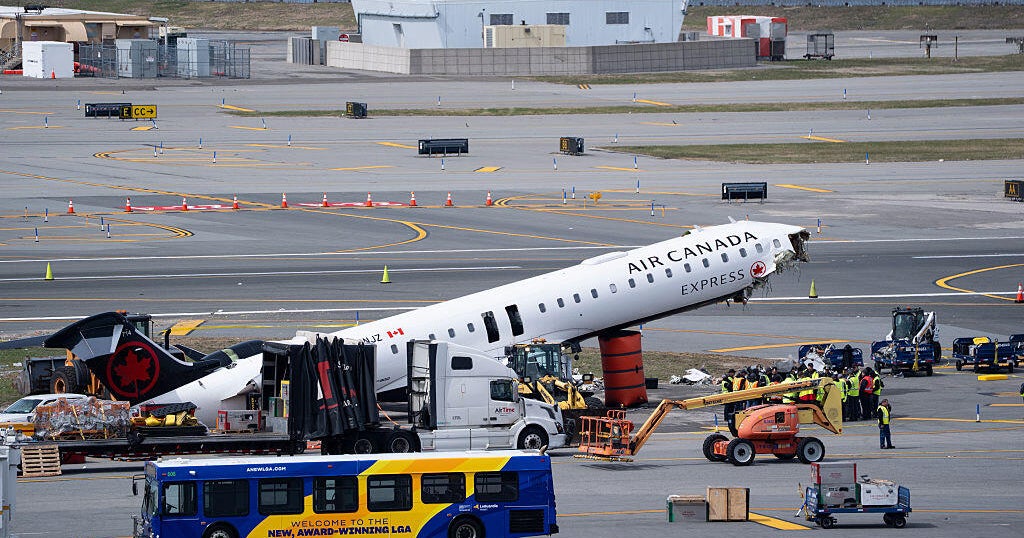
The Port Authority of New York and New Jersey has been working around the clock to clear the wreckage and restore normal operations at one of America’s busiest airports. For days, the mangled remains of the aircraft and the overturned fire truck lay scattered across the tarmac, completely blocking access to one of LaGuardia’s two critical runways. On Wednesday afternoon, around 5 p.m. Eastern Time, airport workers finally began the complex task of removing the debris. The operation involved multiple large tow trucks working in coordination to handle the massive pieces of wreckage. One of the more dramatic moments came when crews used two heavy-duty tow trucks working together to upright the badly damaged fire truck, which had been lying on its side since the moment of impact. The Port Authority issued a statement expressing their commitment to reopening the affected runway “no later than Friday morning,” though they emphasized that safety remains the top priority. Before the runway can be cleared for use, officials must thoroughly inspect it to ensure it meets all Federal Aviation Administration regulations and can safely accommodate aircraft operations once again.
Aircraft Removal Reveals Extent of Damage
The removal of the Air Canada plane itself was a carefully orchestrated operation that revealed just how catastrophic the collision had been. The aircraft’s nose section, which bore the brunt of the impact, was completely obliterated and had to be cut away by work crews earlier in the day before the rest of the plane could be moved. The tail section was carefully lifted onto a large specialized dolly designed to transport aircraft components. Once secured, the tail was towed using long tethers attached to two vehicles driving side by side to maintain balance and control. Remarkably, the middle section of the aircraft remained supported by its own landing gear throughout the removal process, as this equipment appeared to have remained intact despite the violence of the crash. Air Canada confirmed in a statement that authorities had released the plane’s debris for removal and that the airline’s own crews would “move the aircraft as soon as it is safe, to a secured hangar.” The fire truck involved in the collision has been moved to a secure location where it will be preserved as evidence for the ongoing National Transportation Safety Board investigation. Both Air Canada and the Port Authority have pledged their full cooperation with investigators as they work to determine exactly what went wrong and how such a tragedy might be prevented in the future.
Heroic Actions and Tragic Losses
The human stories emerging from this disaster paint a picture of both incredible courage and heartbreaking loss. The two pilots who perished in the crash have been identified as Captain Antoine Forest and First Officer Mackenzie Gunther. According to survivor accounts, these two aviators demonstrated extraordinary skill and composure in the final moments before impact. Passenger Clément Lelièvre specifically credited their “incredible reflexes” with saving his life and the lives of many others aboard the aircraft. He described how the pilots braked with extreme force just as the plane was touching down, a split-second decision that likely reduced the severity of the collision and gave passengers a better chance of survival. The aftermath of the crash saw dramatic scenes as many passengers and crew members managed to escape from the damaged aircraft. In one particularly striking incident, a flight attendant survived after being thrown from the plane onto the tarmac while still strapped into her seat—a testament to both the violent forces involved in the crash and the remarkable resilience of the human body. The two Port Authority Police Department firefighters who were inside the fire truck at the time of the collision both survived, though details about their current conditions and the extent of their injuries have not been made public.
Investigation Focuses on Air Traffic Control Procedures
As the National Transportation Safety Board continues its investigation, attention has turned to the air traffic control decisions made in the moments leading up to the collision. NTSB Chair Jennifer Homendy revealed in a Wednesday interview with CNN that investigators have been conducting extensive interviews with everyone involved in managing air traffic at the time of the crash. Late Tuesday night, they spoke with the air traffic controller who was actively directing traffic when the collision occurred. On Wednesday, they expanded their interviews to include the other controller who was present in the tower, as well as supervisory personnel including the controller in charge, the air traffic manager, and the operations supervisor. A particularly troubling detail emerged from these conversations: the workload being managed by the two controllers on duty at the time appears to have been extremely heavy. Chair Homendy expressed concern about this, noting that “there was a pretty heavy workload for these controllers, where you had an emergency going on, you had several flights that they had to attend to.” According to the preliminary investigation, an air traffic controller had cleared the fire truck to cross the runway just seconds before the Air Canada plane made contact with it—a decision that will undoubtedly be scrutinized in detail as the investigation continues.
A Pattern of Safety Concerns at LaGuardia
Perhaps most concerning is the revelation that Sunday’s deadly collision is not an isolated incident but rather the latest in a long history of safety issues at LaGuardia Airport. A comprehensive review conducted by CBS News examined dozens of reports dating back to the year 2000 and uncovered a troubling pattern. Pilots have been filing complaints about controller miscommunication and dangerous close calls with ground vehicles at LaGuardia for more than two decades. When CBS News analysts examined the Federal Aviation Administration’s official database of runway incursions, they identified at least 132 separate incidents since 2000. Of these, 17 specifically involved maintenance vehicles, snow removal equipment, and other support vehicles being present on runways when they should not have been—precisely the type of situation that led to Sunday’s fatal crash. This historical context raises serious questions about whether enough has been done to address known safety vulnerabilities at one of the nation’s most important transportation hubs. As investigators continue their work and the aviation community processes this latest tragedy, there will undoubtedly be calls for comprehensive reviews of procedures, additional safety measures, and possibly significant changes to how ground operations are coordinated with air traffic at busy airports like LaGuardia. The goal must be ensuring that the lives lost in this accident lead to meaningful improvements that prevent similar tragedies in the future.