



Texas Meteor Strike: A Spectacular and Terrifying Close Encounter
A Fiery Visitor from Space Lights Up the Houston Sky
On an otherwise ordinary Saturday afternoon in Texas, residents across the Houston area experienced something truly extraordinary—and more than a little frightening. A massive meteor, weighing approximately one ton and measuring roughly three feet in diameter, came hurtling through Earth’s atmosphere at an astonishing speed of nearly 35,000 miles per hour. What began as a spectacular light show in the sky ended with a startling bang that left thousands of witnesses in awe and one homeowner dealing with unexpected damage to her property. According to NASA’s reports, the meteor first became visible about 49 miles above Stagecoach, northwest of Houston, before it traveled southeast and ultimately broke apart approximately 29 miles above Bammel, just west of Cypress Station. The fragmentation of this celestial visitor released an incredible amount of energy—equivalent to 26 tons of TNT—creating powerful pressure waves that generated the sonic booms heard across a wide swath of the region.
When the Sky Falls: One Woman’s Terrifying Experience
For Sherrie James, a resident of Cypress Station located about 27 miles north of Houston, the meteor’s arrival was particularly dramatic and personal. While at home on that fateful Saturday, James heard what she described as a tremendous boom, followed immediately by the discovery of a strange, rock-like object that had apparently penetrated her ceiling, creating a hole above and leaving a significant dent in her floor below. In an interview with ABC station KRTK in Houston, James recounted the terrifying moments following the impact: “It just scared me to death,” she explained, describing how she immediately evacuated everyone from the room, unsure of what exactly had crashed into her home. Her first instinct was that it might be a meteor, though in the moment of panic, she couldn’t be certain. Demonstrating commendable presence of mind during what must have been an incredibly stressful situation, James’s first action was to call the fire department to ensure the safety of her household. NASA has stated that it is working to confirm reports that a piece of the meteor did indeed penetrate the roof of a house in Cypress Station, which would make James’s experience not just a close call, but an actual collision with space debris—an extremely rare occurrence.
NASA’s Investigation and the Science Behind the Spectacle
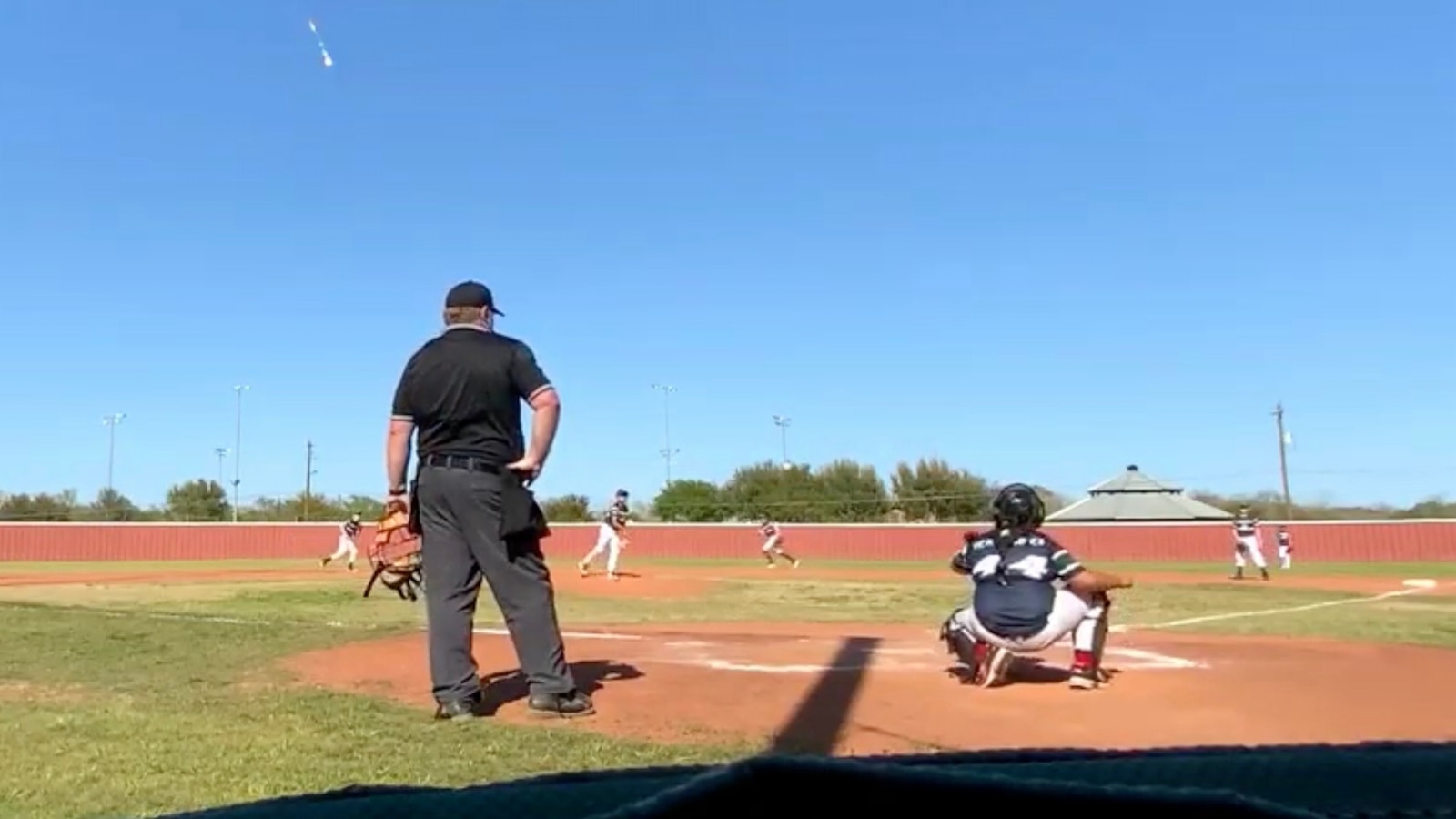
NASA’s Astromaterials Research and Exploration Science division (ARES) began receiving numerous reports of the fiery object streaking through the sky north of Houston around 4:40 p.m. local time on Saturday. Eyewitnesses from across a vast area—including people as far away as the Dallas-Fort Worth metropolitan area and Austin—reported seeing the dramatic celestial display. The space agency’s analysis revealed that the meteoroid was traveling at approximately 35,000 miles per hour when it became visible in the atmosphere, and the subsequent fragmentation created a pressure wave responsible for the sonic booms that startled residents across the region. One particularly striking piece of evidence came from an unlikely source: a youth baseball game in East Bernard, Texas, where an image was captured showing the meteor in the upper left corner of the frame as it broke apart while entering Earth’s atmosphere. NASA utilized Doppler weather radar technology to track the debris field, which showed meteorites produced by the fragmentation falling between the Houston suburbs of Willowbrook and Northgate Crossing. According to NASA’s statement, most of the mass of an object like this is reduced to atoms and fine droplets during the fireball phase, with only a small percentage—roughly a few percent of the total mass—actually surviving the intense heat and friction of atmospheric entry to reach the ground, scattered across a range of meteorite sizes throughout what scientists call a “strewn field.”
The Phenomenon of Meteors and Why They Create Such Drama
To understand what happened over Texas that Saturday requires a basic appreciation of the incredible forces at play when objects from space encounter Earth’s atmosphere. Meteors, which are often called “shooting stars” when we see them streak across the night sky, are actually pieces of debris from space—usually fragments of asteroids or comets—that collide with our planet’s atmosphere at tremendous speeds. The friction created by this high-speed entry generates intense heat, causing the object to glow brightly and often to fragment or completely vaporize. The term “meteoroid” refers to the object while it’s still in space, “meteor” describes it during its fiery passage through the atmosphere, and “meteorite” is the name for any pieces that actually survive to reach the ground. The Texas meteor was relatively large by everyday standards—about three feet in diameter and weighing roughly a ton—though it was still quite small compared to the truly dangerous asteroids that astronomers monitor. The speed of 35,000 miles per hour at which it was traveling is typical for such objects, as they’re moving through space in their own orbits around the sun before intersecting with Earth’s path. The sonic booms heard across the region were created by the shock waves produced as the meteor traveled faster than the speed of sound, and the fragmentation event released energy equivalent to 26 tons of TNT, making it comparable to a significant explosive event, though fortunately distributed across a wide area of the upper atmosphere.
A Troubling Pattern or Just Cosmic Coincidence?
What makes this Texas meteor particularly noteworthy is its timing: it occurred just five days after another significant meteor event near Cleveland, Ohio. According to NASA, that earlier meteoroid measured nearly six feet in diameter and weighed approximately seven tons—significantly larger than the Texas meteor. That object also caused a spectacular fireball in the sky when it broke apart about 50 miles above Lake Erie while traveling at an even higher speed of 39,200 miles per hour, and it too created loud booms that startled residents across the region. Having two such notable meteor events occur within the same week in the United States might seem like cause for concern, but astronomers would likely point out that Earth is constantly being bombarded by space debris of various sizes. Most of this material is quite small and burns up completely in the atmosphere without anyone noticing, but larger objects that create visible fireballs and audible sonic booms are less common, though they do occur regularly on a global scale. The fact that two such events happened in close temporal proximity and both over populated areas of the United States is more a matter of statistics and observation bias than an indication of increased danger. Nevertheless, these incidents serve as dramatic reminders that Earth exists in a cosmic shooting gallery, and while we’re generally well-protected by our atmosphere, occasionally these encounters can be close enough to be both spectacular and a little unnerving.
The Aftermath and Broader Implications
Fortunately, despite the dramatic nature of this event and the widespread reports of sonic booms and fireballs across the Houston area, no injuries were reported from the Texas meteor incident. This is actually quite typical for meteor events, even relatively large ones, because the vast majority of the material is destroyed high in the atmosphere, and any surviving fragments are usually small and scattered across a wide area, most often landing in uninhabited regions. If confirmed, Sherrie James’s experience of having a meteorite crash through her roof would be extraordinarily rare, though not unprecedented in the historical record. For NASA and the scientific community, events like this provide valuable opportunities to study material from space that has made its way to Earth. Meteorites are essentially time capsules from the early solar system, containing information about the conditions and composition of the material from which our planetary system formed billions of years ago. Researchers from NASA’s Astromaterials Research and Exploration Science division will likely be very interested in recovering any fragments from this event for study. For the general public, incidents like this serve as powerful reminders of both the wonders and the potential hazards of our cosmic environment. While the chances of any individual being struck by a meteorite are infinitesimally small, these events demonstrate that we live on a planet that is part of a dynamic and sometimes unpredictable solar system, making continued investment in programs that track near-Earth objects an important component of planetary defense and scientific understanding.