
Federal Agents Accused of Lying Under Oath in Minneapolis ICE Shooting Case
Serious Allegations Rock Immigration Enforcement Agency
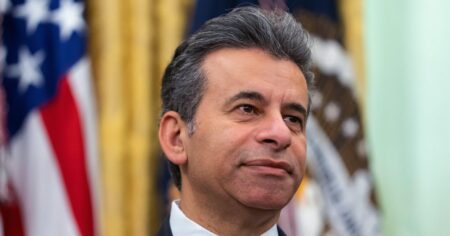
In a stunning development that has sent shockwaves through federal law enforcement circles, Todd Lyons, who currently leads Immigration and Customs Enforcement in an acting capacity, has publicly accused two of his own agents of providing false testimony under oath. The accusations stem from a controversial shooting incident that occurred in mid-January in Minneapolis, involving a Venezuelan man named Julio Cesar Sosa-Celis. The gravity of the situation cannot be overstated—lying under oath represents a serious federal crime, and the allegations have prompted immediate action from ICE leadership. Both officers at the center of this controversy have been removed from active duty and placed on administrative leave while investigators work to uncover the truth about what really happened that winter day in Minneapolis. Lyons made it clear in his public statement that video evidence directly contradicts the sworn statements provided by the two officers, suggesting a potential cover-up or misrepresentation of the facts surrounding the shooting. This case has become particularly sensitive given the timing—it occurred just one week after another ICE agent shot and killed Renee Good in the same city, creating an atmosphere of heightened tension and scrutiny around immigration enforcement activities in the Minneapolis area.
The Collapse of Federal Charges and New Evidence
The situation took a dramatic turn when the Department of Justice made the extraordinary decision to drop all charges against both Alfredo Alejandro Aljorna and Julio Cesar Sosa-Celis, who had been facing federal charges for allegedly assaulting ICE officers during the January 14 incident. U.S. Attorney Daniel Rosen, representing Minnesota, filed paperwork citing “newly discovered evidence” that was described as “materially inconsistent” with the charges that had been brought against the two men. This kind of reversal is highly unusual in federal cases and typically indicates that prosecutors have uncovered information that fundamentally undermines their case. The discovery of this evidence appears to have been the catalyst for the internal investigation and the accusations of perjury against the ICE agents. What makes this situation even more troubling is that law enforcement officers are held to an exceptionally high standard when it comes to truthfulness, particularly when providing sworn testimony that can result in criminal charges and potentially lengthy prison sentences for defendants. The decision to drop charges suggests that federal prosecutors concluded they could no longer proceed with a case built on testimony they now believe to be false.
Conflicting Stories: What Really Happened That Day
From the very beginning, two completely different versions of events emerged regarding the shooting of Sosa-Celis near North Sixth Street and North 24th Avenue. Cellphone footage that was shared by Democratic state Senator Erin Maye Quade tells one story—a recording of a woman making a frantic 911 call shortly after the shooting, describing how her husband had been chased by ICE agents all the way to their home, where he was shot in front of his family members. The raw emotion and immediacy of that account painted a picture of aggressive pursuit and what appeared to be excessive force used against someone who had made it to what should have been the safety of his own property. However, the official narrative from the Department of Homeland Security presented an entirely different scenario. According to their initial statement, Sosa-Celis had fled from agents and crashed his vehicle into a parked car before attempting to escape on foot. The DHS account claimed that when an officer caught up with him, Sosa-Celis “began to resist and violently assault the officer.” The official story became even more dramatic, alleging that two additional men emerged from a nearby apartment building and joined the attack, wielding a snow shovel and broom handle as weapons against the officer, who then feared for his life and fired what was described as a “defensive shot” that struck Sosa-Celis in the leg.
The Story Changes Again: FBI Enters the Picture
As if the conflicting accounts weren’t confusing enough, the government’s version of events underwent significant changes when the FBI became involved and filed an affidavit to support criminal charges against both Aljorna and Sosa-Celis. This new federal account introduced different details that contradicted the earlier DHS narrative. According to the FBI’s version, it was actually Aljorna—not Sosa-Celis—who had been the one fleeing in a vehicle. The FBI affidavit went on to describe Sosa-Celis as the person who initially struck the ICE officer with a broomstick while the agent was attempting to arrest Aljorna. The document then claimed that Aljorna managed to break free from the officer’s grasp and began his own attack using the same broomstick as a weapon. Interestingly, the FBI affidavit also included details about poor lighting conditions at the scene, noting that the officer “had poor or sporadic lighting” and “had difficulty seeing the assailants.” This detail about visibility issues seems particularly significant now, given that video evidence apparently shows a very different sequence of events than what the officers described. These shifting narratives and the acknowledgment of poor visibility raise serious questions about the reliability of the officers’ accounts and whether they could have accurately perceived the events as they claim to have occurred.
Legal Representatives Speak Out About Video Evidence
The attorneys representing the two men who were charged have been careful in their public statements, but their comments reveal the significant role that video surveillance played in exposing the truth. Frederick Goetz, who represents Aljorna, provided insight into why the charges were dropped, explaining that “the video surveillance evidence that captured the incident was materially inconsistent with the federal agent’s claims of what happened.” He elaborated that the agent’s allegations of being assaulted simply weren’t supported by what the video footage actually showed. This statement suggests that rather than showing two men violently attacking an officer with improvised weapons, the video likely shows something much less threatening—or perhaps even shows the officer as the aggressor rather than the victim. Robin Wolpert, who represents Sosa-Celis, expressed relief that both ICE and the Department of Justice were “publicly acknowledging and investigating untruthful statements by the two ICE officers.” For defense attorneys, having video evidence that contradicts law enforcement testimony is invaluable, as juries and judges typically give significant weight to officer testimony. The fact that such evidence exists in this case may well have saved their clients from wrongful conviction on serious federal charges that could have resulted in substantial prison time.
Accountability and the Path Forward
Todd Lyons emphasized in his statement that the men and women of ICE are “entrusted with upholding the rule of law” and that “violations of this sacred sworn oath will not be tolerated.” He made clear that following the completion of the internal investigation, the two officers could face termination of employment—though criminal prosecution for perjury also remains a possibility if the investigation confirms that they deliberately provided false testimony under oath. This case represents a critical moment for ICE and federal law enforcement more broadly, as public trust in immigration enforcement has been severely tested in recent years. The fact that leadership is willing to publicly call out potential misconduct by its own agents is significant, though critics might argue it only happened because video evidence made denial impossible. The incident also highlights the crucial importance of video documentation in police encounters, as without the surveillance footage, the officers’ accounts might never have been challenged, and two men could be facing years in federal prison for crimes they apparently didn’t commit. As the investigation continues, many in Minneapolis and beyond will be watching closely to see whether these officers face meaningful consequences for allegedly lying under oath, and whether this case leads to broader reforms in how immigration enforcement operations are conducted and documented. The community in Minneapolis, already reeling from multiple shooting incidents involving ICE agents in a short period, deserves answers and accountability to begin rebuilding trust in federal law enforcement.