


The Federal Reserve Faces Unprecedented Uncertainty Amid Iran War Crisis
A Central Bank Caught in the Fog of War
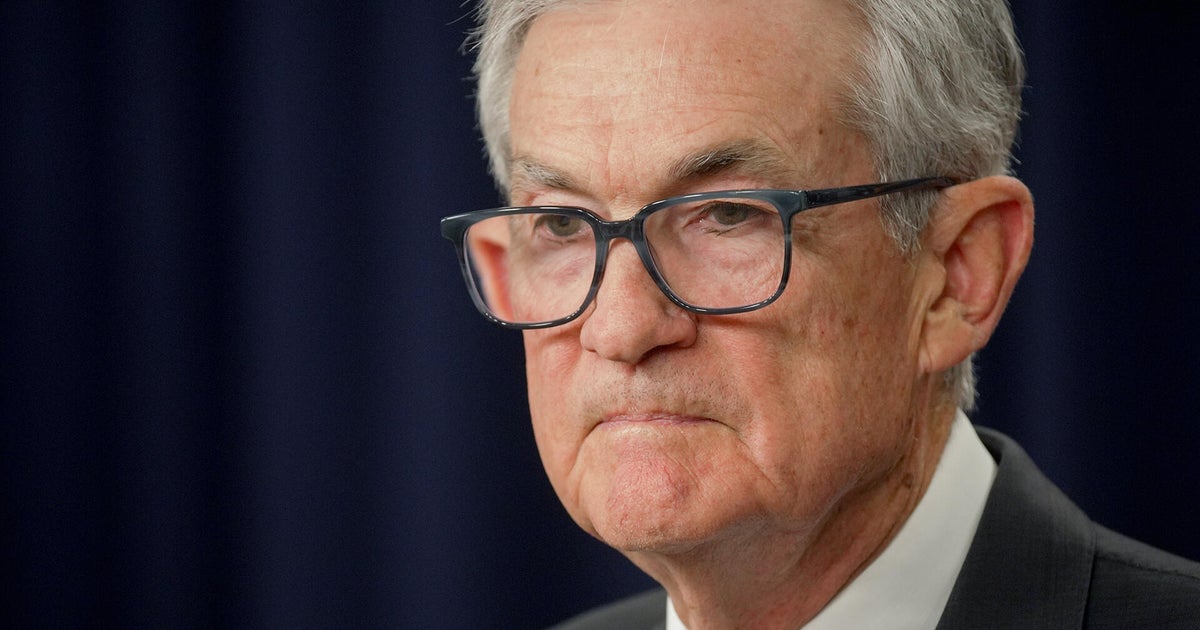
The Federal Reserve finds itself in uncharted territory as the escalating conflict with Iran casts a long shadow over America’s economic future. During Wednesday’s Federal Open Market Committee meeting, Fed Chair Jerome Powell delivered a message that sent shivers through Wall Street: the central bank simply doesn’t know what comes next. His press conference became a study in uncertainty, with Powell uttering phrases like “we don’t know” at least fourteen times and calling for a “wait-and-see” approach another four times. The result was immediate and painful for investors, with stocks tumbling during his remarks and continuing their downward spiral into Thursday’s trading session. Heather Long, chief economist at Navy Federal Credit Union, didn’t mince words when she told CBS News, “The Fed is frozen.” The paralysis stems from a situation that transcends traditional economic analysis—the potential closure of the Strait of Hormuz, through which roughly one-fifth of the world’s oil supply flows. This isn’t a problem that can be solved with interest rate adjustments or monetary policy tools. It’s a geopolitical crisis with profound economic implications, and it has left America’s most powerful financial institution essentially powerless to chart a clear course forward.
The Implications of Economic Blindness
What makes this moment particularly unsettling is that it represents a rare admission of helplessness from an institution that typically projects confidence and control. The Federal Reserve has navigated countless economic challenges over its history, from the 2008 financial crisis to the pandemic-induced recession of 2020. But the current situation presents something different—a perfect storm of geopolitical turmoil and economic fragility that defies conventional policy responses. Tim Duy, chief U.S. economist at SGH Macro Advisors, captured the moment vividly when he wrote to clients that Fed participants appeared “caught like deer in the headlights.” The central bank was already grappling with stubborn inflation data that refused to cooperate with their forecasts, and then the Iran conflict exploded onto the scene, fundamentally scrambling the economic calculus. Gregory Daco, chief economist at EY-Parthenon, emphasized that the Fed clearly wants to avoid making preemptive policy adjustments given how rapidly the situation could evolve. Making the wrong move now could prove catastrophic, but standing still carries its own risks. It’s this paralyzing uncertainty that has investors so concerned—if the Fed doesn’t know where we’re headed, how can markets price risk appropriately?
Inflation Forecasts Losing Their Meaning
On Wednesday, the Federal Reserve also released its quarterly Summary of Economic Projections, a closely watched document that outlines committee members’ expectations for key economic indicators including inflation, unemployment, and economic growth. According to the latest projections, Fed officials now expect inflation to run slightly hotter in 2026 than they had predicted in their December forecast. Under normal circumstances, this modest upward revision would be significant news, driving market reactions and influencing business planning across the economy. But these aren’t normal circumstances, and Powell himself essentially undermined the credibility of these projections during his press conference. As energy prices surge due to the conflict’s disruption of oil markets, traditional forecasting models become nearly useless. Powell emphasized this point repeatedly, noting that the economic effects of the current crisis “could be bigger, they could be smaller, they could be much smaller or much bigger. We just don’t know.” This acknowledgment transforms the Fed’s economic projections from authoritative guidance into educated guesses with unusually wide error bars. The uncertainty surrounding oil and gas prices alone makes inflation forecasting extraordinarily difficult, but when you add in potential supply chain disruptions, shifts in consumer confidence, and the possibility of broader economic contagion from the conflict, the Fed’s crystal ball has effectively shattered.
The Disappearing Rate Cuts
Before Wednesday’s meeting, financial markets had been pricing in at least one, and possibly two, interest rate cuts in 2026. These expectations were built on the assumption that inflation would continue moderating toward the Fed’s 2% target while the labor market remained reasonably healthy, creating space for the central bank to ease monetary policy and provide some economic relief. Powell’s remarks this week have dramatically altered that calculus. According to CME FedWatch, which tracks market expectations for Fed policy decisions, there’s now almost a 75% probability that we’ll see zero rate cuts this year—a remarkable shift in sentiment in a very short time. As Heather Long noted, “That’s a pretty big shift.” The so-called “dot plot,” a chart showing where each Federal Reserve official expects interest rates to land in the coming years, reveals just how divided the central bank has become. Seven officials penciled in no rate cuts for 2026, while seven support one cut, and five policymakers predict two or more reductions. This lack of consensus, as Gregory Daco observed, “highlights a deeply divided committee.” For everyday Americans, this shift has real consequences. Those hoping for relief on mortgage rates, car loans, or credit card interest are likely to wait considerably longer than expected. Businesses planning expansions based on cheaper borrowing costs may need to reconsider their strategies.
The Job Market’s Silent Crisis
While headlines about inflation and interest rates dominate financial news, perhaps the most concerning development for average Americans is the deterioration of the labor market. The Federal Reserve operates under what’s called a “dual mandate”—it must both keep inflation under control and ensure maximum employment. For the past few years, the employment side of that equation has looked relatively solid, with unemployment remaining low even as the Fed aggressively raised interest rates to combat inflation. But cracks are forming in the foundation. During Wednesday’s press conference, Powell noted that while the unemployment rate sits at 4.4%—still relatively low by historical standards—job creation has essentially ground to a halt. “Effectively, there is zero net job creation in the private sector,” he stated bluntly. This is the situation Heather Long describes as a “hiring recession,” and it’s creating real pain for American workers even if they’re not losing their jobs in large numbers. The February jobs report shocked economists by showing the U.S. economy shed 92,000 jobs when forecasters had expected gains. Anyone trying to change jobs or enter the workforce right now can attest to the difficulty—applications go unanswered, hiring processes drag on for months, and opportunities seem frustratingly scarce.
Navigating an Economic Fog Without a Compass
The current situation places the Federal Reserve in an extraordinarily difficult position, caught between competing pressures with no clear path forward. Normally, when the job market weakens, the Fed would cut interest rates to stimulate economic activity, making it cheaper for businesses to borrow, expand, and hire workers. But inflation remains stubbornly above the Fed’s 2% annual target, and the Iran war threatens to push energy prices even higher, which would feed into broader inflation across the economy as transportation and manufacturing costs rise. Cutting rates now could pour fuel on the inflation fire. Yet standing pat while job creation stalls risks tipping the economy into recession. This is why Powell’s repeated admissions of uncertainty during Wednesday’s press conference were so notable. The Federal Reserve typically projects confidence even amid challenges, carefully calibrating its language to avoid panicking markets. But the current crisis apparently warranted a different approach—an honest acknowledgment that the central bank is flying blind through an economic fog with no clear instruments to guide the way. For investors, businesses, and American workers, this creates an deeply unsettling environment where planning for the future becomes nearly impossible. The one bright spot, as Powell noted, is that layoffs remain historically low, suggesting businesses are reluctant to shed workers even if they’ve stopped hiring. But if the current situation persists or worsens, that restraint may not hold. The path ahead remains unclear, and for now, the Federal Reserve—and the rest of us—can only watch, wait, and hope the fog eventually lifts.