


Suspected Antisemitic Attack on Jewish Ambulances Shakes London Community
A Shocking Morning in Golders Green
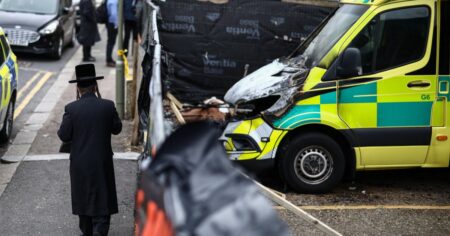
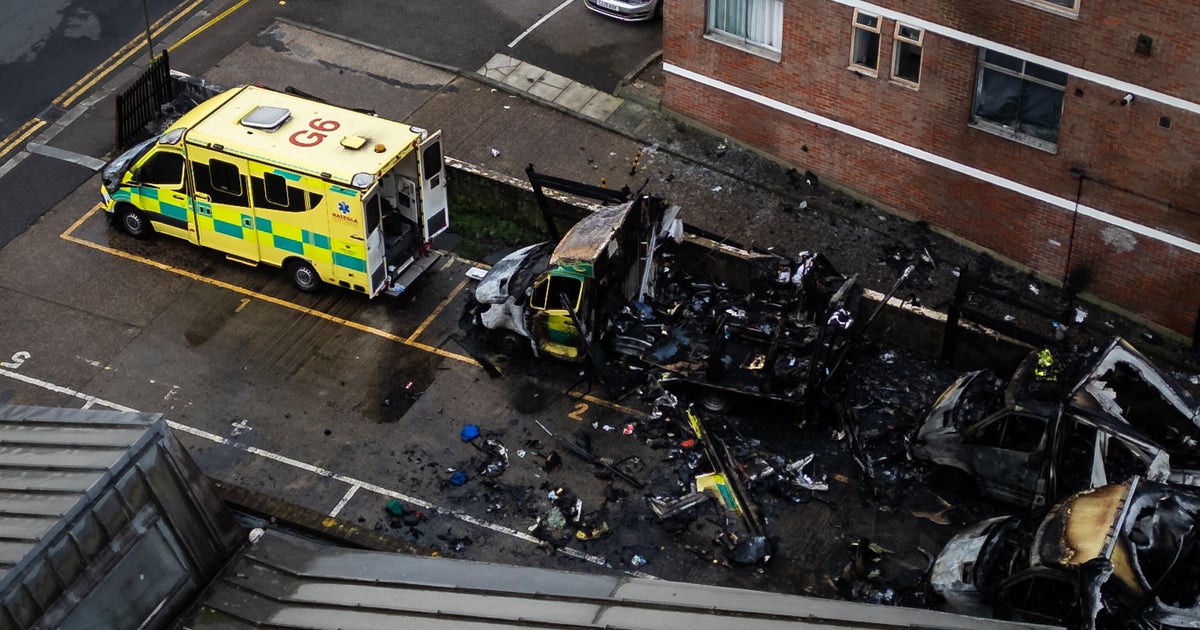
In the early hours of a Monday morning, the peaceful neighborhood of Golders Green in London was shattered by the sound of explosions and the sight of flames engulfing emergency vehicles that serve the local Jewish community. Police rushed to the scene after reports of a fire, only to discover that four ambulances belonging to Hatzola Northwest—a cherished volunteer organization providing emergency medical services to the community—had been deliberately set ablaze. The incident, which authorities are investigating as a suspected antisemitic hate crime, has sent shockwaves through the area, known for its significant Jewish population. The London Fire Brigade worked swiftly to bring the flames under control, but not before multiple gas cylinders on the vehicles exploded with such force that windows in a nearby apartment building shattered. Miraculously, despite the violence of the explosions and the proximity to residential areas, no injuries were reported. However, the emotional and psychological impact on the community has been profound, leaving residents grappling with fear, anger, and disbelief that such a targeted attack could occur in their neighborhood.
The Scale of Destruction and Community Response
The destruction wrought by the arson attack was both extensive and deliberate. As firefighters battled the blaze, the intensity of the fire caused gas canisters stored on the ambulances to explode sequentially, creating a terrifying scene that residents described as resembling something from a war zone. Local resident Mark Reisner, who witnessed the horrifying events unfold, told Sky News that he heard extremely loud explosions that he could “feel go through his guts.” He arrived at the scene just as the third ambulance was exploding, describing the experience as leaving him and his neighbors “reeling with confusion and shock.” The force of the explosions was so powerful that authorities made the precautionary decision to evacuate nearby homes, understanding that the situation could have escalated into an even greater tragedy. The volunteer organization Hatzola Northwest, which has served the community faithfully for years, providing critical emergency medical response services, now finds itself the victim of what appears to be a calculated attack on Jewish community infrastructure. Shomrim, a nonprofit organization that operates neighborhood watch services in Jewish communities, was quick to condemn the attack, emphasizing that this was “not only a criminal act of arson, but a targeted and deeply concerning incident affecting a vital emergency service serving the local Jewish community.”
The Investigation and Search for Suspects
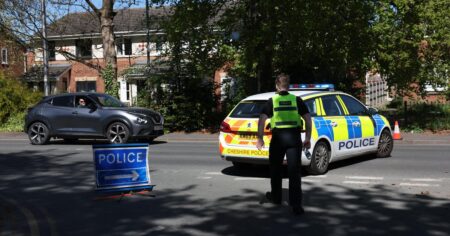
Police Superintendent Sarah Jackson addressed the community’s concerns, acknowledging that this incident would naturally cause “a great deal of community concern” and assuring residents that officers remained on scene conducting urgent inquiries. The Metropolitan Police are treating the fire as a suspected antisemitic hate crime, a designation that reflects the apparent targeting of specifically Jewish community resources. Authorities have revealed they are actively searching for three suspects in connection with the arson attack, though as of the latest reports, no arrests had been made. The investigation is ongoing, with forensic teams examining the scene and detectives reviewing security camera footage from the area in hopes of identifying those responsible. The police presence in Golders Green has been significantly increased to provide reassurance to the community and to gather evidence that might lead to the perpetrators. The cause of the fire, while strongly suspected to be deliberate arson, is still officially under investigation as authorities work to build a comprehensive case. The community has been urged to come forward with any information, no matter how insignificant it might seem, that could assist police in their investigation. The response from law enforcement demonstrates the seriousness with which this attack is being treated, recognizing it not just as a criminal act but as an assault on the safety and security of an entire community.
Political Condemnation and National Response
The incident has drawn condemnation from the highest levels of British government, with Prime Minister Keir Starmer issuing a strong statement calling it a “deeply shocking antisemitic arson attack.” According to Reuters, Starmer emphasized that “antisemitism has no place in our society,” reflecting the government’s position that such attacks represent not only crimes against individuals or property but assaults on the fundamental values of tolerance and diversity that Britain strives to uphold. The Prime Minister’s swift response highlights the political sensitivity surrounding antisemitism in the United Kingdom and the government’s determination to address the rising tide of hate crimes targeting Jewish communities. Politicians from across the political spectrum have joined in condemning the attack, with many expressing solidarity with the Jewish community and calling for those responsible to be brought to justice swiftly. The incident has also reignited debates about the adequacy of security measures protecting Jewish institutions and community services, with some calling for increased government funding for security infrastructure around synagogues, schools, and community organizations. The attack on emergency service vehicles has been particularly troubling for many observers because it represents a strike against an organization dedicated to saving lives, regardless of background or faith—making it not just an antisemitic attack but an assault on the very principle of humanitarian service.
Rising Antisemitism in the United Kingdom
This disturbing incident in Golders Green is unfortunately part of a much larger and deeply concerning trend of rising antisemitism across the United Kingdom. According to the Community Security Trust, an organization dedicated to protecting Jewish communities and tracking antisemitic incidents, the numbers tell a troubling story of escalating hate. The organization recorded approximately 3,700 antisemitic incidents in 2025, representing a staggering increase from the 1,662 incidents reported in 2022. This dramatic rise has been particularly pronounced since the start of the Israel-Hamas War in late 2023, with Jewish communities across Britain experiencing a marked increase in harassment, vandalism, assault, and other forms of antisemitic behavior. The conflict in the Middle East, while geographically distant, has had profound reverberations in British Jewish communities, with many members reporting feeling increasingly unsafe and vulnerable. The statistics reveal that Jewish people in Britain are facing an environment of heightened threat, where their places of worship, community centers, schools, and now even emergency services are being targeted. The attack on the Hatzola ambulances represents an escalation in the nature of these attacks, moving beyond verbal harassment or graffiti to potentially life-threatening arson that could have resulted in mass casualties had the timing been different or had the ambulances been in use during the attack.
A Community Under Siege and the Path Forward
Perhaps most chilling is that this attack on emergency vehicles in Golders Green comes in the context of other serious violent incidents targeting Jewish communities in the UK. In October 2025, a horrific attack occurred outside a Manchester synagogue where worshippers had gathered to celebrate Yom Kippur, one of the holiest days in the Jewish calendar. An attacker drove his car into the crowd before stabbing one person to death, while another person tragically died after being inadvertently shot by police responding to the incident. These attacks—both the Golders Green arson and the Manchester synagogue assault—represent not isolated incidents but rather data points in a disturbing pattern that has left British Jewish communities feeling under siege in their own country. The targeting of a volunteer ambulance service is particularly insidious because Hatzola provides emergency medical care as an expression of the Jewish value of pikuach nefesh—the principle that saving a life overrides nearly all other religious considerations. By attacking these ambulances, the perpetrators weren’t just committing arson; they were attempting to deprive an entire community of a crucial safety net. As Britain grapples with this rising tide of antisemitism, community leaders, law enforcement, and government officials are being called upon to not only investigate and prosecute individual incidents but to address the underlying currents of hatred that allow such attacks to flourish. For the residents of Golders Green and Jewish communities across the United Kingdom, the path forward must include both increased security measures and a broader societal commitment to confronting and dismantling antisemitic ideology wherever it appears, ensuring that all citizens can live without fear of being targeted for their faith or identity.