
Maryland Governor Wes Moore Charts New Path for Democrats While Confronting Trump
A Call for Action Over Analysis
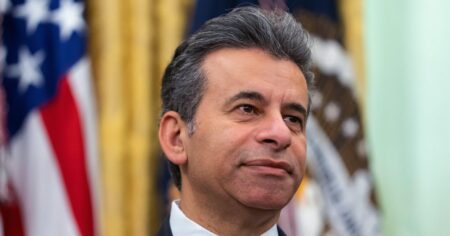
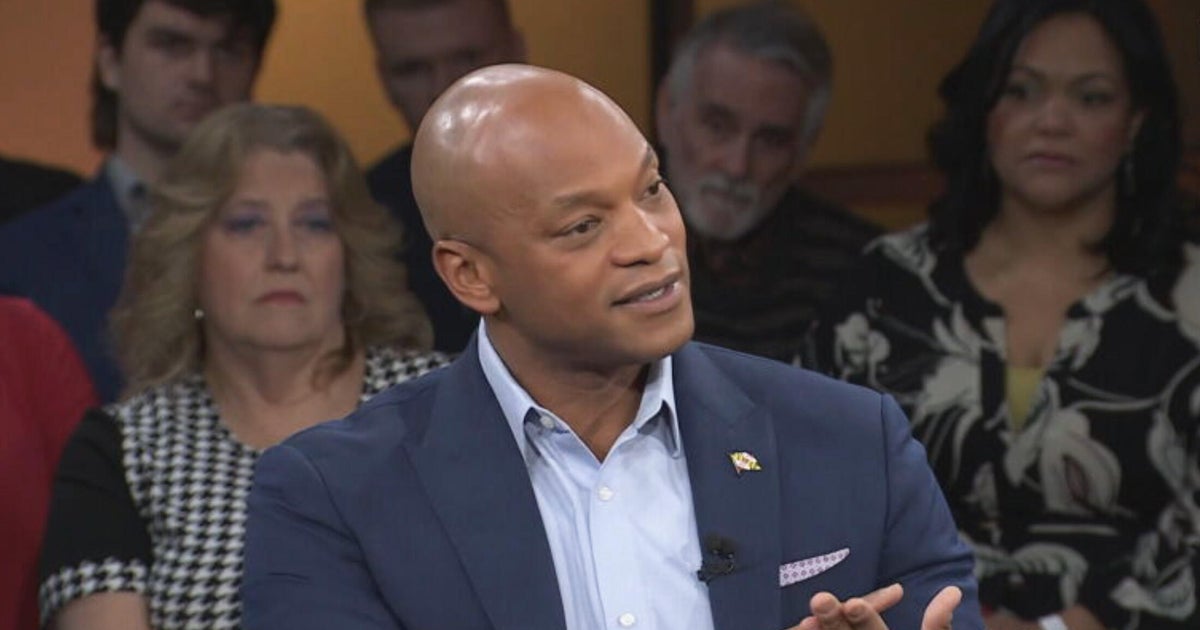
In a revealing CBS News “Things That Matter” town hall that aired Sunday evening, Maryland Governor Wes Moore delivered a candid assessment of both major political parties while offering his vision for how Democrats can reconnect with everyday Americans. The Army veteran turned Democratic governor didn’t pull punches when discussing his party’s shortcomings, particularly criticizing what he sees as an excessive tendency toward deliberation at the expense of action. In what might surprise some progressive voters, Moore suggested that Democrats could actually learn something from President Trump’s approach to governance—specifically, his willingness to act decisively rather than endlessly study problems.
“Democrats have got to stop being the party of no and slow, and start being the party of yes and now,” Moore declared during the hourlong discussion moderated by CBS News senior correspondent Norah O’Donnell. He argued that not every problem requires years of committee meetings and commissioned studies before solutions can be implemented. Using education as an example, the governor said parents don’t want to hear about forming commissions when their children’s schools aren’t adequately preparing them for the future—they want action now. Moore acknowledged the irony in drawing lessons from Trump, noting that the president “does not waste time” when implementing his agenda, even if those policies are harmful. “Donald Trump did not need an analysis to decide that he was going to rip away food assistance for the people of our state,” Moore observed, pointing out that the president deployed federal agents into communities without extensive planning or accountability measures.
Responding to Presidential Attacks and Racist Imagery
The town hall came amid escalating tensions between Moore and the Trump administration. The Maryland governor found himself excluded from the traditional White House meeting and dinner with governors from both parties this month, with Trump declaring him “not worthy” to attend. In a characteristic Truth Social post, the president called Moore “foul mouthed,” criticized his gubernatorial performance, and accused him of lying about receiving a military medal. Moore dismissed these attacks as “full of lies” and “unhinged,” making clear he won’t be intimidated by presidential insults. “I will work with anyone. But I will bow down to no one,” Moore told CBS News. “And I think the president has a problem with that.”
When asked directly whether he believes President Trump is a racist—particularly following the controversy over Trump’s Truth Social post depicting Barack and Michelle Obama as apes—Moore took a diplomatic but pointed approach. Rather than giving a simple yes or no answer, he said it’s ultimately a question for the president himself to answer. However, he quickly added: “But, frankly, I think his actions probably give the answer before he even has a chance to answer it himself.” The offensive video, which drew bipartisan condemnation with Republican lawmakers calling it “racist,” “incredibly offensive,” and “inappropriate,” was eventually deleted from Trump’s social media account, though the president claimed he hadn’t seen the offensive imagery before posting it.
Immigration: Failures on Both Sides of the Aisle
On immigration, Moore offered criticism that spanned both parties, arguing that the issue has been mishandled by Republican and Democratic administrations alike. While he strongly condemned Trump’s current immigration crackdown, particularly the surge in ICE arrests that he believes has ensnared people far removed from the administration’s stated goal of targeting the “worst of the worst,” he also acknowledged the Biden administration’s failures on border security. Moore noted that ICE, which received massive funding increases, has become “the largest law enforcement agency in this country, and they are using their resources arresting 5-year-olds,” questioning how such actions make Americans safer.
However, the governor didn’t give his own party a pass on the issue. When pressed about the surge in unauthorized border crossings during the Biden years, Moore was straightforward: “I definitely think that the former president did not have this right. We needed to do more. I don’t think anyone can argue that we had the system worked out under President Biden—that immigration was worked out.” This balanced critique reflects Moore’s broader message that Democrats need to address issues honestly rather than simply defending their record. He called for comprehensive immigration reform from Congress and faulted the current GOP-led House and Senate for their “continued abdication of responsibility” on the matter, suggesting that real solutions require legislative action rather than executive orders or enforcement alone.
Accountability for Epstein, Economic Challenges, and Redistricting
Moore didn’t shy away from other controversial topics during the town hall. Addressing the recently released millions of Justice Department files on convicted sex offender Jeffrey Epstein, the governor called the revelations “sickening” and demanded accountability for anyone implicated in crimes against children, regardless of their political affiliation or social status. “I think if you are found guilty of doing these horrific things to these children, I do not care your background nor political affiliation, justice has to be served,” he stated firmly. Moore criticized the Justice Department’s handling of the case, particularly the 2008 plea deal that allowed Epstein to avoid federal charges until 2019, calling the “lack of accountability, the lack of transparency, and frankly the lack of justice” in the case “staggering.”
On economic matters closer to home, Moore acknowledged that Maryland faces significant challenges with the cost of living, particularly regarding housing and energy costs. He pointed to data from the state comptroller showing that approximately 40,000 people have been leaving Maryland annually in recent years, many seeking states with more affordable housing. “It is a national problem. But it is a very big problem in the state of Maryland,” Moore admitted. “It’s just harder to get by. And frankly, it’s not fair.” The governor outlined his efforts to address these issues, including proposals to build housing on state-owned land and pressuring the regional power grid operator to cap costs and accelerate approval of new energy projects, positioning himself as “one of the most aggressive housing governors in this country.”
Political Future and Democratic Strategy
When it comes to his own political ambitions, Moore sought to put speculation about a 2028 presidential run to rest—at least for now. “I’m not running for president,” the 47-year-old governor stated plainly, emphasizing that his focus is on winning reelection in Maryland in 2026. When pressed about whether he’d ever consider a future White House bid, he responded, “I don’t see a reason … I love my job, and I love what I’m doing.” However, political observers note that such denials are common among politicians who eventually do run for higher office, and Moore’s national profile continues to rise.
The governor is currently pushing for Maryland’s state Senate to take up redistricting legislation that would redraw the state’s congressional map, potentially giving Democrats a better chance of winning the state’s only GOP-controlled House district. The measure has passed the state House but stalled in the Senate, where leaders worry it could backfire by diluting Democratic advantages in other districts. Moore defended the effort by noting that Republicans drew first blood in the current redistricting wave, with Texas creating five new GOP-leaning seats, which prompted Democratic responses in California and redistricting efforts in several other states. “Donald Trump started this conversation when he started calling Texas and said, ‘I need you to find me votes,'” Moore argued, asking only that the Senate “debate it. Discuss it. And do your democratic duty to vote.”
Throughout the town hall, Moore’s central message was clear: Democrats need to expand their coalition by focusing on the issues that matter most to all Americans—particularly economic concerns—rather than simply energizing their existing base with partisan rhetoric. “I think in this moment that the job of the Democratic Party is not to just energize the base,” Moore said. “It’s to enlargen it. It’s to speak to everybody.” This approach, combining progressive values with pragmatic action and honest acknowledgment of past failures, represents Moore’s vision for how Democrats can rebuild trust with voters who have felt left behind. Whether his party will embrace this message remains to be seen, but Governor Moore is clearly positioning himself as a leader willing to challenge orthodoxy in pursuit of practical results that improve people’s daily lives.