
When a Family Outing Became a Nightmare: The Idaho Horse Racing Raid
A Community Celebration Turns Into Chaos
On what should have been an ordinary weekend afternoon at La Catedral Arena in Wilder, Idaho, families gathered for a beloved community tradition: horse racing. Parents brought their children to enjoy the festive atmosphere, complete with food vendors, raffles, and the excitement of watching horses thunder down the track. For Anabel Romero and her three children – 14-year-old SueHey, 8-year-old NeVaeh, and 6-year-old Alfredo – it was meant to be a fun family outing. Instead, it became a terrifying experience that would leave lasting scars on everyone present, especially the children who witnessed military-style law enforcement tactics unfold before their eyes. When the first helicopter appeared overhead that October day, followed by five armored vehicles and approximately 200 officers in tactical gear, the casual family event transformed into what witnesses described as a war zone. Children ran screaming, parents desperately tried to protect their families, and confusion reigned as heavily armed agents swarmed the property without clear explanation of who they were or why they were there.
The Sheriff’s Defense and the Photographic Evidence
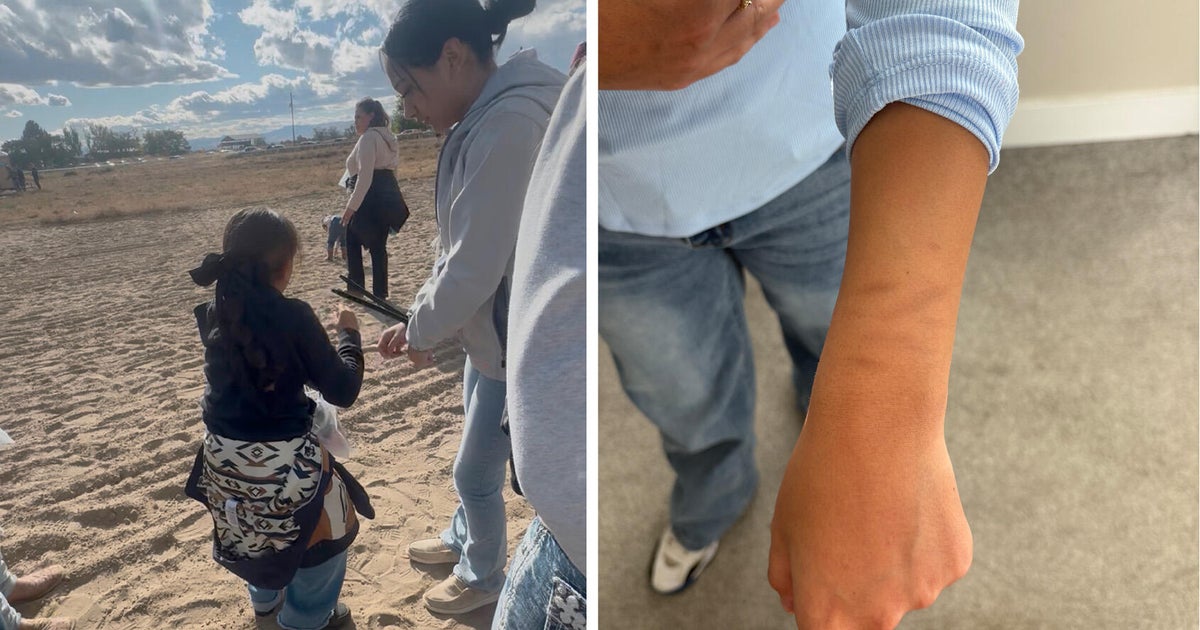
Canyon County Sheriff Kieran Donahue, who participated in the raid on horseback, initially denied that children had been restrained with zip ties during the operation. He characterized the law enforcement response as necessary and appropriate, defending the tactics used to detain over 100 undocumented immigrants. However, when CBS News presented him with photographic evidence showing the plastic restraints and the resulting bruises on 14-year-old SueHey’s wrists, his response shifted. “God bless her. I’m sorry she went through that,” Donahue acknowledged, though he maintained that “law enforcement is not evil because we contained everybody and detained them until we sorted it out.” This statement reveals a troubling disconnect between the reality experienced by families at the event and how authorities justified their actions. The images obtained by CBS News tell a story that contradicts official statements from multiple agencies involved in the raid. Despite federal officials, including Homeland Security spokesperson Trisha McLaughlin, categorically denying that children were ever zip-tied, restrained, or arrested, the evidence suggests otherwise. Multiple law enforcement agencies initially claimed that reports of children being restrained were “completely false,” only to later amend their statements when confronted with proof.
Children Caught in the Crossfire
The accounts from children who were present at the raid paint a harrowing picture of fear and confusion. SueHey Romero was in her family’s truck with her younger siblings, sheltering from a passing rain shower, when agents in what she described as military gear began “running around, opening car doors, and yelling at people to get onto the track.” When officers opened the truck door and ordered her out, she initially refused, crouched protectively over her younger brother and sister. The agents forcibly removed her from the vehicle. Her 6-year-old brother Alfredo, showing remarkable courage for his age, told CBS News: “I was brave and I opened the door because I wanted to protect my sister.” The trauma extended beyond the Romero family. According to the ACLU lawsuit filed on behalf of three Latino families, Juana Rodriguez was bound with zip ties for hours while her 3-year-old son cried and struggled beside her. When she begged to hold and comfort her frightened child, agents refused, instead instructing the toddler to hold onto his mother’s pocket, which they had turned inside out. Another 8-year-old boy appeared on local news describing how he had to pick tiny shards of glass from his mouth after agents allegedly smashed car windows where children had taken refuge. The lawsuit describes how agents deployed flashbang grenades, pointed guns at children, and fired rubber bullets over their heads, creating an atmosphere of terror that will likely haunt these young witnesses for years to come.
A Mother’s Desperate Fight to Protect Her Children
Anabel Romero’s experience reveals the helplessness parents felt during the raid. When the chaos began, her first thought was for her children’s safety. She called them from her hiding place in a horse stall, telling them to stay in the truck. But agents searching through the stalls found her, and when she asked for basic information about who they were and why she was being detained, she says they responded with threats: “I’m gonna [expletive] blow your head off.” Romero describes being kicked, punched, and stepped on before being zip-tied and led to the racetrack where hundreds of others were being detained. Seeing her 14-year-old daughter being forcibly removed from the truck where she’d been protecting her younger siblings, Romero’s maternal instincts kicked in, but she was powerless to intervene. When agents moved to restrain SueHey, Romero repeatedly told them the girl was only 14 years old, pleading with them to at least zip-tie her hands in front of her body rather than behind her back to reduce her pain. The officers eventually agreed to this small mercy, but the damage was already done. The family remained detained for several hours before ICE agents determined they were all U.S. citizens. During their detention, Romero was questioned extensively about her children, who have different last names than her. “I didn’t know I needed to carry their birth certificates around,” she said, highlighting the absurdity of being treated as suspicious in her own country.
The Stated Purpose and the Troubling Questions
According to Sheriff Donahue, the massive law enforcement operation was triggered by a federal criminal warrant related to suspected illegal gambling at the racetrack. The FBI had identified five individuals allegedly running an unlicensed gambling operation. However, the scale of the response – 200 officers, armored vehicles, helicopters, flashbang grenades, and tactical gear – seems disproportionate to addressing an illegal gambling operation. The sheriff claimed that cartel involvement was suspected and that this justified the militarized approach, with immigration enforcement being “secondary or tertiary” to the operation’s goals. But the ACLU’s lawsuit tells a different story, alleging that law enforcement “conspired to abuse a criminal search warrant as cover to go fishing for immigration arrests at an event where they knew they would encounter a large number of Latino individuals.” The numbers support this interpretation: while 105 attendees were determined to be undocumented immigrants and moved to detention facilities, approximately 375 others – all either U.S. citizens or lawful residents – were detained, questioned about their legal status, and required to provide documentation before being released. Local immigration lawyer Nikki Ramirez-Smith, who came to the scene, believes authorities fundamentally misjudged the event. “My opinion is they didn’t know that most of the people there were American citizens,” she explained. “I think law enforcement misjudged it because the event is in Spanish.” Four months after the raid, the only criminal charges filed involved the five individuals arrested for unlicensed gambling – raising serious questions about whether the operation’s scope was ever justified.
The Lasting Impact on Children and Community Trust
The psychological toll of the October raid extends far beyond the physical bruises that marked SueHey’s wrists. The ACLU complaint documents widespread, lasting fear and emotional distress among the children who witnessed or experienced the violent, chaotic operation. Three-year-old Y.R., one of the plaintiffs identified by their initials, is now afraid of police. A 15-year-old identified as Y.L. reports having recurring nightmares of being detained at gunpoint. These children, many of them American citizens who had done nothing wrong, now associate law enforcement with terror rather than protection. SueHey Romero expressed a chilling hesitation about calling 911 in an emergency: “How are they gonna treat me even though I’m a U.S. citizen, even if I’m not doing anything wrong, even if I’m just reporting a crime?” This erosion of trust between law enforcement and the community represents a profound failure that may take generations to repair. Sheriff Donahue acknowledged that the raid had severed ties between local law enforcement and Idaho’s Latino community, a reality that makes everyone less safe. For Anabel Romero, the raid shattered something fundamental about her family’s place in America. “My parents, they came over here [from Mexico] to give us a better life,” she told CBS News. “That day, I felt like our freedom was taken away from us.” The incident in Wilder has been somewhat overshadowed by immigration enforcement actions in Minnesota and other locations, but the ACLU argues it signals a dangerous normalization of harsh and sometimes violent tactics in the presence of children. As the nation grapples with questions about immigration enforcement, the faces of these traumatized children – including 5-year-old Liam Conejo Ramos in Minnesota, photographed wearing bunny ears and carrying a Spiderman backpack while being detained – serve as a stark reminder of the human cost of militarized policing tactics that fail to distinguish between suspected criminals and innocent bystanders, between adults and children, between those who have violated immigration laws and American citizens simply enjoying a community event.