
Bipartisan Push Forces Two Congress Members to Resign Amid Misconduct Allegations
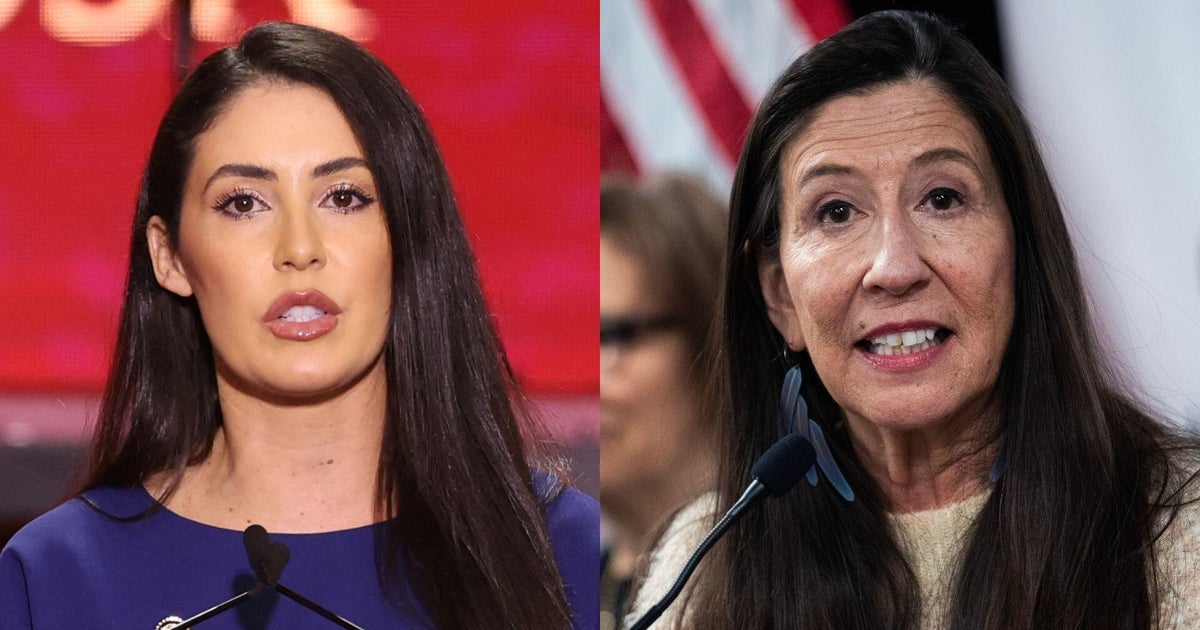
In an unprecedented display of cross-party cooperation, two members of the United States House of Representatives resigned on Tuesday after facing mounting pressure and the threat of formal expulsion from Congress. What makes this story particularly remarkable is not just the resignations themselves, but the fact that they resulted from a coordinated effort between two female lawmakers from opposite sides of the political aisle who decided enough was enough when it came to misconduct allegations against their colleagues. Republican Representative Anna Paulina Luna and Democratic Representative Teresa Leger Fernández joined forces to push out Democratic Representative Eric Swalwell and Republican Representative Tony Gonzales, sending a clear message that allegations of sexual misconduct and ethical violations would no longer be swept under the rug in the halls of Congress. In a revealing interview with CBS News, both women detailed how they worked together, supported each other’s expulsion resolutions, and ultimately created enough political pressure to force both men to resign rather than face humiliating removal votes on the House floor.
The Allegations and the Coordinated Response
The circumstances that led to these resignations were serious and troubling. Representative Eric Swalwell faced accusations from multiple women in recent days alleging sexual assault and the sending of unsolicited explicit messages—allegations he has firmly denied. The mounting scandal became so intense that Swalwell also withdrew from California’s gubernatorial race over the weekend, suggesting the political damage extended far beyond his congressional seat. Meanwhile, Representative Tony Gonzales came under intense scrutiny regarding an affair with a staff member who later tragically died by suicide, raising serious questions about power dynamics and ethical conduct. Gonzales had already dropped his reelection bid last month as the controversy swirled around him. Luna and Leger Fernández didn’t just voice concerns—they took concrete action by introducing separate expulsion resolutions and building bipartisan support. According to Luna, they had already secured the backing needed to remove both men if it came to a vote, telling CBS News that “we had two-thirds support for both people to be gone.” This bipartisan coalition represented a significant achievement in today’s deeply polarized political environment.
When Leadership Hesitates, Members Act
What makes this story particularly compelling is that it represents a grassroots effort within Congress itself, rather than action directed from party leadership. Representative Leger Fernández was clear about this point, explaining that the dual resignations were the direct result of individual members stepping up when House leadership initially failed to take immediate action on these serious allegations. “If it wouldn’t have been for those resolutions that we were each filing, they wouldn’t have resigned,” she stated emphatically, adding that the entire situation only came to public attention because the women involved “were willing to break the silence.” This highlights a broader problem within institutional politics—that sometimes it takes individual courage to force accountability when established systems and procedures move too slowly or not at all. The coordination between Luna and Leger Fernández began informally, starting after Luna publicly pushed for action and the two women connected to strategically align their efforts. Because House rules require separate members to bring forward expulsion resolutions, they made a pact to support each other’s moves, creating a united front that proved impossible to ignore. House Speaker Mike Johnson told reporters that he personally did not play a role in causing the rapid succession of resignations, though he called the outcome appropriate and described the allegations against Swalwell as “alarming.”
More Members May Face Similar Pressure
Perhaps most significantly for the future of congressional accountability, both Luna and Leger Fernández made clear to CBS News that their efforts might not end with Swalwell and Gonzales. They indicated that other members currently facing scrutiny could find themselves under similar pressure to resign or face expulsion votes. Luna specifically mentioned that she would support expulsion proceedings if warranted in additional cases, including those involving Republican Representative Cory Mills and Democratic Representative Sheila Cherfilus-McCormick. “If you’re knowingly breaking the law, then you need to go,” Luna stated plainly, adding that “I think the threshold will be met” for taking action against these members. Mills is currently under investigation by the House Ethics Committee over alleged campaign finance violations, sexual misconduct, and other accusations, while Cherfilus-McCormick has been charged by federal prosecutors with improperly using millions of dollars in federal pandemic relief funds in connection with her campaign. The Ethics Committee determined last month that most of the allegations against Cherfilus-McCormick were substantiated, though it has not yet issued recommendations on what punishment, if any, should follow. Both Mills and Cherfilus-McCormick have denied wrongdoing and pushed back against suggestions they should resign or face expulsion.
The Accused Push Back
Not surprisingly, those now potentially in the crosshairs are defending themselves and arguing against what they see as an unfair grouping of very different types of allegations. Representative Mills, speaking to reporters on Tuesday, argued forcefully that he is being unfairly lumped together with lawmakers facing much more serious accusations, noting that he is not facing criminal charges or allegations involving inappropriate behavior with staff members or interns. “There’s absolutely no criminal charges being filed against me… no inappropriate behavior or actions with a staffer or intern on the Hill,” he emphasized, suggesting the allegations against him are fundamentally different in nature and severity. Representative Cherfilus-McCormick similarly told CBS News in a statement that she has no plans to resign and warned that expelling members without formal findings against them would set a “dangerous precedent” for Congress. She pointedly noted that the allegations she faces “are not the same as those facing some of my colleagues,” and criticized efforts to conflate different types of misconduct. “Lumping them together, particularly with cases involving sexual assault and rape, is inaccurate and irresponsible,” Cherfilus-McCormick stated. These responses highlight the complexity of establishing clear standards for when congressional misconduct rises to the level requiring expulsion, especially when comparing financial irregularities with allegations of sexual assault or harassment.
A Broader Movement for Accountability
Both Luna and Leger Fernández framed the week’s resignations as part of a much broader and necessary push to address misconduct within Congress, particularly cases involving power dynamics between members and their staff. Luna’s message was direct and uncompromising: “No means no. You cannot sexually harass or assault people and not expect the law to come down on you.” This represents a significant shift in congressional culture, where such behavior has historically been tolerated, covered up, or addressed through quiet settlements rather than public accountability. Leger Fernández emphasized that the goal was to make crystal clear that such behavior will no longer be tolerated under any circumstances. “We are going to hold men accountable,” she declared, “and we will not let women continue to be silenced.” This commitment to breaking the silence around misconduct in Congress echoes broader cultural movements around accountability in workplaces across America. Both women also raised serious concerns about the pace and effectiveness of the House Ethics Committee’s work, arguing that the process often takes far too long to address serious allegations, allowing accused members to continue serving while investigations drag on. Luna was particularly blunt in her assessment, describing the committee—which is evenly split with five Democrats and five Republicans—as a place “where things go to die,” while Leger Fernández called for changes to ensure cases are handled more expeditiously.
Historical Context and What Comes Next
It’s worth noting that expelling a member of the House of Representatives requires a two-thirds vote, a high threshold that has historically made it an extremely rare outcome. Only six members of the House have been expelled in the entire history of the United States, most recently Republican Representative George Santos, who was removed after being charged with wire fraud, money laundering, and campaign finance violations. The resignation of two members under threat of expulsion in a single day is therefore quite remarkable and suggests a potential shift in how Congress handles misconduct allegations going forward. Representative Luna suggested that recent developments could indeed trigger “a chain reaction” of accountability, potentially leading to further resignations or expulsion proceedings against other members facing serious allegations. Republican Representative Michael Guest, who chairs the Ethics Committee, defended his panel’s work to reporters on Tuesday, explaining that “some investigations can be accomplished much quicker than others” and noting that complex probes like the one into Cherfilis-McCormick are difficult because they involve reviewing large numbers of documents and dealing with multiple attorneys. He insisted that committee members and staff are “working diligently to move these cases through as quickly as possible.” Whether this moment represents a true turning point in congressional accountability or merely an isolated incident remains to be seen, but the bipartisan cooperation between Luna and Leger Fernández offers a glimpse of what might be possible when members prioritize institutional integrity over partisan loyalty.