


Britain’s Naval Power Under Fire: The Truth Behind Trump’s Criticism
A Historic Maritime Power Faces Modern Scrutiny
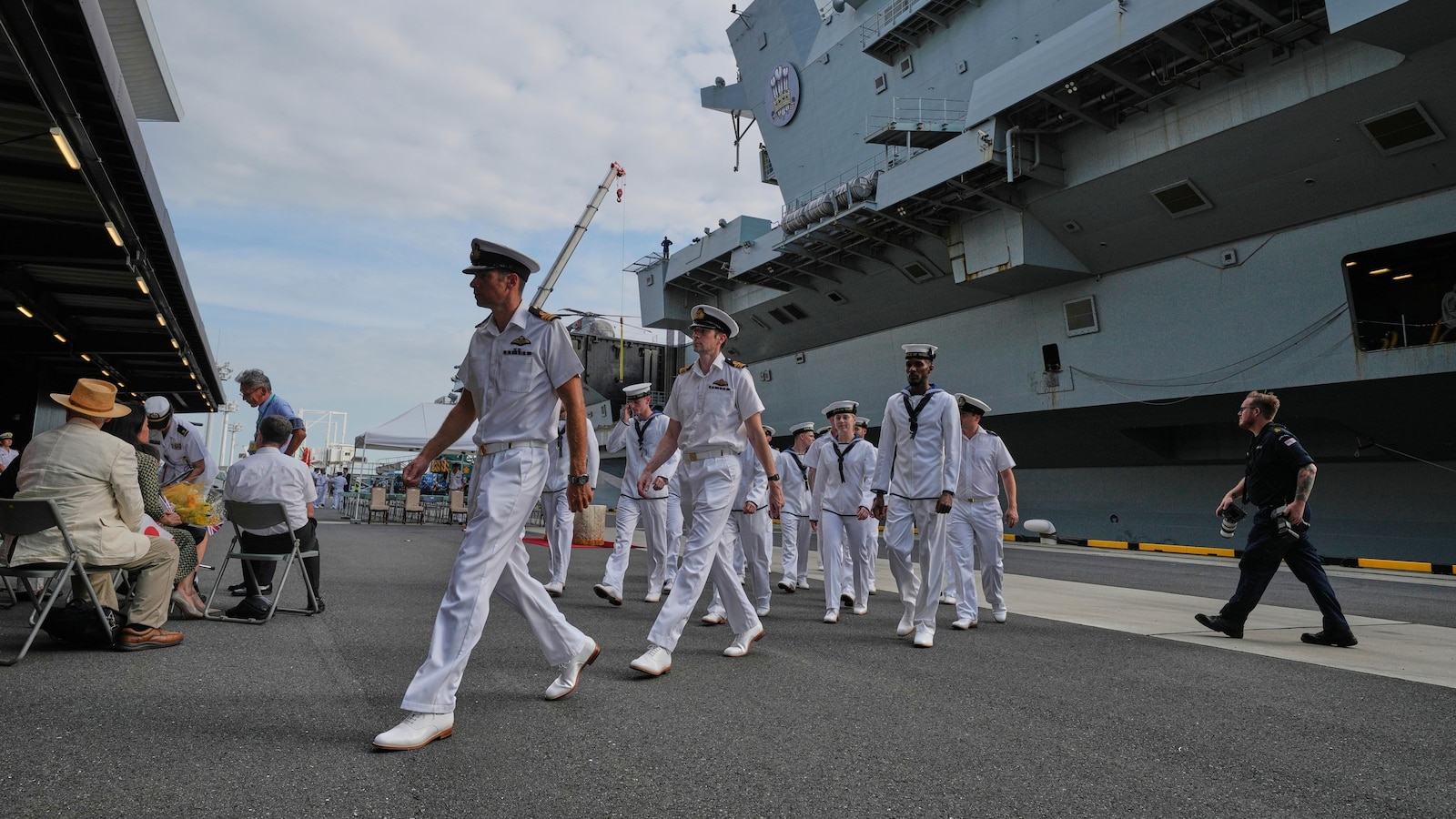
The United Kingdom, a nation with centuries of naval dominance and maritime achievement, finds itself in an uncomfortable spotlight as U.S. President Donald Trump and Defense Secretary Pete Hegseth have launched pointed criticism at British naval capabilities. While these jibes have wounded national pride in a country that once commanded the world’s seas, there’s an uncomfortable kernel of truth buried within the provocative rhetoric. The criticism intensified dramatically after British Prime Minister Keir Starmer initially refused U.S. military access to British bases at the onset of the Iran conflict on February 28th. Although Britain partially reversed this decision, allowing American forces to use facilities including the strategically crucial Diego Garcia base in the Indian Ocean for defensive operations, Trump has remained unyielding in his disappointment. His attacks have been personal and cutting, dismissing the Royal Navy’s two aircraft carriers as mere “toys” and telling Britain’s Daily Telegraph that the nation doesn’t “even have a navy,” characterizing it as “too old” with “aircraft carriers that didn’t work.” Defense Secretary Hegseth added his own sarcastic barb, questioning where the “big, bad Royal Navy” was when it came to securing the Strait of Hormuz for commercial shipping. These comments have sparked debate about whether Britain’s once-formidable naval force has declined to the point of irrelevance or whether the American criticism oversimplifies a more complex reality.
The Reality of Britain’s Naval Decline
The hard numbers paint a sobering picture of Britain’s diminished naval strength. According to analysis by The Associated Press using figures from the Ministry of Defense and the House of Commons Library, the Royal Navy fleet has contracted dramatically over the past five decades. In 1975, Britain commanded 166 vessels including aircraft carriers, destroyers, frigates, and submarines. By 2025, that number has plummeted to just 66 vessels—a reduction of approximately 60% in half a century. The specifics are equally stark: the destroyer fleet has been cut in half from twelve to just six, while the frigate fleet has been devastated, dropping from sixty vessels to a mere eleven. Perhaps most symbolically significant, there was a seven-year period during the 2010s when Britain had no operational aircraft carriers at all, a gap that would have been unthinkable during the nation’s maritime heyday. This stands in sharp contrast to Britain’s capacity in living memory—in 1982, when Argentina invaded the Falkland Islands, the UK assembled a task force of 127 ships, including two aircraft carriers, for the successful campaign to retake the islands. That operation, which then-President Ronald Reagan viewed with lukewarm enthusiasm, represented the last great demonstration of Britain’s traditional naval power. Today, military experts acknowledge that nothing approaching that scale could be mounted with current resources, a reality that speaks volumes about the transformation of British military capability.
Understanding the Causes Behind the Cuts
The decline of the Royal Navy cannot be attributed to a single cause but rather represents the convergence of multiple factors over decades. Part of the reduction reflects legitimate changes in military technology and strategy—modern vessels are far more capable than their predecessors, meaning fewer ships can accomplish missions that once required larger fleets. The end of the British Empire also fundamentally changed the nation’s defense requirements, eliminating the need to maintain far-flung garrisons and the extensive naval infrastructure to support them. However, budgetary pressures have played the dominant role in shrinking Britain’s fleet. During the Cold War, when the Soviet Union posed an existential threat, Britain consistently spent between 4% and 8% of its annual national income on defense. Following the fall of the Berlin Wall in 1989, successive governments saw an opportunity to claim a “peace dividend,” redirecting defense spending to domestic priorities. The Labour governments of Tony Blair and Gordon Brown were particularly aggressive in this regard, channeling funds toward health and education rather than military modernization. Defense spending steadily declined, reaching a nadir of just 1.9% of GDP in 2018. The global financial crisis of 2008-2009 compounded these pressures, as Conservative-led governments imposed sweeping austerity measures that prevented any increase in military spending even as warning signs accumulated about resurgent threats, particularly from Russia following its 2014 annexation of Crimea and incursions into eastern Ukraine.
Recent Wake-Up Calls and Policy Shifts
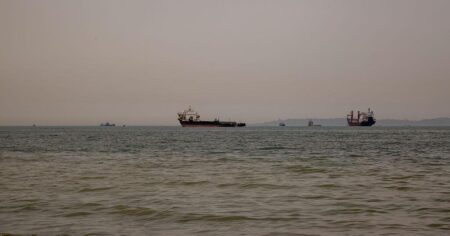
The symbolic moment that crystallized concerns about Britain’s hollowed-out military capabilities came during the recent Iran crisis. The Royal Navy faced widespread criticism for the time required to deploy the HMS Dragon destroyer to the Middle East after hostilities began. While naval officials worked around the clock to prepare the vessel for a mission entirely different from what it had been preparing for, the episode became emblematic of how far British military readiness had fallen. The ship was available but not immediately deployable—a situation that would have been unthinkable during previous eras of British naval power. These concerns have finally begun producing policy changes across the political spectrum. Russia’s full-scale invasion of Ukraine in 2022 served as a catalyst for reassessment, prompting the then-Conservative government to begin reversing decades of defense spending decline. When Labour returned to power in 2024, Prime Minister Starmer continued this trajectory, even at the cost of reducing Britain’s historically significant foreign aid budget—a politically difficult decision that reflects how seriously the government views the security environment. Starmer has committed to raising UK defense spending to 2.5% of GDP by 2027, with an updated goal of reaching 3.5% of GDP by 2035 as part of a NATO agreement strongly promoted by President Trump. In concrete terms, this represents tens of billions of additional pounds flowing into the armed forces, money that will translate into significantly more equipment, personnel, and capabilities across all service branches.
The Balanced Assessment: Not as Bad as Portrayed
Despite the legitimate concerns about Britain’s reduced naval capacity, experts caution against accepting Trump and Hegseth’s characterizations at face value. Professor Kevin Rowlands, editor of the Royal United Services Institute Journal and a former Royal Navy captain, offers a more nuanced perspective. He acknowledges that “there is a grain of truth, with the Royal Navy being smaller than it has been in hundreds of years,” but emphasizes the positive developments often overlooked in inflammatory rhetoric. Critically, Rowlands notes that “the Royal Navy would say that it’s entering its first period of growth since World War II, with more ships set to be built than in decades.” When compared to peer nations, Britain’s naval capabilities remain respectable. The Royal Navy is “largely similar with the French navy, which it is often compared with,” indicating that Britain remains among the world’s significant naval powers even if it no longer dominates as it once did. The two aircraft carriers, despite Trump’s dismissive “toys” comment, represent genuine capability that very few nations possess. While they have experienced technical issues and operational challenges, they provide Britain with power projection capabilities that only a handful of countries can match.
Looking Forward: Challenges and Uncertainties
The path forward for Britain’s naval revival faces significant obstacles despite the stated political commitments to increased spending. The most immediate challenge is fiscal—the economic disruption caused by the Iran war has further strained public finances, making it unclear where additional defense funding beyond already-announced increases might originate. Britain faces the classic guns-versus-butter dilemma, with competing demands from healthcare, education, infrastructure, and social services all claiming legitimacy. There’s growing pressure for the government to accelerate the planned spending increases, but delivering on even the current timeline will require difficult trade-offs. Moreover, rebuilding naval capacity cannot happen overnight—ships take years to design and build, crews require extensive training, and supporting infrastructure needs development. Even with dramatically increased funding, it will be a decade or more before Britain could field a substantially larger fleet. The political dimension adds another layer of complexity, as Trump’s criticism—however unfair and lacking in nuance according to Rowlands—may continue regardless of British efforts. “We are dealing with an administration that doesn’t do nuance,” Rowlands observed, suggesting that facts may matter less than rhetoric in the current political environment. For Britain, the challenge extends beyond simply rebuilding its navy to navigating a changing geopolitical landscape where traditional alliances face new pressures and the rules-based international order that has underpinned British security for decades appears increasingly fragile. The Royal Navy’s revival, should it materialize, will need to serve not just as a symbol of national prestige but as a practical tool for protecting British interests in an increasingly uncertain world.