



A School Offering Hope: How Greenland Girls School Gives Teenage Mothers a Second Chance in Kenya
Breaking Time Becomes Bonding Time
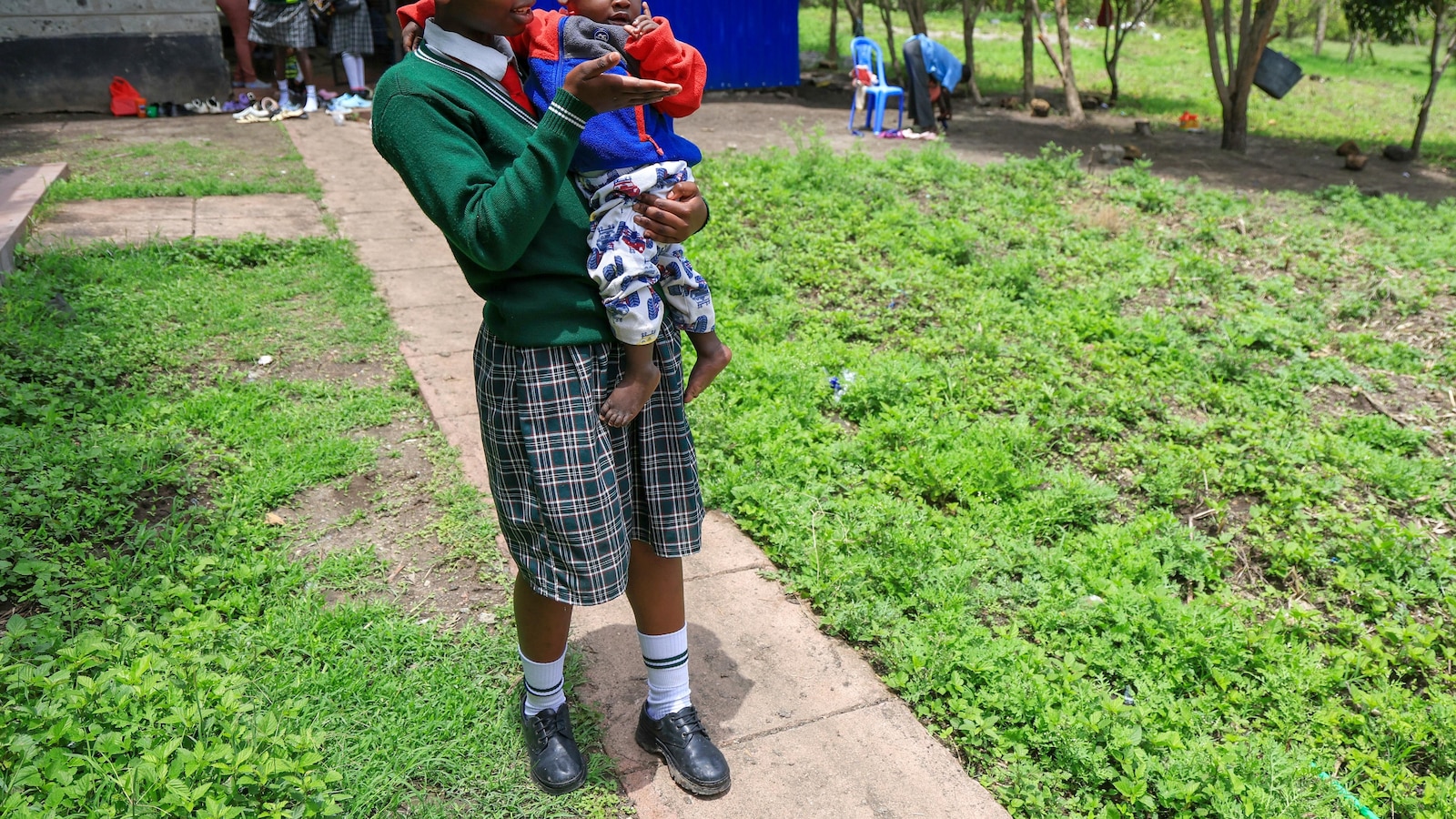
For most high school students, break time means socializing with friends or catching a quick snack before the next class. But for 19-year-old Valarie Wairimu at Kenya’s Greenland Girls School, these precious minutes serve a different purpose entirely. As soon as the bell rings, she rushes to grab something to eat before heading to the school’s on-site nursery, a facility that sets this institution apart from any other in the country. There, a dedicated team of nannies has been caring for her baby son, Kayden, while she attends her classes. During these brief interludes between lessons, Wairimu feeds her child and shares moments of connection before returning to her studies. This unique arrangement represents more than just convenience—it symbolizes a revolutionary approach to education that refuses to force young mothers to choose between their children and their futures. For Wairimu, who has excelled academically at Greenland and dreams of becoming a doctor, this school represents the opportunity she thought she had lost forever when she discovered she was pregnant.
A Revolutionary Model for Educational Inclusion
Greenland Girls School stands alone in Kenya as the only educational institution specifically designed for teenage mothers, providing care for both the students and their children. With 310 enrolled students and more than 80 children ranging from newborns to toddlers, the school offers something increasingly rare: a second chance at education in an environment completely free from the stigma that typically follows young mothers in Kenyan society. Education experts have recognized Greenland as a groundbreaking model demonstrating how teenage mothers can be successfully reintegrated into formal education systems. Founded in 2015 by the nonprofit organization Shining Hope for Communities, the boarding school has already guided hundreds of young women through secondary education while simultaneously supporting their children’s development. The success stories emerging from Greenland are remarkable, with graduates going on to pursue professional careers in fields including government administration and medicine. Many students attend through grants provided by the nonprofit, making this life-changing opportunity accessible regardless of financial circumstances. The majority of students come from Kajiado County, located south of Nairobi, where the school has established a network of outreach officers specifically tasked with identifying and referring expectant mothers who might benefit from the program. However, the school’s reputation has spread throughout Kenya, reaching even remote western regions where students like Wairimu have learned about this unique opportunity through family connections and teacher referrals.
Confronting Difficult Circumstances with Compassion
The stories behind Greenland’s student body reveal the harsh realities many young women face in Kenya. Wairimu’s journey to the school began when she found herself pregnant while living with her single father and younger brother, in circumstances where caring for a newborn was financially impossible. Her grandmother’s awareness of Greenland provided the lifeline that changed her trajectory. Many students arrive at Greenland carrying even heavier burdens—some became pregnant through sexual assault, while others were forced into early marriages. Paul Mukilya, the school’s manager, explains that family support is often tragically absent, with parents frequently rejecting their pregnant daughters. In these cases, the school’s outreach officers must negotiate with community elders to secure permission for young women to attend, navigating complex social dynamics and cultural expectations. The challenges these students face extend beyond their immediate families to encompass entire communities that struggle to accept them. Under Kenyan law, sexual activity involving minors—those under 18—is illegal, but the legal framework only criminalizes male participation, leaving a complicated landscape where underage pregnancies often become court matters. Greenland actively supports its students through these legal processes and maintains relationships with local authorities, particularly in cases involving underage marriages. Recognizing that the trauma these young women experience requires more than just academic instruction, the school provides comprehensive psychological counseling and mentorship programs designed to help students process their experiences and rebuild their sense of self-worth.
Nurturing Mothers While Educating Students
While students attend classes, Greenland’s dedicated staff takes complete responsibility for childcare, but their role extends far beyond simply watching children. The caregivers also serve as mentors, teaching their young students essential parenting skills and helping them develop healthy relationships with their children. Caroline Mumbai, one of the school’s caregivers and a mother of two herself, explains that some young mothers initially view their children as burdens rather than blessings. Through patient guidance and modeling, the staff helps these teenagers learn how to nurture and bond with their babies, transforming their perspectives on motherhood. This dual approach—simultaneously educating young women while teaching them to be mothers—addresses the complete picture of these students’ needs. The program recognizes that academic success alone isn’t sufficient if these young mothers return to their communities without the skills and confidence to raise their children effectively. By integrating childcare, parenting education, and academic instruction, Greenland creates a comprehensive support system that prepares students for the multiple roles they’ll need to fulfill. This holistic approach acknowledges the complex reality these young women face: they are simultaneously students, mothers, and young people still developing their own identities. The school’s success in balancing these competing needs demonstrates that with proper support structures, teenage mothers can excel academically without sacrificing their children’s wellbeing.
Addressing a National Crisis in Education
The work Greenland performs addresses a significant and growing challenge in Kenya, where providing educational access to teenage mothers has become increasingly critical as the country’s young population rapidly expands. National statistics from 2024 reveal the scope of the issue: more than 125,000 live births were to adolescent mothers under 19 years old, representing thousands of young women whose educational trajectories were potentially derailed by pregnancy. Research conducted by the Population Council, a health and development think tank, found in 2015 that two-thirds of teenage mothers identified their pregnancies as the primary reason for leaving school. More recent data from 2022, compiled by research group IDinsight, confirmed that unintended pregnancy remains the second-leading cause preventing girls from returning to education, surpassed only by inability to pay school fees. These statistics paint a troubling picture of lost potential and interrupted futures across Kenya. In response to demonstrated need beyond the Kajiado region, Greenland Girls School is expanding its model by opening a second campus in Kilifi County along Kenya’s coast. Dr. Githinji Gitahi, chief executive of the development agency Amref Health Africa, strongly advocates for the expansion of programs like Greenland, arguing that every girl who becomes pregnant during her school years must be allowed to re-enter the education system. While he emphasizes that special schools like Greenland play an important supplementary role, he stresses they should be part of a broader, scalable policy framework focused on closing equity gaps in education access.
Creating Stigma-Free Spaces for Learning
Beyond the practical support of childcare and education, students at Greenland consistently highlight another invaluable aspect of the school: an environment completely free from judgment and stigma. For young women who have faced rejection, shame, and condemnation from their families and communities, this acceptance creates a foundation for healing and growth. Mary Wanjiku, a 20-year-old student whose son is nearly 18 months old, describes the transformation she experienced upon arriving at Greenland. Before coming to the school, she faced constant judgment because of her pregnancy, a social burden that compounded the practical challenges of being a young mother. The moment she arrived at Greenland, however, she was received with love—a stark contrast to her previous experiences. This welcoming, non-judgmental atmosphere has allowed her to focus on her studies and plan for her future, including her aspiration to become a lawyer. The psychological impact of this supportive environment cannot be overstated. Students who previously saw themselves through the lens of societal disapproval can begin to recognize their own worth and potential. They learn alongside peers who share similar experiences, creating a community of mutual understanding and support rather than competition and judgment. This stigma-free environment doesn’t just benefit the students emotionally—it directly enhances their academic performance by removing the psychological barriers that shame and social rejection create. By demonstrating that teenage mothers deserve support rather than condemnation, Greenland Girls School challenges broader social attitudes while simultaneously providing practical solutions. The school’s success offers powerful evidence that when young mothers receive appropriate support—combining childcare, education, counseling, and acceptance—they can achieve remarkable academic outcomes and build successful futures for themselves and their children.