


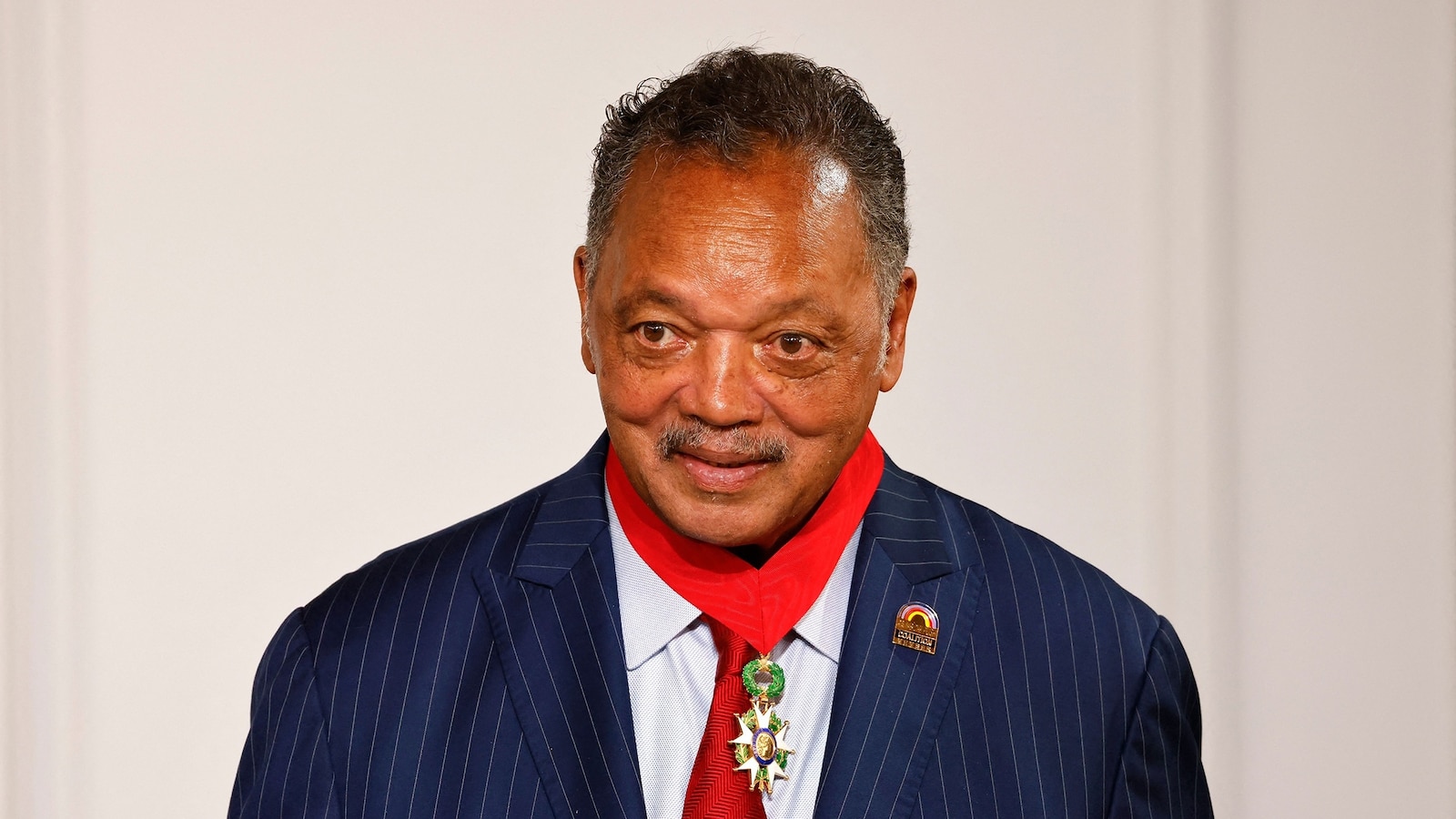

The Life and Legacy of Rev. Jesse Jackson, Sr.: A Journey Through His Final Years
A Giant of Civil Rights Passes
The world lost one of its most influential civil rights leaders on Tuesday morning when Rev. Jesse Jackson, Sr. passed away at the age of 84. Jackson, who dedicated his life to fighting for equality and justice, had been facing significant health challenges in recent years that gradually slowed but never fully stopped his tireless advocacy work. His death marks the end of an era for the American civil rights movement, though his impact will continue to resonate for generations to come. Throughout his final years, Jackson demonstrated the same resilience and determination that characterized his entire career, continuing to show up for causes he believed in even as his body struggled against debilitating neurological conditions. His journey through illness was marked by numerous hospitalizations, misdiagnoses, and ultimately a rare condition that would contribute to his passing, yet through it all, he remained engaged with the work that defined his life.
Early Health Challenges and the Parkinson’s Diagnosis
Jackson’s health struggles came into public view as early as 2008, when he was hospitalized with what doctors initially believed was viral gastroenteritis, commonly known as stomach flu. However, the more significant revelation came in November 2017, when Jackson publicly announced that he had been living with Parkinson’s disease, a progressive neurological disorder that affects movement and causes tremors, muscle stiffness, and balance problems. In a heartfelt letter to his supporters, Jackson explained that his family had begun noticing changes in his physical condition about three years prior to the diagnosis. True to his character, Jackson initially resisted taking time away from his civil rights work to seek medical attention, but as his symptoms became more pronounced and his daily physical struggles intensified, he could no longer ignore what was happening to his body. The diagnosis was particularly poignant for Jackson, as Parkinson’s disease had also affected his father. Despite acknowledging that he had been slow to grasp the full gravity of his condition, Jackson committed to making necessary lifestyle changes and began physical therapy to slow the disease’s progression, demonstrating the same fighting spirit that had defined his activism.
A Year of Mounting Medical Challenges
The year 2021 proved especially difficult for Jackson, with multiple hospitalizations that tested both his physical resilience and his family’s strength. In January, he was admitted to Northwestern Memorial Hospital in Chicago with abdominal discomfort, which led to gallbladder surgery. Following the procedure, Jackson was transferred to a rehabilitation center for exercise and physical therapy before being discharged in March. The Rainbow PUSH Coalition, an organization Jackson founded, reported that he was in high spirits and continuing his civil rights work, a testament to his unwavering commitment to social justice. However, the most serious health scare came in August when both Jackson and his wife, Jacqueline, tested positive for COVID-19 and required hospitalization. Jackson had received his first COVID-19 vaccine earlier that year, partly to encourage vaccine confidence within the African American community, though his wife had not been vaccinated due to a pre-existing condition. During a phone interview while hospitalized, Jackson characteristically downplayed his condition, saying he was “doing fairly well,” though his son Jonathan Jackson urged the public to take the situation seriously and keep both parents in their prayers. While Jesse Jackson was released to a rehabilitation facility after about a week, his wife’s condition worsened, requiring intensive care treatment. The family celebrated when Jacqueline was moved out of the ICU on August 31 and finally released from the hospital on September 4, while Jesse remained at The Shirley Ryan Ability Lab receiving intensive occupational and physical therapy. As if these challenges weren’t enough, in November 2021, Jackson was hospitalized again after suffering a fall while doing what he had always done—standing up for others. He was protesting poor campus living conditions alongside students at Howard University when the incident occurred, perfectly encapsulating his lifelong dedication to activism regardless of personal cost.
The Corrected Diagnosis and Progressive Decline
A significant turning point came in April 2025 when Jackson’s medical team revised his diagnosis from Parkinson’s disease to progressive supranuclear palsy, or PSP, a rare and more aggressive neurological disorder. This change in diagnosis helped explain why Jackson’s condition had been worsening more rapidly than typical Parkinson’s disease would suggest. PSP affects body movements, walking, balance, and eye movements, caused by nerve cell damage in brain areas controlling both thinking and physical movement. Unlike Parkinson’s disease, PSP typically has a later onset and progresses much more quickly, with patients often experiencing severe disability within three to five years of symptom onset. The condition carries serious risks of complications including choking, pneumonia, and head injuries from falls, making Jackson’s continued public appearances all the more remarkable. In November 2025, Jackson was hospitalized and placed under observation specifically for PSP management. His family shared updates throughout his stay, including the encouraging news on November 17 that he had been moved out of intensive care and was breathing without mechanical assistance. He was discharged on November 24, with his son and family spokesperson, Yusef Jackson, expressing deep gratitude for the outpouring of support, visits, and prayers from countless friends and supporters who had reached out during this difficult time.
The Final Months at Home
Following his November discharge, Jackson spent time at an acute nursing facility as reported on December 11, with his family expressing hope that he would be home soon. Their wishes were fulfilled when Jackson was discharged from the facility on December 22, allowing him to spend the holidays surrounded by family. In a touching statement, Yusef Jackson reflected on the journey his family had undertaken, acknowledging not only their own struggle but also holding in their hearts those families navigating the season without loved ones. His words revealed the Jackson family’s characteristic compassion, extending love and comfort to every family experiencing loss even as they dealt with their own challenges. These final months at home represented a precious time for the Jackson family to gather together, with Yusef noting the blessing of having his father at their table while remaining mindful that not all families shared this fortune. The statement reflected the values Jesse Jackson had championed throughout his life—empathy, solidarity with those suffering, and an awareness of the broader community even in moments of personal trial. Despite the progressive nature of his illness and the physical limitations it imposed, Jackson’s presence continued to inspire those around him, and his family’s updates consistently emphasized his enduring spirit and the meaningful connections he maintained.
A Legacy That Transcends Physical Decline
Rev. Jesse Jackson’s final years, marked by health struggles and progressive neurological decline, nonetheless demonstrated the qualities that made him a transformative figure in American history. Even as Parkinson’s disease and later PSP compromised his physical abilities, Jackson continued showing up—literally—for the causes he believed in, whether that meant standing with Howard University students protesting living conditions or maintaining his organizational work despite obvious physical challenges. His journey through illness was characterized by the same transparency and courage he brought to his civil rights work, publicly sharing his diagnoses to raise awareness and inspire others facing similar challenges. The support he received from the medical teams at Northwestern Memorial Hospital, The Shirley Ryan Ability Lab, and various rehabilitation facilities reflected the impact he had made throughout his life, with healthcare professionals going above and beyond to provide excellent care. His family’s regular updates to the public honored the relationship Jackson had built with supporters over decades of activism, recognizing that his life belonged not just to them but to the broader community he had served. As news of his passing spreads, the world reflects not on the physical decline of his final years but on the extraordinary life that preceded them—a life dedicated to justice, equality, and the unwavering belief that ordinary people working together could create extraordinary change. Jesse Jackson’s legacy will endure not in the limitations imposed by PSP, but in the countless lives he touched, the movements he helped build, and the more just society he fought to create.