


The Shifting Landscape of Abortion Access in America: Understanding the Growing Focus on Medication Pills
The Rise of Telehealth Abortion Services in Restricted States
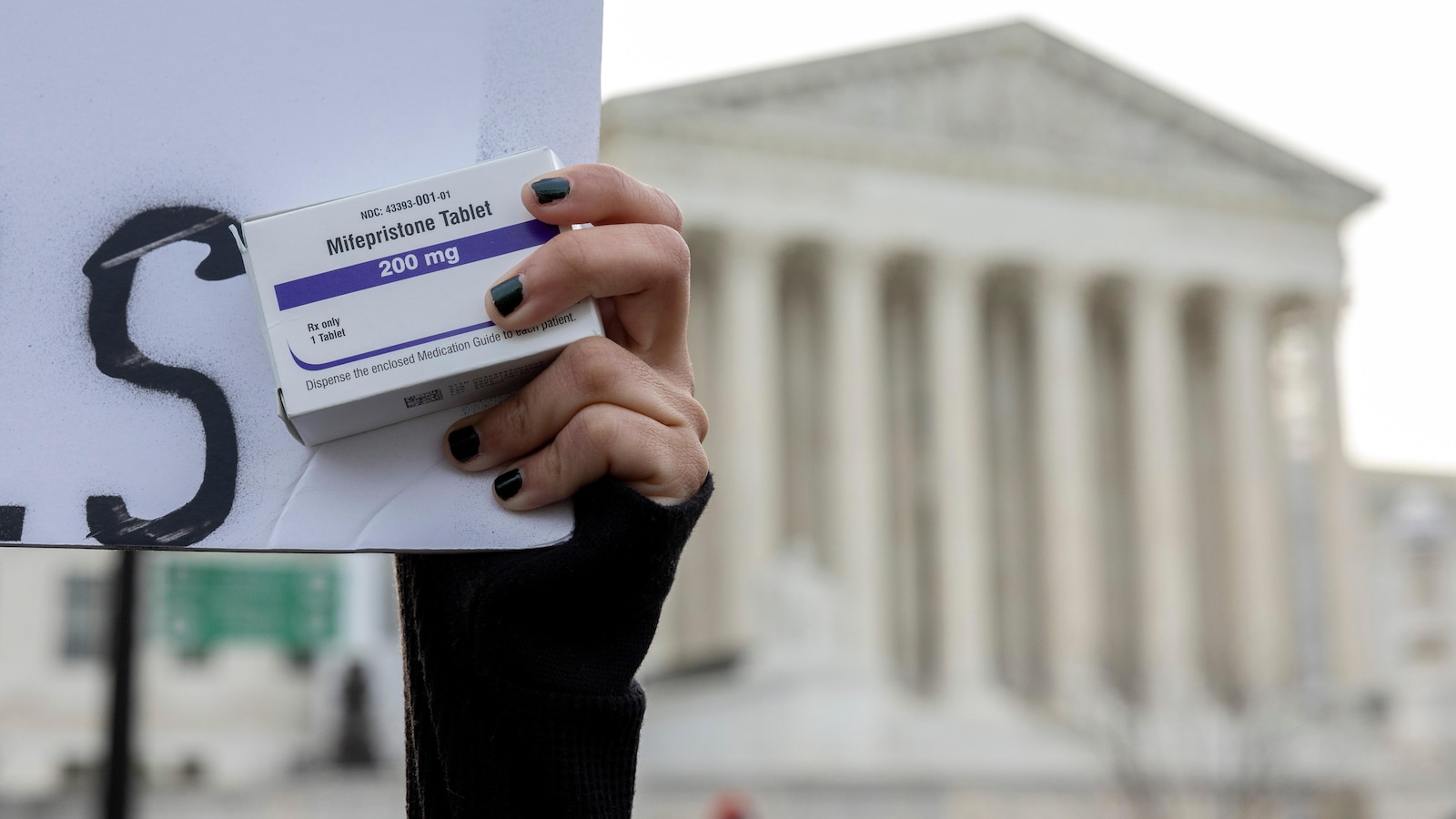
In the evolving battle over reproductive rights across America, a significant shift is taking place in how women access abortion services in states with restrictive laws. New survey data released this week reveals a surprising trend: more women in states with abortion bans are now obtaining abortion pills through out-of-state telehealth providers than are traveling to states where the procedure remains legal. This marks a pivotal moment in the nearly four years since the Supreme Court overturned Roe v. Wade, fundamentally changing how abortion access works in America. The Guttmacher Institute’s research, which supports abortion rights, shows that in 2025, women in the 13 states that ban abortion at all stages of pregnancy increasingly turned to medication abortion prescribed remotely rather than making the often expensive and logistically challenging journey to abortion-friendly states. This shift reflects both the adaptability of abortion providers and the determination of women to access reproductive healthcare despite mounting legal barriers. The pills involved—typically a two-drug regimen of mifepristone and misoprostol—are approved for use during the first 10 weeks of pregnancy and can be taken at home, making them a more private and accessible option for many women.
States Intensify Efforts to Block Abortion Pill Access
Understanding this trend, lawmakers in states with existing abortion bans are now turning their attention to blocking access to these pills. South Dakota recently took aggressive action when Republican Governor Larry Rhoden signed legislation making it a felony to advertise, distribute, or sell abortion pills within the state. Mississippi is poised to follow suit, with similar measures having passed both legislative chambers, though differences between the House and Senate versions still need reconciliation before reaching the governor’s desk. The legislative push extends beyond these two states—bills targeting abortion pill distribution have advanced through at least one chamber in Arizona, Indiana, and South Carolina this year. According to the Guttmacher Institute’s policy analysis, at least three states—Florida, Oklahoma, and Texas—already have specific laws preventing healthcare providers from mailing these pills to patients. Louisiana has taken a unique approach by classifying mifepristone as a controlled dangerous substance, placing it in the same category as drugs with high potential for abuse. These legislative efforts reflect a coordinated strategy among abortion opponents to close what they see as a loophole in their state abortion bans, recognizing that telehealth has become a crucial pathway for women seeking abortion care.
The Legal Battlefield Over Telemedicine and Abortion Pills
The fight over abortion pill access has moved decisively into the courtroom, with multiple states challenging the federal regulations that allow mifepristone to be prescribed via telehealth. These legal battles represent attempts to undermine the ability of out-of-state providers to reach patients in states with abortion bans. If courts were to require in-person prescriptions instead of allowing telehealth consultations, it would significantly limit women’s ability to obtain medication abortion without traveling. Louisiana has filed a lawsuit in its federal court system, while the attorneys general of Florida and Texas have pursued litigation in Texas. Additionally, Florida, Texas, Idaho, Kansas, and Missouri are making similar arguments in a Missouri court case. Beyond challenging federal regulations, some states are directly targeting providers. Texas has initiated civil cases against providers accused of mailing pills into the state, while Louisiana has pursued criminal charges against such providers. Meanwhile, the Food and Drug Administration’s approval of a generic version of mifepristone last year frustrated abortion opponents by potentially making the medication more widely available and affordable. These interconnected legal battles will likely shape abortion access for years to come, determining whether telehealth can continue serving as a lifeline for women in restrictive states.
The Numbers Tell a Compelling Story
The data behind these legislative and legal efforts paints a clear picture of changing patterns in abortion access. The Guttmacher Institute’s monthly survey of a random sample of U.S. abortion providers, combined with historical data from facilities nationwide, reveals that while more women in ban states are accessing pills through telehealth, fewer are traveling to states like Colorado, Illinois, Kansas, and New Mexico for abortion services. This represents a fundamental shift in the geography of abortion access. The prescriptions arriving in ban states come from providers operating under shield laws—legislation adopted in some states after Roe fell that specifically protects healthcare providers who prescribe abortion pills to patients in states where abortion is banned. These shield laws represent an innovative response to the post-Roe landscape, attempting to preserve abortion access across state lines despite conflicting state laws. The trend documented by Guttmacher aligns with findings from other provider surveys, suggesting a robust and consistent pattern rather than a statistical anomaly. For individual women, the ability to access medication abortion through telehealth means avoiding the costs of travel, time away from work or family, and the emotional burden of navigating an unfamiliar healthcare system in another state. However, it also means navigating legal gray areas and potential criminal liability, creating anxiety and uncertainty around what should be a private medical decision.
Wyoming’s Six-Week Ban and the Courts’ Role
While much of the action on abortion restrictions has focused on pills, Wyoming became the only state this year to impose a new abortion ban, though its future remains uncertain. Republican Governor Mark Gordon signed legislation in March making Wyoming the fifth state with a ban on abortion at approximately six weeks of gestational age—a point before many women realize they’re pregnant. Like similar laws in other states, Wyoming’s ban prohibits abortion once cardiac activity can be detected in the embryo, which typically occurs around six weeks. However, Wyoming’s courts have consistently rejected the state’s efforts to restrict abortion. In January, the Wyoming Supreme Court struck down a ban on abortion at all stages of pregnancy, continuing a pattern of judicial skepticism toward abortion restrictions in the state. This legal pushback illustrates the important role courts play in the post-Roe landscape, serving as a check on legislative action even in conservative states. The interplay between legislative action and judicial review has become a defining feature of abortion policy, with states like Wyoming, Florida, and others seeing their restrictive laws challenged and sometimes blocked by state courts interpreting their own constitutions. This dynamic means that the legal landscape remains fluid and uncertain, with the fate of abortion access often depending on state constitutional interpretation and judicial philosophy.
The Question of Prosecuting Women and What’s Ahead for Voters
Despite persistent proposals, no state has successfully enacted legislation allowing criminal prosecution of women who obtain abortions, though the fact that such bills keep appearing troubles reproductive rights advocates. Proposals to criminalize women’s abortion decisions have been introduced in six states in 2026, down from 13 states last year, according to Pregnancy Justice, an organization advocating for pregnant people’s rights. These bills typically die early in the legislative process, with the furthest advancement being a hearing before a Senate subcommittee in South Carolina last year. Major established anti-abortion organizations oppose prosecuting women, with National Right to Life’s state legislative director Ingrid Duran stating that “women require compassion and support, not prosecution.” However, legal scholars like Melissa Murray from New York University School of Law suggest that repeatedly introducing such bills serves a purpose beyond immediate passage—it normalizes previously unthinkable policies. “You keep pushing the boundary, pushing the envelope, eventually you will get what you’re seeking,” Murray explained. “It will no longer feel fanciful or shocking.” Already, women sometimes face criminal charges related to their pregnancies, as seen in a recent Georgia case where police charged a woman with murder after allegedly using an abortion pill and oxycodone. Looking ahead to November, voters in at least three states will directly weigh in on abortion access. Missouri voters will decide whether to repeal the reproductive freedom right they added to the state constitution in 2024, in what would be an unprecedented reversal. Nevada voters will vote for the second time on a constitutional amendment allowing abortion until fetal viability, which needs approval twice to take effect. Virginia’s ballot will feature a measure guaranteeing reproductive freedom, including contraception access and abortion decisions during the first two trimesters. These ballot measures represent democracy in action on one of America’s most contentious issues, giving ordinary citizens direct say over reproductive rights policy.