
Todd Blanche Steps Up: Inside the Justice Department’s Latest Leadership Shake-Up
A Reluctant Leader Takes the Helm
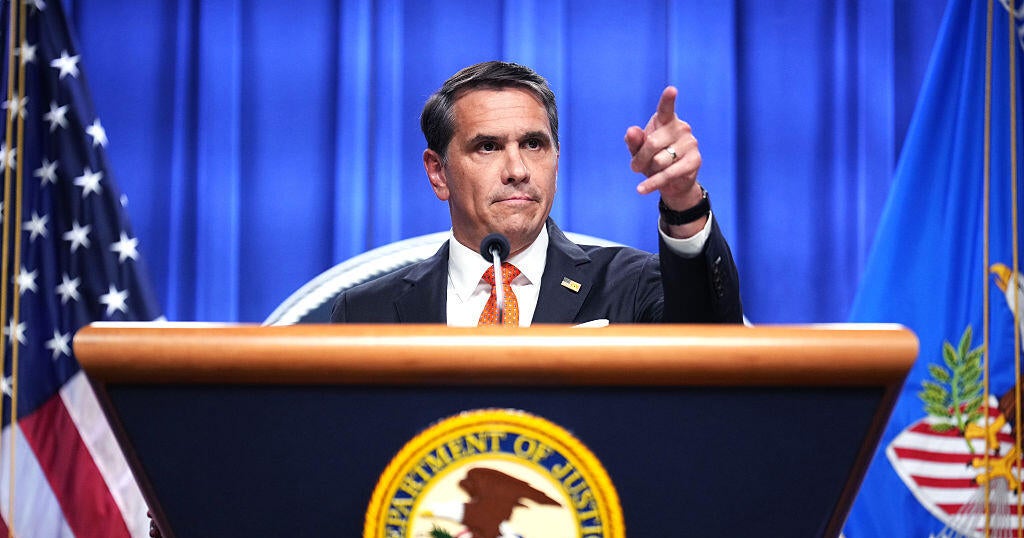
In a moment that has sent ripples through Washington’s corridors of power, Acting Attorney General Todd Blanche stood before reporters on Tuesday with a message that was both humble and revealing. Flanked by the still-hanging portrait of his predecessor Pam Bondi, whose sudden departure last week shocked the Justice Department, Blanche made it clear that he hadn’t sought this position—but he wasn’t turning it down either. His words painted a picture of a man caught between duty and circumstance, declaring his unwavering loyalty to President Trump while acknowledging the unusual situation he’d found himself in. “I did not ask for this job,” Blanche told the assembled press corps, his tone suggesting a mixture of surprise and acceptance. But in characteristic fashion, he pledged his commitment regardless of where his career might lead next, whether that meant staying on as acting attorney general, being formally nominated for the position, or returning to his previous role as Deputy Attorney General. His repeated refrain that serving the President in any capacity would be “an honor” underscored the complicated dance of ambition, loyalty, and political reality playing out at the highest levels of the Justice Department.
The Mystery Behind Bondi’s Exit
The elephant in the room at Tuesday’s press conference was the question everyone wanted answered: Why exactly was Pam Bondi removed from her position? According to previous CBS News reporting, President Trump had grown increasingly frustrated with the Justice Department’s pace in pursuing cases against his political adversaries. Yet Blanche himself claimed ignorance about the specific reasons behind Bondi’s sudden departure, a statement that raised more eyebrows than it settled concerns. “Nobody has any idea why the attorney general is no longer the attorney general and I’m the acting attorney general, except for the president,” Blanche stated, praising Bondi as a “trusted friend of President Trump’s” while simultaneously highlighting the opacity surrounding her removal. The timing was particularly awkward—Blanche even mentioned that he still planned to travel with Bondi to a previously scheduled event the following day, suggesting that whatever prompted her departure happened swiftly and perhaps without the usual administrative transition period. This lack of transparency has fueled speculation about what really transpired behind closed doors and whether Bondi’s exit signals a broader shift in how the Justice Department will operate moving forward.
Pressure, Politics, and Prosecutions
One of the most contentious aspects of Blanche’s press conference centered on questions about political pressure and the independence of the Justice Department. When pressed about whether he would face pressure from President Trump to secure indictments against political opponents, Blanche’s response walked a careful line between acknowledging reality and defending his integrity. He confirmed that thousands of ongoing investigations and prosecutions are currently underway across the country, and yes, some of them do involve individuals and entities that the President has publicly clashed with in the past. But rather than see this as inappropriate pressure, Blanche framed it as simply part of the job. “I do not view this as pressure,” he insisted. “I do not view this as something that is going to keep me up at night.” His comments reveal the delicate balancing act that any attorney general must perform—maintaining prosecutorial independence while serving at the pleasure of the President. Blanche promised that every case would be investigated “to the fullest extent of the law, using all of the resources we can,” a statement meant to reassure both the President’s supporters who want action and critics concerned about politicization of justice.
A New Fraud Division With White House Ties
Beyond the leadership drama, Blanche’s press conference served to announce the creation of a new National Fraud Enforcement Division, a significant restructuring of how the Justice Department will tackle fraud across multiple sectors. This new division will consolidate various offices that currently handle criminal fraud cases involving healthcare, tax fraud, benefits programs, and corporate malfeasance, bringing them together under unified leadership. Colin McDonald has been tapped to lead this division as assistant attorney general, and while he won’t formally report to the White House (contrary to initial suggestions), the relationship between this new division and the executive branch has raised eyebrows. Blanche made it clear that the division would be willing to accept criminal referrals from the White House, a arrangement that represents a significant departure from the post-Watergate norms that were specifically designed to insulate criminal investigations from political influence. When Vice President JD Vance first announced the position in January, he suggested it would be run out of the White House with direct oversight from him and the President—comments he later walked back after likely recognizing the constitutional and ethical concerns such an arrangement would raise.
Breaking With Post-Watergate Traditions
The structural relationship between this new fraud division and the White House represents one of the most significant aspects of this reorganization, particularly for those concerned about the independence of the Justice Department. Since the Watergate scandal of the 1970s, deliberate institutional boundaries have been established to prevent presidents from using the Justice Department as a personal legal weapon. These norms, while not always codified in law, have served as important guardrails protecting prosecutorial independence. Blanche, however, seemed to downplay these concerns, arguing that communication between a president and the Justice Department about priorities is normal and appropriate. “There is always communication between a president and his priorities and what the Department of Justice should be focused on and not focused on,” he explained, offering the hypothetical example of a president hearing about fraud in Minneapolis and asking the attorney general to investigate. While technically true that presidents can communicate priorities to the Justice Department, the devil is in the details—there’s a meaningful difference between setting broad policy priorities and directing specific investigations or prosecutions. Critics worry that the current administration may be eroding these important distinctions, while supporters argue that previous administrations have been hypocritical about these supposed norms.
What Comes Next: Uncertainty and Speculation
As Washington processes these rapid changes at the Justice Department, the question on everyone’s mind is what comes next. Beyond Blanche’s uncertain tenure as acting attorney general, there are rumors swirling about additional personnel changes on the horizon. President Trump’s advisers have reportedly been discussing whether to further shake up senior leadership, including possibly demoting Associate Attorney General Stanley Woodward and elevating Harmeet Dhillon, who currently heads the Civil Rights Division. At Tuesday’s press conference, Woodward was spotted watching from the back of the room—a detail that speaks volumes about the anxiety and uncertainty currently permeating the Justice Department’s leadership ranks. For career prosecutors and department staff, this period of instability creates challenges in maintaining focus on their cases and missions. For political observers, it raises fundamental questions about the role of the Justice Department in American democracy and whether the traditional boundaries between justice and politics are being redrawn. The new National Fraud Detection Center that Blanche also announced—a prosecutor-led operation composed of data analysts from multiple federal agencies aimed at identifying the most harmful actors defrauding federal programs—represents the kind of substantive policy work that can get lost amid the personnel drama. Whether Todd Blanche remains in his current role, gets formally nominated, or is replaced by someone else, these structural changes to how the Justice Department operates will likely have lasting implications well beyond this administration. The coming weeks will reveal whether this leadership shake-up represents a temporary disruption or a more fundamental transformation of how justice is administered at the federal level.