


The Poisoning of Alexei Navalny: A Chemical Weapon Attack Exposed
International Investigation Reveals Deadly Toxin Used Against Putin’s Most Vocal Critic
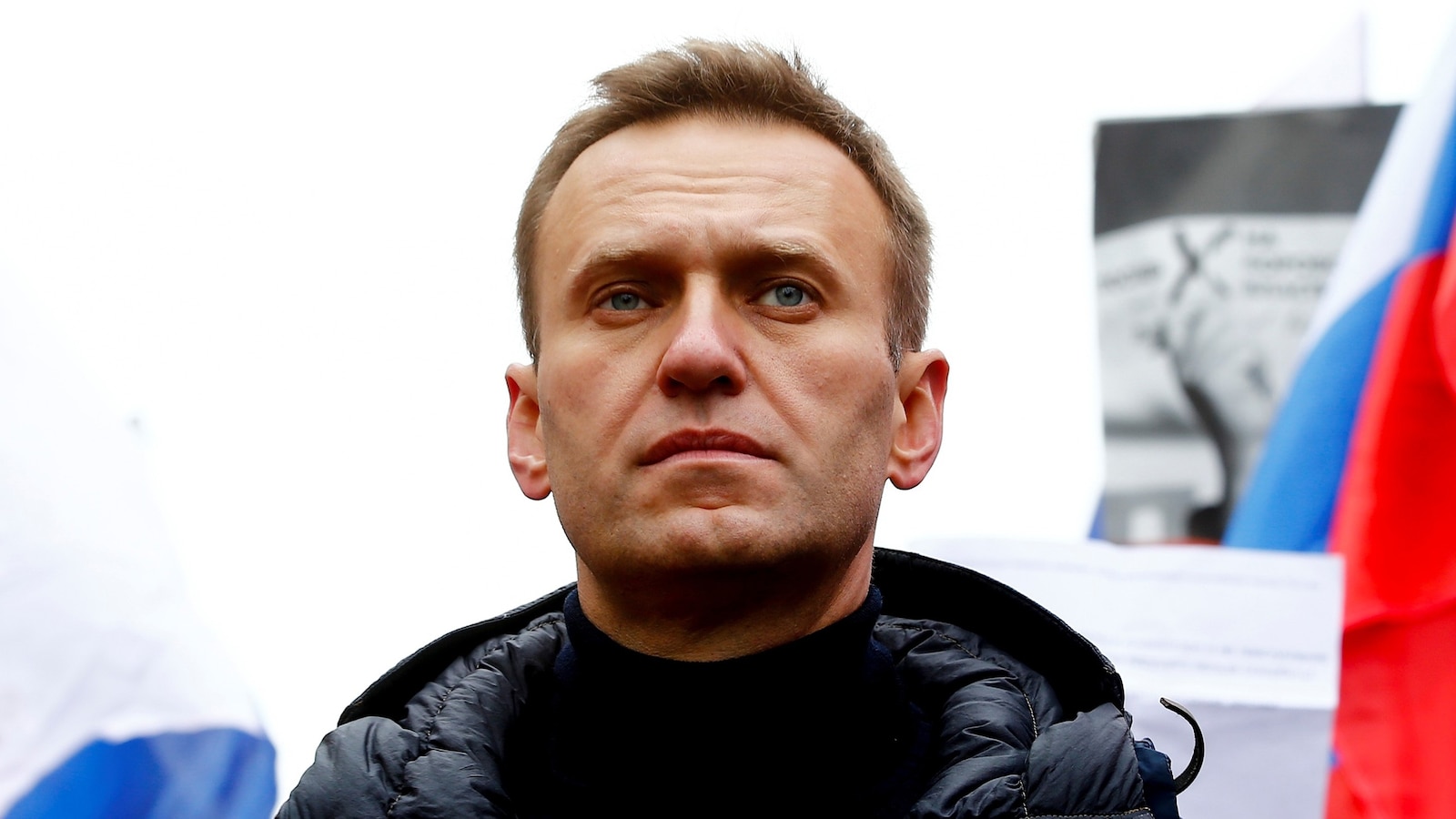
The death of Alexei Navalny, Russia’s most prominent opposition leader, has taken a sinister turn following revelations from a comprehensive international investigation. Five European nations—the United Kingdom, France, Sweden, the Netherlands, and Germany—have jointly announced their findings after extensive analysis of biological samples taken from Navalny. Their conclusion is both shocking and definitive: Navalny was poisoned with epibatidine, an extremely rare and lethal toxin naturally found in the skin of poison dart frogs native to South American rainforests. This discovery transforms what Russian authorities claimed was a natural death in custody into what appears to be a calculated assassination using a chemical weapon, adding another dark chapter to the story of Putin’s regime and its treatment of political dissidents.
The use of such an exotic poison is particularly noteworthy because epibatidine is not a substance that someone could accidentally encounter or ingest. It’s an exceptionally potent neurotoxin, hundreds of times more powerful than morphine as a painkiller, but also incredibly deadly even in minute quantities. The indigenous peoples of South America have used secretions from these brightly colored frogs on the tips of their hunting darts for centuries, hence the common name “poison dart frogs.” In the modern world, this substance has limited applications in medical research and has no legitimate reason to be anywhere near a prison facility. The European partners conducting the investigation expressed complete confidence in their findings, stating unequivocally that the presence of this lethal toxin was confirmed through rigorous scientific analysis. This isn’t speculation or circumstantial evidence—it’s hard scientific proof that something deeply wrong occurred.
Russia’s Dubious Claims Contradicted by Scientific Evidence
The stark contrast between Russia’s official narrative and the evidence uncovered by international investigators could hardly be more pronounced. Russian authorities maintained that Navalny died of natural causes while serving his sentence in one of the country’s notorious penal colonies. They presented his death as an unfortunate but unremarkable event—just another prisoner who succumbed to health problems. However, the joint European statement dismantles this fiction entirely. Given the extreme toxicity of epibatidine and the symptoms that Navalny reportedly experienced before his death, the international investigators concluded that “poisoning was highly likely the cause of his death.” The statement went further, pointing out the obvious but crucial fact that “Navalny died while held in prison, meaning Russia had the means, motive and opportunity to administer this poison to him.” This language—means, motive, and opportunity—is the framework investigators use when building a criminal case, and it’s being applied here to implicate the Russian state itself in what amounts to murder.
The timing and circumstances of Navalny’s imprisonment made him uniquely vulnerable to such an attack. He was completely under state control, isolated from independent medical care, monitored constantly, and yet somehow managed to be exposed to one of the world’s most exotic poisons. The implausibility of any alternative explanation is striking. This wasn’t a toxin he could have obtained himself, nor something that could have been smuggled in by supporters, given the intense security around high-profile political prisoners in Russia’s prison system. The investigation’s findings point to a deliberate act by those who had complete control over Navalny’s environment and daily life. This wasn’t the first time Navalny had been targeted with poison either—he survived a previous assassination attempt in 2020 involving the nerve agent Novichok, another rare poison with links to state-sponsored programs, which required him to be airlifted to Germany for emergency treatment that ultimately saved his life.
A Widow’s Certainty and a Call for Justice
Yulia Navalnaya, Alexei Navalny’s widow, has emerged as a powerful voice demanding accountability for her husband’s death. In a social media post responding to the investigation’s findings, she expressed what many had suspected but could not prove: “I was certain from the first day that my husband had been poisoned, but now there is proof: Putin killed Alexei with a chemical weapon.” Her words are direct, unflinching, and deeply personal. She doesn’t use diplomatic language or hedge her accusations—she names Vladimir Putin explicitly as her husband’s murderer and characterizes the poisoning exactly as the evidence suggests: the use of a chemical weapon against a political opponent. For Navalnaya, this confirmation transforms her private grief and suspicion into a public indictment backed by scientific evidence from multiple respected European nations.
Navalnaya expressed her gratitude to the countries that participated in the investigation—the United Kingdom, France, Sweden, the Netherlands, and Germany—for their commitment to uncovering the truth about her husband’s death. These nations risked diplomatic tensions with Russia by pursuing this investigation and publishing their findings so explicitly. Her statement concluded with a powerful demand: “Vladimir Putin is a murderer. He must be held accountable for all his crimes.” This call for justice resonates far beyond her personal tragedy. It speaks to the broader pattern of political assassinations, imprisonments, and disappearances that have characterized Putin’s decades in power. Opposition figures, journalists, activists, and critics of the Kremlin have faced poisonings, mysterious falls from windows, sudden heart attacks, and fatal accidents with disturbing regularity. Navalnaya’s demand for accountability represents not just her own quest for justice, but the voices of countless others who have suffered under a regime that appears to operate with complete impunity.
The Poisoner’s Playbook: A Pattern of State-Sponsored Assassination
This latest revelation about Navalny’s poisoning fits into a well-documented pattern of the Russian state using poison as a weapon against those it considers enemies. The use of exotic, rare, or military-grade toxins has become something of a signature for Russian intelligence services, perhaps because such substances serve a dual purpose: they are effective at killing, and their unusual nature sends a message that the state has long reach and sophisticated capabilities. The 2006 poisoning of Alexander Litvinenko with radioactive polonium-210 in London, the 2018 attempted murder of Sergei and Yulia Skripal with the nerve agent Novichok in Salisbury, England, and now the use of epibatidine against Navalny—all point to a deliberate choice to use poisons that are traceable to state-level programs rather than substances that could be obtained commercially or privately.
This pattern suggests that plausible deniability may actually be secondary to the intimidation factor. While Russia routinely denies involvement in these poisonings, the very rarity and sophistication of the toxins used makes the state’s involvement obvious to anyone paying attention. It’s a form of open secret—everyone knows, but the official denials provide just enough cover to avoid immediate consequences. The use of poison also allows the Russian government to avoid the optics of a public execution or obvious murder, even as the unusual circumstances make the state’s hand apparent. In Navalny’s case, the authorities could initially claim natural causes, knowing that it would take time for international investigators to access samples and conduct the complex analyses needed to identify such an exotic toxin. By the time the truth emerged, Navalny was already dead and buried, and the propaganda machine had already established the official narrative for domestic consumption.
International Response and the Challenge of Accountability
As of the release of the joint statement from the five European nations, Russian officials had not immediately commented on the report—a silence that speaks volumes. The Kremlin has historically responded to such accusations with flat denials, counter-accusations of Russophobia, suggestions that Western intelligence services fabricated evidence, or simply ignoring the reports entirely until they fade from the news cycle. The challenge facing the international community is how to respond meaningfully to what amounts to a state-sponsored assassination using a chemical weapon. Economic sanctions have been imposed on Russia for various actions over the years, but they have not fundamentally changed the regime’s behavior. Individual travel bans and asset freezes affect some Russian officials, but Putin and his inner circle have proven remarkably resilient to such measures.
The confirmation that Navalny was killed with a chemical weapon adds a particularly serious dimension to the case. The use of chemical weapons is banned under international law, including the Chemical Weapons Convention, which Russia is a signatory to. This isn’t just murder—it’s the use of a prohibited weapon, which should trigger specific international legal mechanisms. However, the practical challenges of holding a nuclear-armed permanent member of the UN Security Council accountable for such actions are immense. International Criminal Court warrants, sanctions, diplomatic expulsions, and public condemnation may follow, but whether these will ever result in actual justice for Navalny and the many other victims of Putin’s regime remains uncertain. What is certain is that the scientific evidence now provides undeniable proof of what many suspected: that Russia’s most visible opposition leader was murdered by poison while in state custody, and that this was not a natural death but a calculated assassination using a chemical weapon. The truth is now established; the question is whether it will lead to accountability or simply become another documented crime in a long list of unpunished acts by an authoritarian regime.