

A Mother’s Quest for Justice: The Alexey Navalny Poisoning Revelation
European Nations Confirm Poisoning as Cause of Death
Two years after the shocking death of Alexey Navalny, Russia’s most prominent opposition leader, new evidence has emerged that validates what his family suspected all along—he was murdered. In a significant development, five European nations—Britain, Sweden, France, Germany, and the Netherlands—issued a joint statement declaring that Navalny died from poisoning with epibatidine, a highly toxic substance found in poison dart frogs. This assessment, based on samples taken from Navalny’s body, directly contradicts Russia’s official narrative that the 47-year-old activist died of natural causes while serving a 19-year prison sentence in a remote Arctic penal colony. The revelation has reignited international attention on the case and prompted emotional reactions from Navalny’s family, particularly his mother Lyudmila Navalnaya, who has been steadfast in her belief that her son was deliberately killed for his political activities against President Vladimir Putin’s regime.
A Mother’s Vindication and Continued Fight
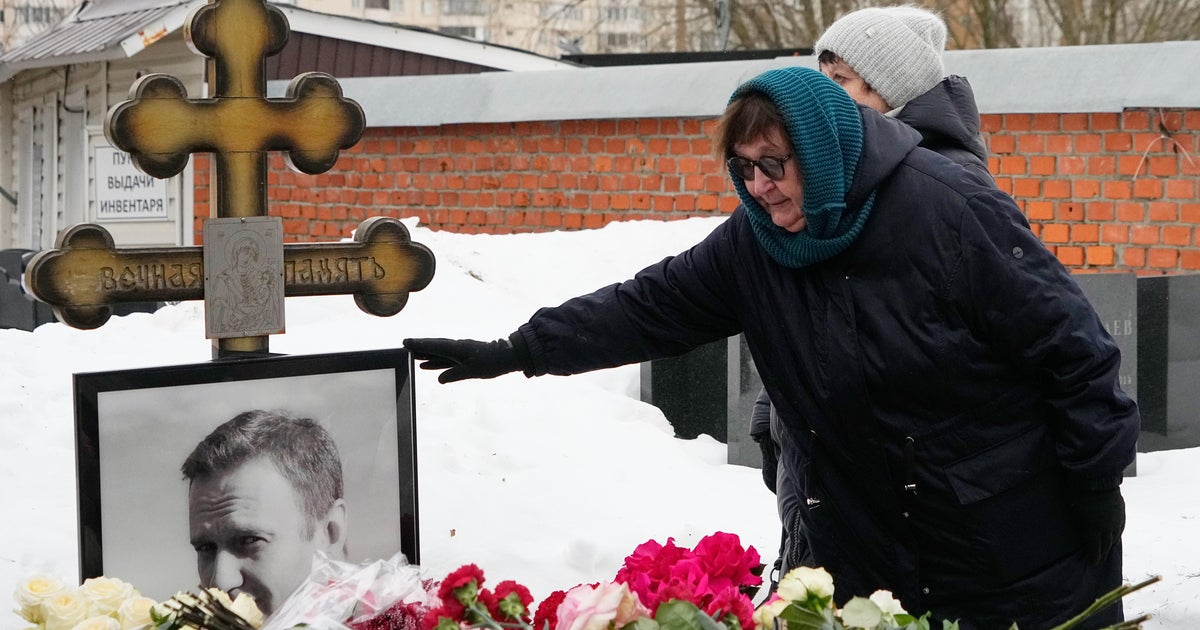
Standing outside the Moscow cemetery where her son lies buried, Lyudmila Navalnaya spoke to reporters with a mixture of grief and determination. “This confirms what we knew from the very beginning,” she stated firmly. “We knew that our son did not simply die in prison, he was murdered.” Her words carried the weight of two years of waiting, questioning, and seeking answers in a country where challenging the official narrative can be dangerous. Despite the risks associated with speaking out in Putin’s Russia, where Navalny’s organization has been designated as “extremist” and merely mentioning his name can lead to prosecution, his elderly mother continues to demand accountability. “I think it will take some time, but we will find out who did it,” she said with quiet resolve. “Of course, we want this to happen in our country, and we want justice to prevail.” Her insistence on justice within Russia, rather than through international courts alone, reflects both her courage and the hope that truth might eventually triumph even in an increasingly authoritarian state.
Russia’s Denial and the Kremlin’s Response
Unsurprisingly, the Kremlin swiftly rejected the European findings, dismissing them as baseless propaganda. “Naturally, we do not accept such accusations. We disagree with them,” declared Kremlin spokesman Dmitry Peskov during a press briefing in Moscow. “We consider them biased and unfounded. And, in fact, we strongly reject them.” This response follows the pattern established throughout Navalny’s imprisonment and after his death—Russian officials have consistently provided minimal information about the circumstances surrounding his demise, offering only vague references to various medical conditions. Navalny’s widow, Yulia Navalnaya, who now lives in exile with an arrest warrant hanging over her head should she return to Russia, revealed that investigators told her approximately six months after her husband’s death that he suffered from “a dozen different diseases” and ultimately died from an irregular heartbeat following a walk. However, she pointedly noted that her husband had exhibited no signs of heart disease before his imprisonment, casting further doubt on the official Russian explanation and suggesting that his deteriorating health was a consequence of his harsh treatment in custody.
International Response and the Trump Administration’s Position
The international community’s reaction to the European assessment has been mixed, with particular attention focused on the Trump administration’s carefully worded response. U.S. Secretary of State Marco Rubio, speaking to reporters during a brief stop in Slovakia, stated that the administration was “not disputing” the European report, calling it “very troubling.” However, his comments revealed a somewhat cautious approach, as he explained that the U.S. decision not to join the European nations’ joint statement “doesn’t mean we disagree with the outcome.” Rubio characterized it as a “European-led initiative” and noted that “sometimes countries go out and do their thing based on the intelligence they have gathered.” While emphasizing that the United States was “obviously aware of the report” and found it troubling, and that they had “no reason to question it,” the administration’s decision to remain on the sidelines of the formal accusation has raised questions about the current U.S. stance on Russian human rights violations. The British government took a stronger position, with Foreign Secretary Yvette Cooper explicitly stating that “Russia saw Navalny as a threat” and poisoned him as a demonstration of power. “By using this form of poison, the Russian state demonstrated the despicable tools it has at its disposal and the overwhelming fear it has of political opposition,” Cooper said, leaving no ambiguity about Britain’s position on who bears responsibility for Navalny’s death.
The Poison and What It Reveals About State Capabilities
The identification of epibatidine as the poison used to kill Navalny is particularly chilling and carries significant implications. This extremely toxic alkaloid, naturally found in certain species of poison dart frogs, is not something that can be casually obtained or administered. Its use points to sophisticated capabilities typically associated with state actors rather than common criminals. The European nations’ joint statement emphasized this connection: “Russia claimed that Navalny died of natural causes, but given the toxicity of epibatidine and reported symptoms, poisoning was highly likely the cause of his death. Navalny died while held in prison, meaning Russia had the means, motive and opportunity to administer this poison to him.” The British foreign office went further, stating that “only the Russian state had the means, motive and opportunity to deploy this lethal toxin to target Navalny” and holding Russia directly responsible for his death. This wasn’t the first time Navalny had been poisoned—in 2020, he survived an assassination attempt involving Novichok, a Soviet-era nerve agent, while traveling from Moscow to Siberia. After recovering through extensive treatment in Germany, he told CBS’s 60 Minutes that he believed Putin had engineered the assassination attempt, another claim Russian officials denied.
Legacy of Courage and the Ongoing Fight
Alexey Navalny’s story is one of extraordinary courage in the face of overwhelming danger. For years, he crusaded against official corruption within Putin’s government, organizing massive anti-Kremlin protests and building a substantial following through his Anti-Corruption Foundation. Even after surviving the 2020 Novichok poisoning, he made the remarkable decision to return to Moscow in January 2021, fully aware that arrest awaited him. He was convicted three times on various charges that he consistently denounced as politically motivated and was ultimately sentenced to 19 years for extremism-related offenses. After nearly three years in different facilities, he was transferred to an Arctic penal colony, one of Russia’s harshest prison environments, where he died in February 2024 at just 47 years old. On the second anniversary of his death, dozens of mourners visited his grave, including foreign diplomats, according to reporters present at the Moscow cemetery. Some attendees wore masks or scarves to conceal their identities—a stark reminder of the risks associated with honoring Navalny’s memory in today’s Russia. His widow Yulia, now living in exile and unable to safely return to her homeland, continues his anti-corruption work from abroad, keeping his legacy alive even as the Kremlin attempts to erase his impact. The revelation about his poisoning may not bring him back, but it serves as an important historical record and potentially paves the way for future accountability, whether through international pressure, sanctions, or eventual changes within Russia itself.