


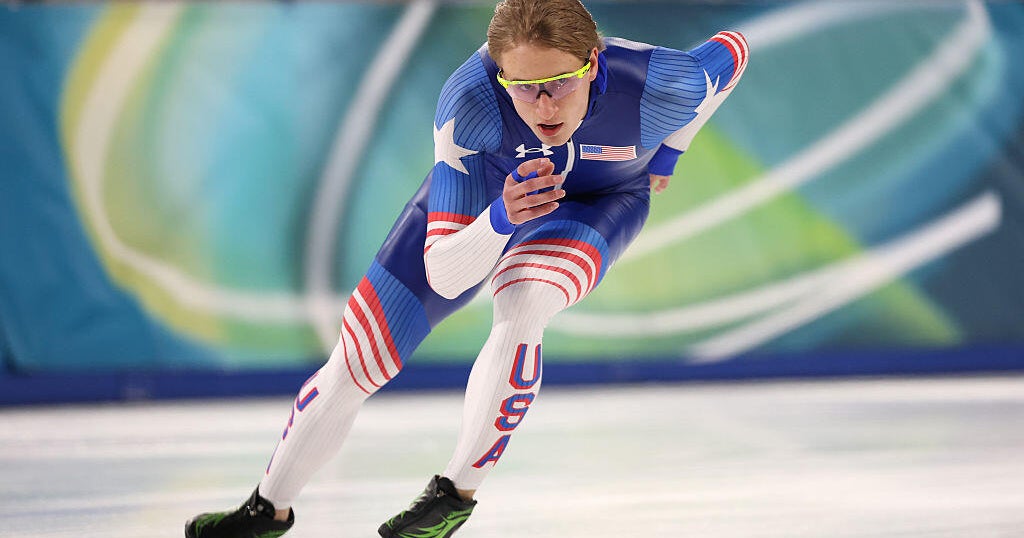

Jordan Stolz: America’s Speed Skating Phenomenon Making Olympic History
A Historic Double Gold Achievement
Jordan Stolz has etched his name into American Olympic history with a remarkable performance at the Milan Winter Olympics. On Saturday, the young speedskating sensation captured his second gold medal of the games in the 500-meter event, accomplishing something no American had achieved in over four decades. The last time an American athlete claimed two gold medals in speedskating at a single Olympics was back in 1980, making Stolz’s achievement all the more significant for Team USA. His golden performance didn’t stop there – just days earlier, he had already secured his first gold medal in the 1,000-meter race, a particularly meaningful victory as it marked the first time an American had stood on the podium in that event since 2010. This dual triumph has reinvigorated American interest in a sport that has long been dominated by European nations, particularly the Netherlands.
The Journey Continues: More Races Ahead
Despite already securing two gold medals, Stolz’s Olympic journey in Milan is far from over. The 20-year-old speedskater still has two more opportunities to add to his medal collection, competing in both the 1,500-meter race scheduled for Thursday and the mass start event next Saturday. Rather than feeling the pressure of his current success, Stolz appears energized and optimistic about his remaining competitions. Speaking to CBS News on Wednesday, before his 500-meter triumph, he expressed his excitement about the upcoming races with characteristic confidence and enthusiasm. “That’s what I’m looking for,” Stolz said, referring to his expectation that his future events would be “some of the best races I’ve had all year.” His positive mindset and competitive spirit suggest that he’s not content to rest on his laurels – he’s hungry for more success and ready to push himself even further in pursuit of additional Olympic glory.
A Record-Breaking Career in the Making
What makes Stolz’s Olympic success even more impressive is the context of his already stellar speedskating career. The young athlete has been breaking records and setting new standards in the sport well before arriving in Milan. He currently holds the world record for the fastest 1,000-meter skate, a testament to his exceptional speed and technical ability on the ice. His dominance at this distance is further evidenced by his status as a two-time world champion in the 1,000-meter event. This season alone, Stolz demonstrated remarkable consistency by going 5-for-5 in the World Cup circuit for the same event, winning every single race he entered. This kind of sustained excellence is rare in any sport, but particularly noteworthy in speedskating, where races are often decided by hundredths of a second. His ability to consistently perform at the highest level, race after race, competition after competition, speaks to not just his natural talent but also his mental toughness and dedication to his craft.
An American Star on a Dutch Team
In an interesting twist that highlights the global nature of professional speedskating, Stolz actually skates professionally for Albert Heijn Zaanlander, a Dutch speedskating team. This arrangement might seem unusual at first, but it makes perfect sense given the sport’s popularity and infrastructure in the Netherlands. Speedskating is essentially a national passion in the Netherlands, where the sport receives significant investment, media coverage, and public support. The Dutch have developed some of the world’s best training facilities, coaching programs, and competitive opportunities for speedskaters. By joining a Dutch team, Stolz gains access to world-class resources and the opportunity to train and compete alongside some of the sport’s best athletes. This professional arrangement also demonstrates Stolz’s commitment to being the best – he’s willing to immerse himself in the sport’s premier environment, even if that means representing a foreign club team while still competing for the United States in international competitions like the Olympics.
From Beijing Disappointment to Milan Triumph
Stolz’s current Olympic success is made even sweeter when considering his previous Olympic experience. At the 2022 Beijing Winter Games, Stolz competed as a 17-year-old, essentially a teenager making his Olympic debut against the world’s most experienced speedskaters. While competing at such a young age was an achievement in itself, his results – 14th place in the 1,000-meter and 13th in the 500-meter – were undoubtedly disappointing for such a talented athlete. However, rather than being discouraged by these results, Stolz appears to have used them as motivation and learning experiences. The three years between Beijing and Milan have seen remarkable growth and development in his skating abilities, mental preparation, and competitive maturity. What he learned from competing on the Olympic stage as a teenager has clearly informed his approach this time around. The transformation from a promising young skater who didn’t medal in Beijing to a double gold medalist in Milan represents not just improved times and technique, but a complete evolution as an athlete and competitor.
A Mission to Grow the Sport in America
Beyond his personal achievements and medal collection, Stolz has expressed a larger ambition that could impact speedskating in the United States for generations to come. In conversations with CBS News before the Milan Cortina Winter Games began, he shared his hope to help bring speedskating to a wider audience in America and inspire a new generation of American speedskaters. This mission is particularly important given that speedskating has traditionally struggled for attention and popularity in the United States, especially compared to sports like figure skating, hockey, or even snowboarding and skiing. Success stories like Stolz’s – young, charismatic, record-breaking, and winning gold medals on the Olympic stage – are exactly what the sport needs to capture American imagination and interest. His youth and relatability, combined with his extraordinary talent and competitive success, position him perfectly to be an ambassador for the sport. If Stolz can leverage his Olympic success to increase participation in speedskating programs across America, develop better training infrastructure, and attract more media coverage and sponsorship dollars to the sport, his legacy may extend far beyond his personal medal count. He has the potential to be remembered not just as a great speedskater, but as the athlete who helped transform speedskating from a niche Olympic sport into something more mainstream in American sports culture. With two more events still to come in Milan and potentially more Olympics in his future, Stolz’s story is still being written, and the speedskating world is watching with great anticipation to see what this remarkable young athlete will accomplish next.