



Chloe Kim’s Olympic Journey Ends in Silver: A New Champion Emerges
The End of a Golden Era
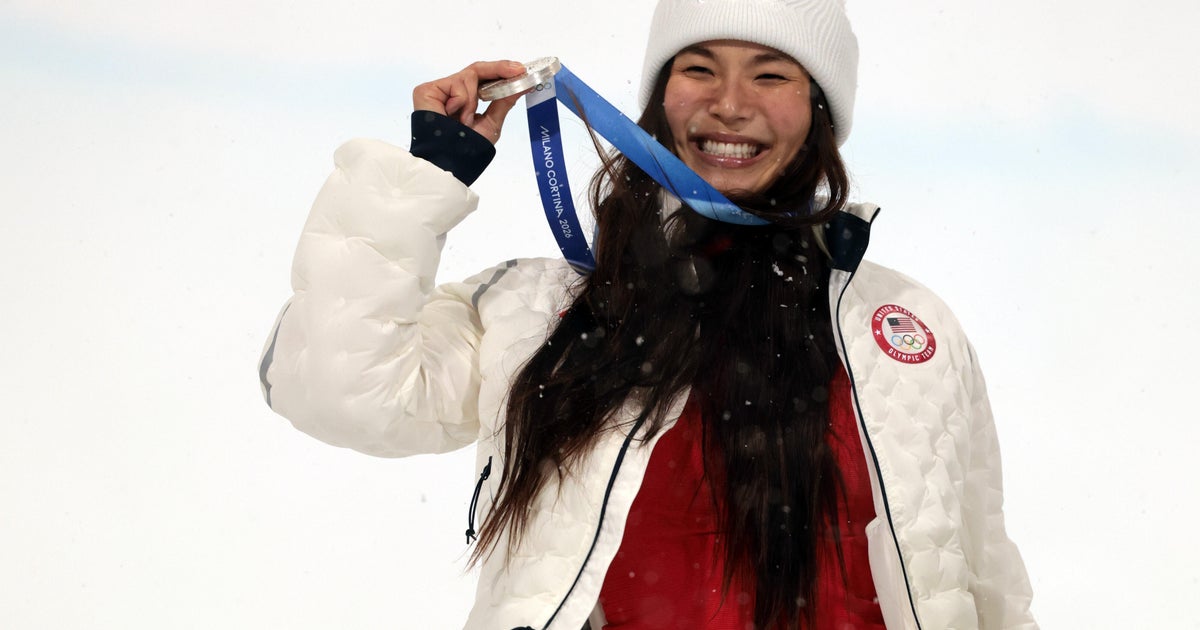
In a dramatic turn of events at the Milano Cortina 2026 Winter Olympics, American snowboarding legend Chloe Kim’s quest to make history came to an emotional end. The 25-year-old phenom, who had captured the world’s imagination with back-to-back Olympic gold medals, fell just short of becoming the first snowboarder ever to win three consecutive Olympic gold medals in the same event. Competing in the women’s halfpipe on Thursday at the Livigno Snow Park in Italy, Kim delivered a strong opening run that scored 88 points and initially put her in the lead. However, South Korea’s rising star Choi Gaon, a mere 17 years old, mounted an incredible comeback to claim the gold medal with a stunning final run that scored 90.25 points. Kim attempted to reclaim her throne on her final descent but wiped out, ultimately settling for the silver medal. Japan’s Mitsuki Ono rounded out the podium with a bronze medal finish. While the result wasn’t what Kim had hoped for, her gracious response and the inspiring story behind the competition revealed something perhaps even more meaningful than another gold medal.
A Comeback for the Ages
What made Choi Gaon’s victory even more remarkable was the frightening crash she endured earlier in the competition. During one of her runs, the teenage sensation slammed hard into the incline of the halfpipe in a collision that immediately silenced the crowd of spectators. The impact sent Choi sliding to the middle of the course, where she remained motionless for several agonizing minutes while medical staff rushed to her aid. The severity of the crash left many wondering whether she would even be able to continue competing, let alone challenge for a medal. After being evaluated by the medical team, Choi eventually rode off the course under her own power, though doubts lingered about whether she would attempt another run. Demonstrating the mental toughness and determination that defines Olympic champions, the young Korean athlete not only returned for her second run but managed to complete it successfully. Then, in a moment that will be remembered as one of the most dramatic in Olympic snowboarding history, Choi saved her absolute best for last. Her third and final run down the halfpipe was nothing short of spectacular, drawing gasps from the crowd as she executed her tricks with precision and confidence, ultimately earning the score that would capture Olympic gold.
Passing the Torch with Grace
The relationship between Chloe Kim and Choi Gaon adds a beautiful layer of meaning to this Olympic result. Kim’s parents emigrated from South Korea to the United States, making the young American star a source of tremendous pride for both nations. Throughout Choi’s development as a snowboarder, Kim had served as a mentor and inspiration, offering encouragement and support to the teenager who idolized her. In fact, Choi had become the youngest X Games winner in history back in 2023 at just 14 years old, following in the footsteps that Kim had blazed before her. Now, in a twist that feels almost poetic, Choi has claimed the Olympic title from the very person who inspired her journey. Kim’s response to being dethroned showed the character and sportsmanship that have made her beloved worldwide. Rather than expressing disappointment or resentment, Kim embraced the moment with remarkable maturity. “It’s all about passing the torch, so there’s no one else I would have rather stood next to on the podium than her,” Kim said after the competition. “I’m so proud of her and I’m so excited to see what she does next.” The image of the two athletes standing together on the podium—the veteran mentor in silver, the teenage protégé in gold—captured something essential about the Olympic spirit that transcends national boundaries and individual achievements.
Competing Through Adversity
What many spectators didn’t fully appreciate while watching Kim compete was the physical challenge she was overcoming just to participate in the Games. Just four weeks before the Olympics, Kim suffered a shoulder injury that significantly disrupted her preparation and training. The injury was serious enough that she had to compete while wearing a protective brace, a visible reminder of the pain she was managing with every twist and rotation in the halfpipe. Despite this setback, Kim had still dominated the qualifying rounds, showcasing the exceptional talent and competitive drive that had made her a two-time Olympic champion. “Obviously, I’m really disappointed that I can’t snowboard until right before the Olympics, which is going to be hard,” Kim had posted on Instagram the previous month, acknowledging the difficulty of the situation. After Thursday’s final, the California native revealed that she would require surgery on her shoulder to properly address the injury. This context completely reframed her silver medal performance—rather than being a disappointment, it represented a triumph of determination and perseverance. “I think that there was a lot of conversation happening about the three-peat,” Kim explained. “I was thinking about it before, but I think the minute I injured myself I was like, that doesn’t matter anymore. So this feels like a win to me because a month ago it didn’t seem too possible.” Her perspective demonstrated a mature understanding that sometimes the greatest victories aren’t measured solely in gold medals.
A Missed Place in Olympic History
Kim’s second-place finish means she joins a select group of athletes at the 2026 Winter Olympics who came tantalizingly close to achieving the rare feat of winning gold medals in the same event at three consecutive Olympic Games. Czech superstar Ester Ledecka, who had hoped to three-peat in Alpine snowboarding’s parallel giant slalom, also fell short of her goal. Similarly, Austria’s Anna Gasser, a two-time defending champion in big air, was unable to complete the three-peat. These near-misses highlight just how extraordinarily difficult it is to maintain dominance at the Olympic level across multiple Games, especially in sports like snowboarding where the field of competitors continues to evolve and improve. Even the legendary Shaun White, arguably the greatest halfpipe snowboarder in history, never managed to win three consecutive Olympic golds despite claiming three total gold medals in the event. White won in 2006, 2010, and 2018, but finished fourth in 2014, breaking his consecutive streak. White was actually in attendance at the Livigno Snow Park on Thursday, part of Kim’s cheering section that also included her boyfriend, Cleveland Browns defensive end Myles Garrett, and entertainment icon Snoop Dogg. White visibly cringed when Kim fell on her final run, understanding better than most what that moment meant. The crowd had gathered hoping to witness Olympic history, but instead they witnessed something equally compelling—the emergence of a new champion and the graceful passing of the torch from one generation to the next.
A Legacy Beyond Gold
When Chloe Kim first burst onto the Olympic scene at the 2018 Pyeongchang Games, she became the youngest woman snowboarder ever to win an Olympic gold medal, capturing the world’s attention with her extraordinary talent and infectious personality. After that triumph, Kim made the courageous decision to step away from competition for almost two years, prioritizing her education at Princeton University and her mental health over the relentless demands of elite athletic competition. Her willingness to speak openly about the importance of mental health helped destigmatize these conversations in the sports world. When she returned to competition, she proved her dominance wasn’t a fluke by claiming her second consecutive Olympic gold at the 2022 Beijing Games. Now, with a silver medal from Milano Cortina 2026, Kim’s Olympic career stands as a testament to sustained excellence at the highest level of her sport. While she didn’t achieve the three-peat, her legacy extends far beyond medal counts. She revolutionized women’s halfpipe snowboarding with tricks and amplitude previously unseen in the women’s competition. She inspired countless young athletes, including Choi Gaon, to pursue their Olympic dreams. And perhaps most importantly, she demonstrated that athletes can be multidimensional people who value education, mental health, and personal growth alongside competitive achievement. As Choi stood atop the podium wiping away tears of joy while clutching her gold medal, with Kim one step below holding her silver, the image represented not an ending but a continuation—the Olympic spirit flowing from one remarkable athlete to another, ensuring that the sport will continue to evolve and inspire for generations to come.