
US Sends Second Aircraft Carrier to Middle East Amid Rising Iran Tensions
Major Naval Deployment Signals Escalating Concerns
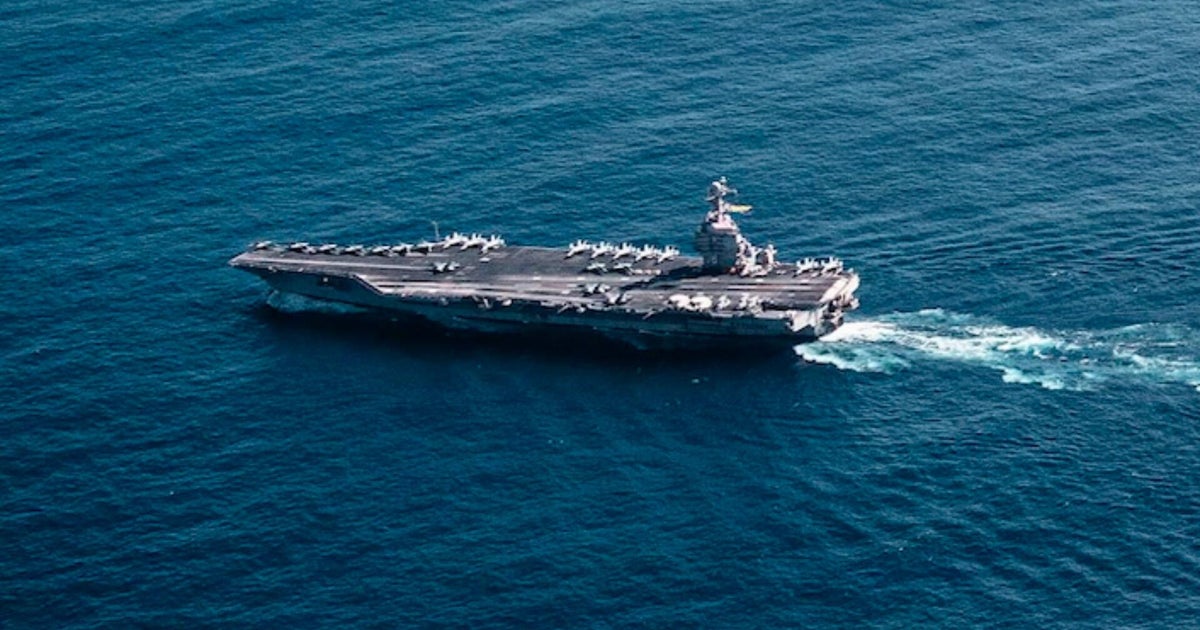
The United States is preparing to significantly boost its military presence in the Middle East by deploying the USS Gerald R. Ford aircraft carrier and its accompanying escort vessels from the Caribbean to the region. According to three U.S. officials who spoke with CBS News, this move will double the American carrier presence in an area already experiencing heightened tensions between Washington and Tehran. The Ford, which represents the Navy’s most technologically advanced aircraft carrier, will join forces with the USS Abraham Lincoln and its carrier strike group, which arrived in Middle Eastern waters in late January. Both carrier groups will operate under the jurisdiction of U.S. Central Command, which oversees military operations throughout the Middle East and surrounding regions. This naval buildup comes at a critical moment when diplomatic efforts appear fragile and the potential for military confrontation remains a genuine concern for international observers.
From Venezuela Operations to Middle East Deployment
The USS Gerald R. Ford carrier strike group hasn’t been idle while stationed in the Caribbean since November of last year. The naval force was positioned near Venezuela as part of a broader American military presence in the region, where it participated in operations targeting drug trafficking organizations. U.S. forces conducted dozens of strikes against suspected drug smuggling vessels during this deployment. The mission took on additional significance last month when American forces successfully captured former Venezuelan President Nicolás Maduro and his wife, marking a dramatic development in U.S.-Venezuela relations. Now, with the situation in Venezuela apparently stabilized from a U.S. military perspective, Pentagon planners have determined that the Ford’s capabilities are needed more urgently in the Middle East, where the strategic calculus has shifted dramatically in recent weeks. The New York Times was the first news organization to report on the carrier’s expected redeployment to the region.
Trump’s Pressure Campaign and Nuclear Deal Demands
President Trump has made renewed efforts to pressure Iran into accepting a comprehensive nuclear agreement, threatening serious military consequences if Tehran refuses to agree to stringent limitations on its nuclear program. The president’s approach combines diplomatic overtures with unmistakable military threats, creating a high-stakes environment where miscalculation could lead to armed conflict. Beyond the nuclear issue, Trump has also condemned Iran’s violent suppression of anti-regime protesters that occurred last month, adding human rights concerns to the list of grievances Washington has with the Iranian government. The president has been increasingly vocal about his intentions, repeatedly warning in recent weeks that a “massive armada” is heading toward Iran. In a revealing interview with Axios on Tuesday, Trump confirmed he was actively “thinking” about deploying yet another aircraft carrier strike group to the Middle East region, which would represent an unprecedented concentration of American naval power in those waters.
Echoes of Previous Military Action
When speaking with Axios, President Trump made a cryptic but ominous statement about America’s options regarding Iran: “Either we will make a deal or we will have to do something very tough like last time.” This comment appeared to reference a series of U.S. military strikes conducted against Iranian nuclear facilities in June, suggesting that similar action could be repeated if diplomatic negotiations fail to produce results acceptable to Washington. The president’s rhetoric has grown increasingly pointed, with Trump telling NBC News last week that Iran’s Supreme Leader, Ayatollah Ali Khamenei, “should be very worried” about the consequences of continued defiance. However, Khamenei has shown no signs of backing down in the face of American pressure. Instead, Iran’s highest religious and political authority issued his own warning, stating that any attacks by the United States would trigger a “regional war” throughout the Middle East—a scenario that could draw in multiple countries, disrupt global energy supplies, and potentially lead to catastrophic loss of life across the region.
Diplomatic Channels Remain Open Despite Military Buildup
Despite the threatening military posture and harsh rhetoric from both sides, diplomatic channels between the United States and Iran have remained open, offering at least some hope that armed conflict might be avoided. Representatives from both countries participated in indirect talks held in Oman last week, with officials from both Washington and Tehran characterizing the discussions as productive. Both sides indicated that negotiations would continue, suggesting that neither government has completely abandoned the possibility of reaching a diplomatic solution to their differences. These indirect talks—where intermediaries shuttle between separate American and Iranian delegations—represent a delicate balancing act, allowing both nations to explore potential compromises without the political optics of direct face-to-face meetings. The fact that these discussions occurred even as the U.S. was planning to deploy additional aircraft carriers to the region demonstrates the complex nature of modern international relations, where military preparations and diplomatic engagement often proceed simultaneously.
Strategic Implications and Regional Stability Concerns
The deployment of two American aircraft carriers to the Middle East represents a massive projection of military power with far-reaching strategic implications. Each carrier strike group includes not just the carrier itself but also guided-missile cruisers, destroyers, and support vessels, along with approximately 7,500 personnel and roughly 90 aircraft. Together, these two carrier groups constitute a formidable force capable of conducting sustained military operations across a wide geographic area. The presence of such concentrated American military power sends clear signals to Iran about Washington’s capability and willingness to use force if necessary, but it also raises concerns about regional stability and the potential for unintended escalation. America’s regional allies, including Israel and Gulf Arab states, likely welcome the enhanced U.S. military presence as a deterrent against Iranian aggression, while Iran and its regional partners view the buildup as a provocation that could destabilize an already volatile situation. The coming weeks will prove critical in determining whether this show of force encourages Iran to make concessions at the negotiating table or instead hardens positions on both sides, making diplomatic resolution more difficult. International observers will be watching closely to see whether the aircraft carrier deployments serve their intended purpose as tools of deterrence and diplomatic leverage, or whether they instead become catalysts for the very conflict they were meant to prevent. The stakes could hardly be higher, with regional stability, global energy markets, and potentially thousands of lives hanging in the balance as this high-stakes diplomatic and military standoff continues to unfold.